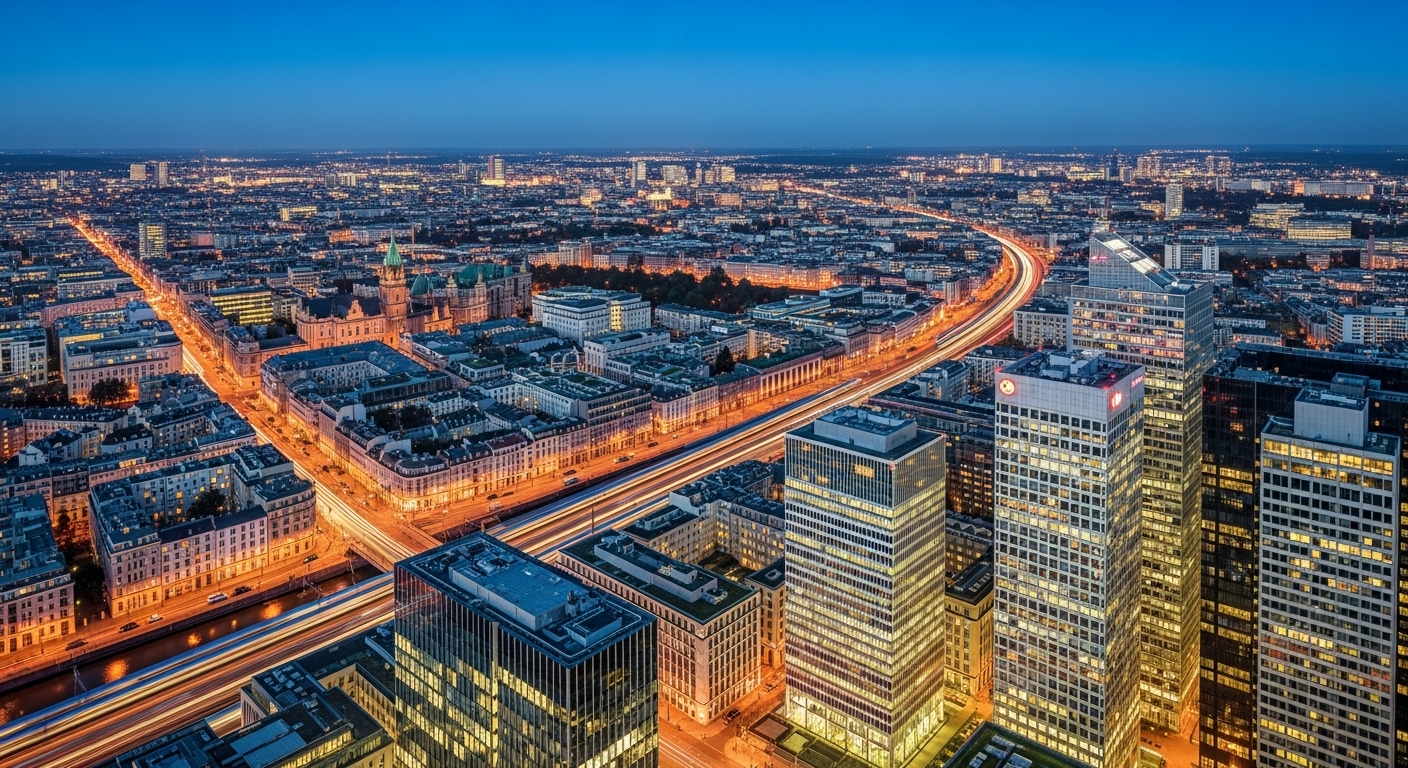
The traditional map of European commerce, long dominated by a handful of iconic financial capitals, is being redrawn. In a post-Brexit and digitally accelerated world, the corporate geography of the continent is becoming more dynamic, decentralized, and diverse than ever before. While legacy powerhouses like London, Paris, and Frankfurt remain formidable, they are now part of a much wider ecosystem of challenger hubs and specialized centers, each competing on a unique mix of talent, technology, and quality of life. Understanding this evolving landscape is no longer optional for global businesses; it is a strategic imperative. This analysis moves beyond reputation to examine the data-driven factors defining Europe’s premier business districts, from venture capital flows and infrastructure investments to sustainability credentials and talent migration patterns. We will explore the enduring strengths of the old guard, the meteoric rise of new tech contenders, and the underlying forces shaping the future of business location strategy across Europe.
The enduring power of Europe’s legacy financial centers
Despite the narrative of disruption, Europe’s traditional business titans continue to exert immense gravitational pull. London, with its twin centers of The City and Canary Wharf, remains a global financial linchpin. Even post-Brexit, it boasts an unparalleled concentration of financial services, legal expertise, and capital markets. The city’s resilience is rooted in its deep talent pool, regulatory maturity, and sheer scale. Similarly, Paris La Défense stands as continental Europe’s largest purpose-built business district, a fortress of corporate headquarters for CAC 40 companies and a major hub for banking and insurance. Its strategic location and significant infrastructure investment, including the Grand Paris Express project, are designed to cement its position. Meanwhile, Frankfurt’s Bankenviertel, often called ‘Mainhattan’, has undeniably benefited from Brexit, attracting banking operations relocating from the UK. As the home of the European Central Bank, its role in continental finance is institutionalized, providing a stable, highly regulated environment that continues to attract major players in banking and asset management. These legacy hubs are not static; they are actively evolving, integrating smart city technologies and adapting their vast commercial real estate portfolios to the demands of hybrid work, proving that deep roots provide a powerful foundation for future growth.
The tech tide: how challenger hubs are rewriting the map
While the old guard adapts, a new wave of challenger hubs is redefining what it means to be a European business center, driven largely by the technology sector. Dublin’s ‘Silicon Docks’ is the quintessential example, having transformed from a derelict port area into the European headquarters for a who’s who of global tech giants. This success was built on a foundation of favorable corporate tax policies, a young, English-speaking workforce, and a concentrated ecosystem of talent and investment. In Germany, Berlin has cultivated a reputation as a gritty, creative, and comparatively affordable capital for startups. Districts like Mitte and Kreuzberg are magnets for venture capital and entrepreneurs, fostering a vibrant scene in fintech, AI, and e-commerce. The city’s appeal lies less in corporate polish and more in its dynamic, innovative culture that attracts top tech talent from around the world. Not to be outdone, Amsterdam’s Zuidas district has masterfully blended its historical trading prowess with a forward-looking tech and sustainability focus. Its world-class digital connectivity, strategic location, and progressive policies have made it a prime location for international companies looking for a stable and well-connected base within the EU. These cities demonstrate that a potent combination of government strategy, venture capital, and a magnetic cultural identity can rapidly create powerful new centers of economic gravity.
Beyond the capital: the rise of specialized secondary cities
The evolution of Europe’s business geography extends beyond the primary capital cities. A growing number of secondary cities are carving out dominant positions as specialized, sector-specific hubs. Munich, for example, serves as the undisputed heart of Germany’s high-tech engineering and automotive industries, home to giants like BMW and Siemens, and surrounded by a rich ecosystem of research institutions and suppliers. Its focus on ‘deep tech’ and advanced manufacturing makes it a critical node in the global innovation chain. In Scandinavia, Stockholm has earned the nickname ‘The Unicorn Factory’ for its phenomenal success in producing billion-dollar tech companies, particularly in fintech and gaming. The city’s success is a testament to its highly educated population, early adoption of technology, and a collaborative environment between startups and established firms. Further south, Zurich, while a primary city in Switzerland, functions as a specialized global hub for private banking, wealth management, and insurance. Its stability, discretion, and deep-seated financial expertise create a unique value proposition that is difficult to replicate. These specialized centers thrive by focusing their resources, developing deep industry knowledge, and fostering talent pools with highly specific skills, proving that in the modern European economy, focus can be just as powerful as scale.
Connectivity and infrastructure as a competitive advantage
In a deeply integrated continent, the quality of physical and digital infrastructure is a critical differentiator for business districts. The ability to move people, goods, and data quickly and efficiently is paramount. Amsterdam’s Schiphol Airport and Frankfurt Airport are not just travel hubs; they are massive economic engines, enabling seamless access to global markets and functioning as key logistics centers. This air connectivity is complemented by Europe’s expanding high-speed rail network, which is increasingly turning multi-city business trips into simple day returns, effectively shrinking the continent and fostering greater collaboration between districts. However, digital infrastructure is arguably the most critical battleground. Leading business districts are defined by ubiquitous high-speed fiber internet and the rapid rollout of 5G technology. This digital backbone is essential for everything from cloud computing and data-intensive financial modeling to supporting a distributed workforce. Cities that invest heavily in their digital infrastructure, ensuring resilient, high-capacity networks, are better positioned to attract the high-growth industries of the future. This investment is a direct enabler of productivity and innovation, making it a non-negotiable factor in modern location analysis.
The talent equation: where skills and quality of life converge
Ultimately, a business district is only as strong as the talent it can attract and retain. In the global war for skilled professionals, the most successful European cities are those that offer a superior quality of life. The calculus for top talent has moved beyond salary to include factors like housing affordability, cultural amenities, green spaces, safety, and work-life balance. Cities like Copenhagen and Vienna consistently top global livability rankings, and this is becoming a significant economic advantage. Companies are discovering that establishing a presence in these locations makes it easier to recruit elite talent who prioritize a holistic lifestyle. The presence of world-class universities is another critical component of the talent equation, ensuring a steady pipeline of new graduates and fostering a culture of research and innovation. This creates a virtuous cycle: companies are drawn to the talent produced by universities, and graduates are more likely to stay in a city with strong job prospects. Therefore, the most competitive business districts are those located within a broader urban fabric that is vibrant, livable, and intellectually stimulating, recognizing that the modern knowledge worker chooses a city first, and a job second.
Sustainability and the future-proof business district
The final, and increasingly decisive, factor in the hierarchy of European business districts is sustainability. As Environmental, Social, and Governance (ESG) criteria move from the periphery to the core of corporate strategy, the environmental credentials of a business location have become a critical consideration. Companies are now under immense pressure from investors, consumers, and employees to reduce their carbon footprint, and their choice of office location is a major part of that. Leading districts are responding by championing green building standards like BREEAM and LEED, which mandate energy efficiency, sustainable materials, and healthier indoor environments. Scandinavian cities, in particular, are at the forefront, with districts that seamlessly integrate sustainable public transport, cycling infrastructure, and renewable energy sources. For example, HafenCity in Hamburg is one of Europe’s largest urban regeneration projects, built entirely on principles of sustainability. These initiatives are more than just environmentalism; they are a core business strategy. Green buildings command higher rents, have lower operating costs, and are proven to enhance employee well-being and productivity. In the near future, a business district’s commitment to sustainability will be as fundamental to its appeal as its digital connectivity or transport links, making it the ultimate measure of a truly future-proof location.
In conclusion, the corporate map of Europe is in a state of dynamic and exciting flux. The era of a single, dominant business capital is over, replaced by a sophisticated, multi-polar network of hubs, each with distinct strengths. The legacy centers of London, Paris, and Frankfurt are leveraging their deep-rooted advantages to adapt and evolve, while a formidable group of challenger cities like Dublin, Berlin, and Amsterdam are using technology and culture to rapidly ascend the ranks. Furthermore, the rise of specialized secondary cities underscores a continental shift towards focused expertise. The defining factors in this new geography are clear: world-class physical and digital connectivity, an unwavering focus on attracting and retaining talent through superior quality of life, and a deep, demonstrable commitment to sustainability. For businesses charting their future in Europe, success will depend on their ability to look beyond the traditional map and understand this new, interconnected ecosystem where the most resilient, innovative, and livable locations will ultimately prevail.