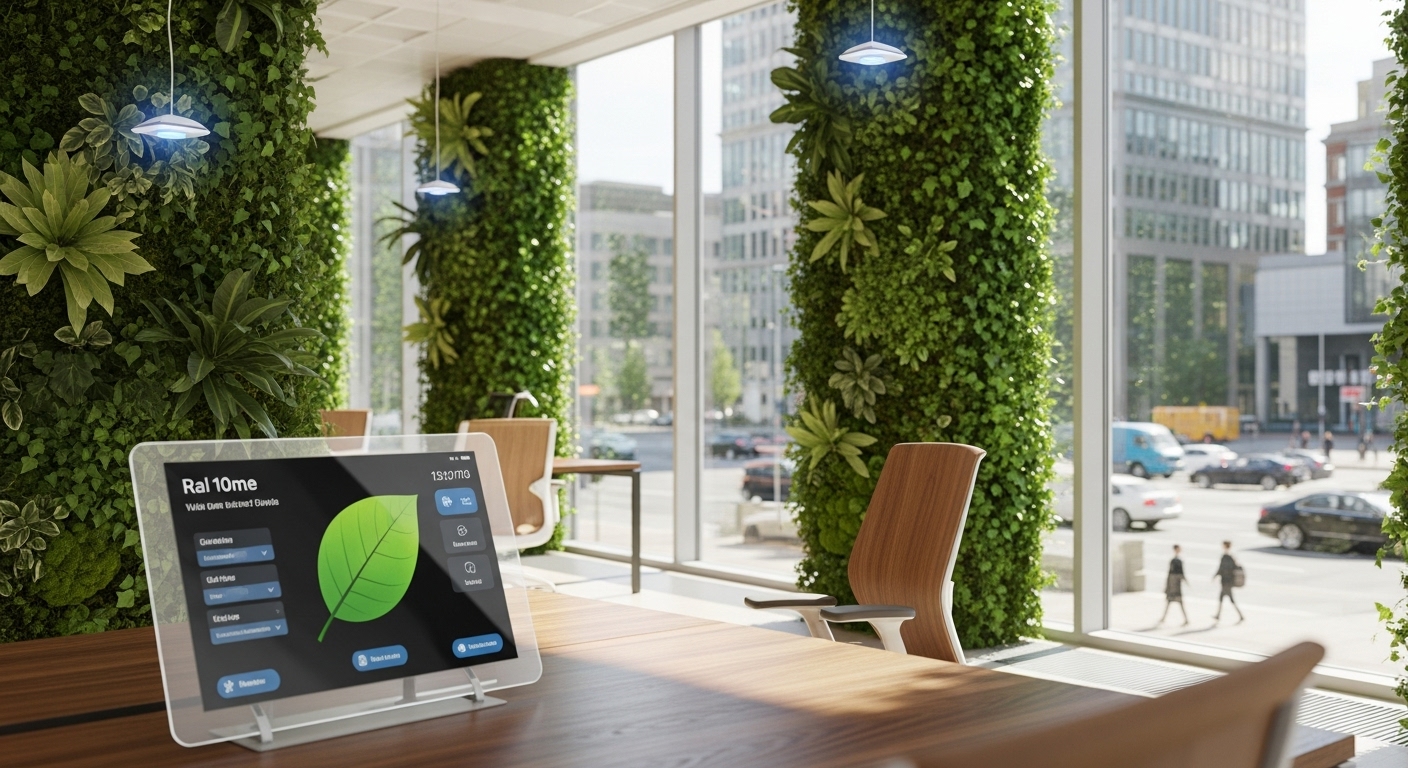
The modern office is undergoing its most significant transformation in a generation. No longer just a physical space for work, it’s becoming a dynamic, data-driven ecosystem designed to enhance productivity, promote well-being, and operate sustainably. At the heart of this evolution is the convergence of smart technologies, particularly Artificial Intelligence (AI) and the Internet of Things (IoT). Recent trends show a clear shift towards creating responsive environments that not only boost efficiency but also prioritize the human experience and environmental responsibility. This article explores the symbiotic relationship between AI, IoT, and sustainability, examining how their integration is creating the intelligent, adaptive, and eco-friendly workplaces that will define the future of work. We will delve into the core technologies driving this change, the tangible benefits for both employees and employers, and the critical considerations for successful implementation.
The central nervous system: IoT as the data foundation
The foundation of any smart office is the Internet of Things (IoT). Think of it as the building’s central nervous system—a vast network of interconnected sensors and devices that gather real-time data about the physical environment. These are not just gadgets; they are crucial data points. Occupancy sensors, for example, do more than just count people; they provide granular insights into how and when specific spaces are used, from individual desks to large conference rooms. Environmental sensors continuously monitor air quality, tracking levels of CO2, volatile organic compounds (VOCs), temperature, and humidity, which are critical factors for employee health and cognitive performance. Smart lighting and HVAC systems are embedded with sensors that track ambient light levels and thermal comfort, while smart plugs can monitor the energy consumption of individual devices. This constant stream of data is the raw material that fuels the smart office. Without this rich, real-time information, any subsequent intelligence or automation would be impossible. The primary function of IoT in this context is to create a detailed, digital twin of the office environment, capturing the dynamic patterns of use and the fluctuating conditions that impact both operational efficiency and the well-being of the occupants.
The intelligent brain: AI for analysis and automation
If IoT is the nervous system, Artificial Intelligence is the intelligent brain that processes the vast amounts of data and makes decisions. AI algorithms analyze the real-time information from IoT sensors to identify patterns, predict needs, and automate responses. For example, AI can analyze historical and real-time occupancy data to optimize HVAC and lighting systems, ensuring energy is only used when and where it’s needed, leading to significant cost savings. This is a leap beyond simple motion sensors; it’s predictive energy management. In space utilization, AI platforms can analyze usage patterns to help facility managers make data-driven decisions about office layouts, identifying underutilized areas that could be repurposed for collaborative zones or quiet spaces. This is particularly crucial in a hybrid work model where office density fluctuates. Furthermore, AI contributes to predictive maintenance. By analyzing data from office equipment, AI can anticipate when a printer or HVAC unit is likely to fail, scheduling maintenance proactively to prevent disruptive downtime. For employees, AI-powered applications can personalize their experience, allowing them to find and book a desk that meets their preferences for temperature, light, and noise level through a simple mobile app, streamlining their daily routine and removing friction from their workday.
The green imperative: driving sustainability with smart tech
Sustainability is no longer a peripheral concern but a core business imperative, and smart technology is a powerful enabler of green initiatives. The most immediate impact is on energy conservation. As mentioned, AI-driven HVAC and lighting systems can reduce energy consumption by 30-50% by intelligently adapting to building occupancy and environmental conditions. This directly lowers a company’s carbon footprint and operational costs. Beyond energy, smart tech promotes resource management. Smart water management systems can detect leaks and optimize irrigation for office plants or green spaces, while smart waste bins can signal when they are full, optimizing collection routes and reducing fuel consumption for janitorial services. The data collected by IoT sensors also provides a clear and accurate picture of a building’s overall environmental performance. This data is essential for achieving green building certifications like LEED or BREEAM, which are increasingly important for corporate reputation and attracting environmentally conscious talent. By providing transparent, verifiable data on energy use, water consumption, and waste management, smart technology makes sustainability measurable, manageable, and a core component of the workplace’s operational DNA.
Enhancing the human experience: well-being and productivity
Ultimately, the goal of a smart office is to create an environment where people can do their best work. Technology serves this human-centric purpose by enhancing well-being and boosting productivity. Data from environmental sensors is key to this. When AI detects a rise in CO2 levels in a meeting room, it can automatically increase ventilation, preventing the cognitive decline and drowsiness that accompanies poor air quality. Personalized control over lighting and temperature allows employees to tailor their immediate environment to their comfort, reducing distractions and improving focus. This focus on creating a healthier and more comfortable space has been shown to reduce absenteeism and increase employee satisfaction. On the productivity front, smart systems remove administrative friction. AI-powered room booking systems can automatically release rooms if attendees don’t show up, maximizing availability. Integrated communication platforms and smart whiteboards facilitate seamless collaboration between in-office and remote team members. By automating mundane tasks and optimizing the physical environment for cognitive performance, smart technology empowers employees to focus on higher-value, more creative work, directly impacting the organization’s bottom line.
Navigating the challenges: privacy, security, and integration
The transition to a symbiotic workplace is not without its challenges. Chief among them are concerns about data privacy and security. The same sensors that optimize space and comfort also collect a vast amount of data about employee movement and behavior. It is absolutely critical for organizations to be transparent about what data is being collected and how it is being used. Establishing clear data governance policies and ensuring robust cybersecurity measures to protect this sensitive information from breaches is non-negotiable. Employee trust is paramount, and any perception of invasive surveillance can negate the benefits of a smart office. Another significant hurdle is integration. The market is flooded with devices and platforms from different vendors, and ensuring they can communicate and work together seamlessly is a complex technical task. A fragmented ecosystem of non-communicating gadgets will create more problems than it solves. Therefore, a strategic approach that prioritizes open standards and scalable, integrated platforms is essential for long-term success. Finally, organizations must manage the human element of change, providing training and clear communication to ensure employees understand and embrace the new technologies rather than resisting them.
The future is adaptive: the self-learning workplace
The convergence of AI, IoT, and sustainability is pushing the workplace towards a future that is not just smart, but truly adaptive. The next frontier is the self-learning office—an environment that continuously learns from its occupants’ behaviors and preferences to become more efficient, comfortable, and sustainable over time. Imagine a workplace that knows to adjust the lighting in a specific zone in the afternoon because it has learned that the team there experiences an energy dip around 3 p.m. or a building that can negotiate energy prices with the grid in real-time based on its own predicted consumption patterns. This level of ambient intelligence will make the office a seamless extension of the work itself, an invisible partner that supports and enhances employee performance without requiring conscious effort. As these technologies mature and become more integrated, the distinction between the physical and digital workspace will continue to blur, creating a truly symbiotic environment where technology, the building, and the people within it work in perfect harmony. This evolution promises not only to optimize business operations but to fundamentally reshape our relationship with the spaces where we work, innovate, and collaborate.
In conclusion, the symbiotic workplace represents a holistic vision for the future of work. By weaving together the data-gathering capabilities of IoT with the analytical power of AI, organizations can create environments that are profoundly more efficient, sustainable, and human-centric. This is not merely a technological upgrade; it is a strategic evolution that addresses the core demands of the modern workforce for flexibility, well-being, and purpose. While navigating the challenges of privacy and integration requires careful planning, the benefits—from significant operational savings and a reduced carbon footprint to a more productive and engaged workforce—are compelling. The convergence of these technologies is setting a new standard for what a workplace can and should be: a responsive, intelligent, and sustainable ecosystem that empowers people to thrive.