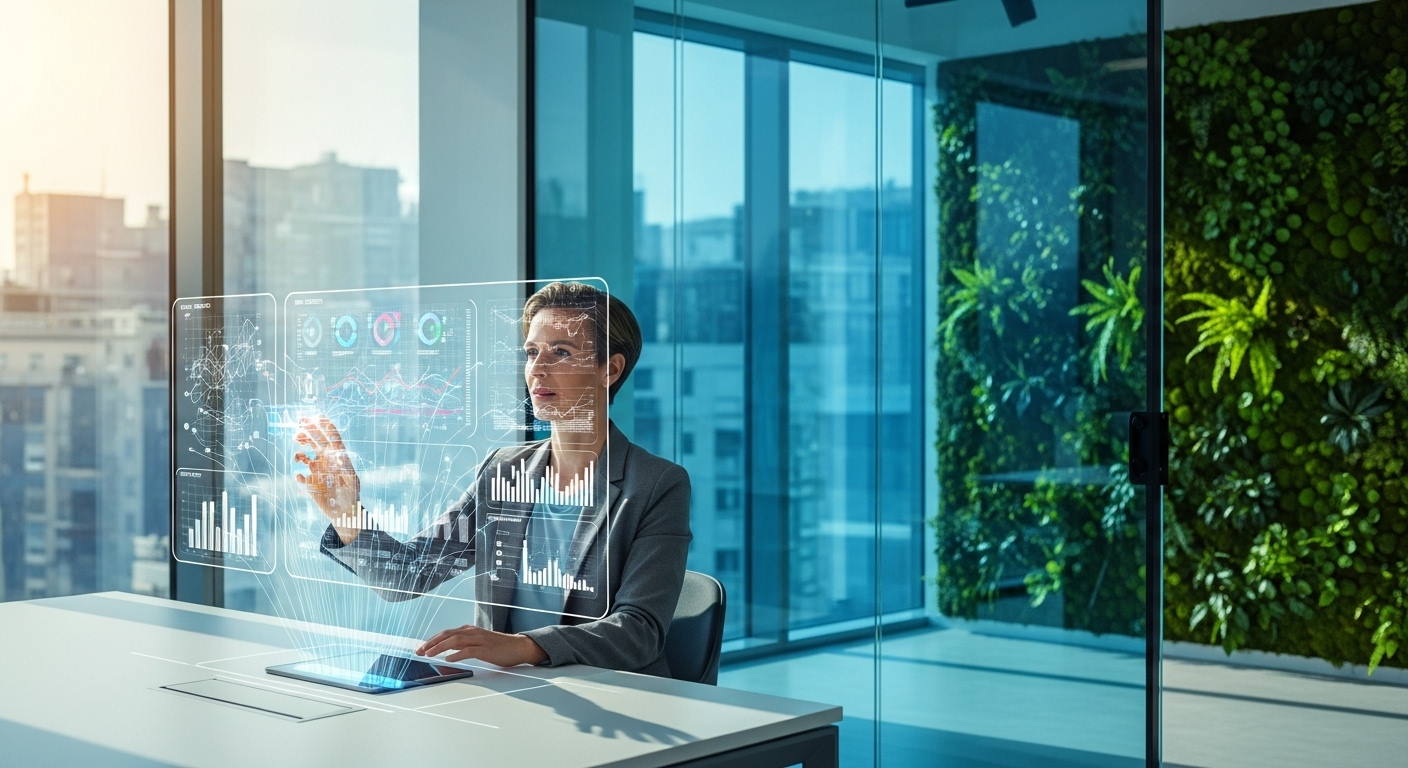
The modern workplace is no longer a static collection of desks and conference rooms; it’s transforming into a living, breathing ecosystem. Imagine an office that anticipates your needs, adjusts to your preferences in real-time, and seamlessly connects you with colleagues across the globe. This is the promise of the responsive office, a concept brought to life by the deep integration of smart technology. Fueled by the Internet of Things (IoT) and Artificial Intelligence (AI), these intelligent environments are moving beyond mere automation to create truly personalized, productive, and sustainable spaces. This evolution is a direct response to the demands of a new era of work, one defined by flexibility, collaboration, and a profound focus on employee well-being. This article explores the core technologies driving this transformation and how they are fundamentally reshaping our professional lives.
The central nervous system: integrating IoT and AI
At the heart of the responsive office is a powerful partnership between the Internet of Things (IoT) and Artificial Intelligence (AI). Think of IoT devices—sensors monitoring occupancy, air quality, light levels, and temperature—as the building’s sensory network, its nerves. These sensors constantly gather vast amounts of data about how the space is being used. However, data alone is inert. This is where AI comes in, acting as the central brain that processes this information and makes intelligent decisions. For example, AI can analyze real-time occupancy data to dim lights and lower HVAC in unused areas, leading to significant energy savings. It can also enable predictive maintenance; by monitoring the performance of office equipment like printers or coffee machines, the system can flag potential issues and schedule a technician before a breakdown ever occurs, minimizing disruption and downtime. This integration creates a dynamic feedback loop where the office environment continuously learns from and adapts to its occupants, moving from a passive structure to an active participant in the daily workflow.
The personalized productivity bubble
One of the most significant impacts of smart office technology is its ability to deliver personalization at scale. In a flexible or hot-desking environment, employees can book a workspace through an app, and upon arrival, the space instantly adapts to their pre-set preferences. The desk height adjusts, the lighting shifts to their preferred color temperature for focus, and the room temperature is set for optimal comfort. This eliminates the minor frictions and adjustments that collectively drain cognitive energy throughout the day. Beyond physical comfort, AI-powered virtual assistants integrated into workplace platforms can manage administrative tasks like scheduling meetings, booking rooms, and surfacing relevant documents. By offloading these routine tasks, the technology creates a personalized ‘productivity bubble’ for each employee, allowing them to dedicate their full attention to high-value, creative, and strategic work. This focus on individual needs fosters a greater sense of control and well-being, which is directly linked to higher job satisfaction and improved performance.
Bridging the distance: technology for the hybrid era
The rise of hybrid work has made seamless collaboration between on-site and remote team members a critical business priority. The responsive office addresses this challenge with technology designed to dissolve physical boundaries. Smart conference rooms are now equipped with advanced video conferencing systems that use AI to automatically frame the active speaker, creating a more natural and engaging experience for remote participants. Interactive digital whiteboards allow colleagues to brainstorm and co-create in real-time, whether they are in the same room or on different continents. Furthermore, integrated space management software provides a clear, real-time view of office occupancy, allowing employees to see when their team members are planning to be in the office and book desks or meeting rooms accordingly. This data-driven approach to scheduling fosters intentional collaboration, ensuring that time spent in the office is maximized for connection and teamwork, making the physical workspace a true hub for hybrid teams rather than just a place to sit.
From smart to sustainable: the green technology dividend
The same technologies that enhance employee experience also deliver significant environmental benefits, aligning business operations with crucial sustainability goals. The responsive office is inherently an energy-efficient office. By leveraging a dense network of IoT sensors, the building’s management system gains a granular understanding of resource consumption. It can identify and eliminate energy waste with a precision that was previously impossible, adjusting lighting and climate control based on occupancy patterns, time of day, and even external weather conditions. This optimization goes beyond energy to include water management and waste reduction. For instance, sensors in restrooms can detect leaks and optimize flush cycles, while smart bins can signal when they are full, optimizing collection routes and reducing fuel consumption for janitorial services. For businesses, this ‘green dividend’ is twofold: it drastically reduces operational costs while providing tangible, reportable data that strengthens their corporate social responsibility (CSR) credentials and attracts eco-conscious talent.
Building intelligence with a human touch
For smart office technology to be truly successful, it must be implemented with a human-centric focus. The goal is not to create a sterile, automated environment, but a workspace that feels intuitive, supportive, and natural. This means prioritizing a frictionless user experience where technology works silently in the background to enhance, not complicate, the workday. A key trend in this area is the integration of biophilic design principles with smart systems. This involves incorporating natural elements like living walls, water features, and ample natural light into the office layout. Smart technology can then augment these elements, such as circadian lighting systems that mimic the natural progression of sunlight throughout the day, which has been shown to improve mood, regulate sleep cycles, and boost cognitive performance. By focusing on how technology can support fundamental human needs for comfort, nature, and well-being, organizations can ensure their smart office is not just intelligent, but also a place where employees can do their best work.
Securing the connected workspace
As an office becomes more interconnected, its digital attack surface expands. Every sensor, smart device, and integrated system represents a potential entry point for cyber threats. Therefore, robust security is not an afterthought but a foundational pillar of the responsive office. A multi-layered security strategy is essential. This begins with secure access control, moving beyond key cards to include biometric authentication like fingerprint or facial recognition to ensure only authorized personnel can enter sensitive areas. On the network level, AI-driven security platforms actively monitor data traffic in real-time, learning normal patterns of behavior and instantly flagging anomalies that could indicate a breach. This proactive threat detection is crucial for identifying and neutralizing risks before they can cause significant damage. Furthermore, strong data encryption policies for all information, both at rest and in transit, are critical to protecting sensitive corporate and employee data generated by the smart office ecosystem, ensuring that privacy and security are maintained.
In conclusion, the responsive office represents a paradigm shift in how we view the workplace. It is no longer a passive container for work but an active, intelligent partner in achieving organizational goals. By seamlessly integrating AI and IoT, these smart environments offer a deeply personalized experience that boosts productivity and well-being. They provide the critical infrastructure for effective hybrid collaboration, bridge the gap between physical and digital teams, and deliver substantial cost savings through enhanced energy efficiency and sustainability. While the technology is complex, the underlying goal is simple: to create spaces that are more intuitive, supportive, and human-centric. As businesses continue to navigate the future of work, investing in a responsive, technology-enabled environment is no longer a luxury—it’s a strategic imperative for attracting top talent, fostering innovation, and building a resilient, future-proof organization.