As a global nexus of finance and innovation, Shanghai has long been defined by its ever-expanding skyline. Yet, a powerful new trend is reshaping the city’s vertical ambitions from the inside out. Driven by China’s national push towards carbon neutrality and a growing demand for healthier, more engaging work environments, the concept of the sustainable workspace is no longer a niche interest but a critical business imperative. This evolution goes beyond simple energy savings; it represents a fundamental rethinking of the office’s role in fostering well-being, attracting top talent, and driving productivity. In a city where the future is built daily, sustainable workspaces are becoming the new standard of excellence, blending cutting-edge technology with human-centric design to create environments that benefit people, the planet, and the bottom line. This article will explore the key pillars of this green revolution, from biophilic design and smart technology to the prestigious certifications setting a new benchmark for corporate real estate.
The rise of biophilic design in urban landscapes
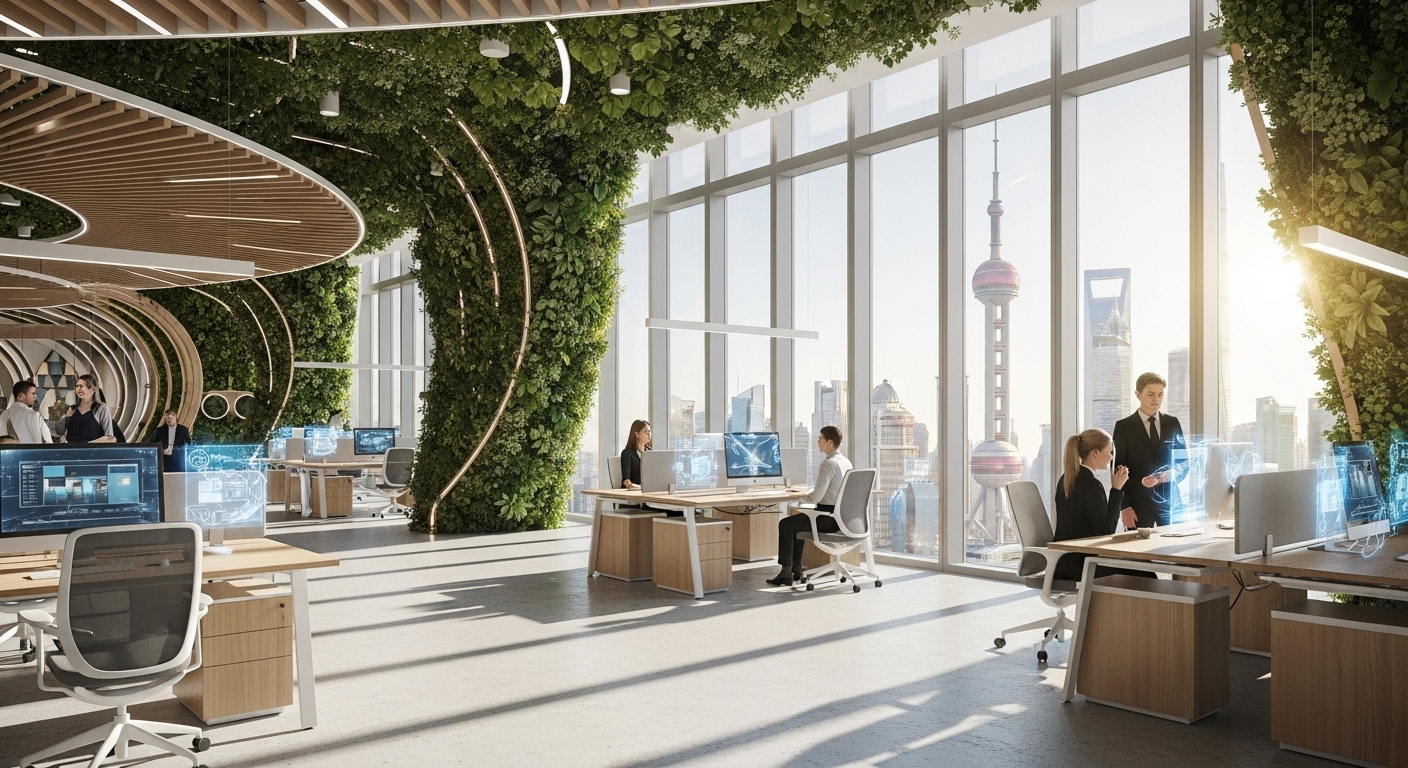
In the dense vertical forests of its business districts, a counterintuitive movement is taking hold: bringing the natural world indoors. Biophilic design, the practice of integrating nature and natural elements into the built environment, is becoming a cornerstone of sustainable workspace strategy. The core idea is that humans have an innate tendency to seek connections with nature, and satisfying this in the workplace can lead to profound benefits. Companies are moving beyond the token potted plant and creating immersive, nature-inspired environments. This includes the installation of living walls that purify the air, the use of natural materials like wood and stone, maximizing exposure to natural light, and even incorporating water features to create a sense of tranquility. The impact of this approach is backed by compelling data. Studies have shown that biophilic elements can increase productivity by as much as 6% and boost creativity by 15%. For employees, this translates to reduced stress, improved cognitive function, and enhanced overall well-being. In the competitive talent market of Shanghai, an office that actively promotes the health of its occupants is a powerful differentiator, helping companies attract and retain the best and brightest minds who increasingly prioritize a healthy work-life integration.
Smart building technology and energy efficiency
Technology is the silent, powerful engine driving sustainability in modern workspaces. The advent of the Internet of Things (IoT) and AI-powered analytics has transformed buildings from static structures into responsive, intelligent ecosystems. Smart building technology allows for the real-time monitoring and optimization of virtually every operational aspect. For example, sensors can adjust lighting and climate control based on occupancy patterns, ensuring energy isn’t wasted on empty rooms or during non-peak hours. Advanced HVAC systems can monitor air quality, circulating fresh, filtered air while minimizing energy expenditure. These systems not only lead to significant reductions in a building’s carbon footprint but also generate substantial operational savings over time. Furthermore, this technology directly enhances the employee experience. Staff can use mobile apps to book desks, adjust their personal lighting preferences, and receive real-time data on air quality, giving them a greater sense of control and comfort. This fusion of sustainability and user experience is a hallmark of the new generation of office buildings, where environmental responsibility and human-centric design are two sides of the same coin.
Green certifications as the new standard of excellence
In the world of commercial real estate, commitment to sustainability is increasingly measured by a set of globally recognized benchmarks. Green building certifications like LEED (Leadership in Energy and Environmental Design) and the WELL Building Standard provide a rigorous framework for creating healthy, efficient, and cost-saving green buildings. Achieving these certifications is a powerful statement of a company’s dedication to environmental stewardship and employee well-being. LEED focuses on factors like energy and water efficiency, sustainable site development, and the use of eco-friendly materials. The WELL standard, conversely, centers on the human experience within the building, measuring attributes like air and water quality, light, nourishment, and mental health support. Landmark projects across Shanghai are proudly displaying these certifications. The iconic Shanghai Tower, for example, has achieved a LEED Platinum certification, a testament to its innovative sustainable design, which includes wind turbines and a rainwater collection system. Similarly, numerous leading companies are fitting out their offices to meet both LEED and WELL standards, recognizing that a dual focus on planetary and human health is the new pinnacle of corporate real estate strategy.
The circular economy in workspace operations
The sustainability movement is extending beyond building design and into the entire lifecycle of the materials used within the workspace. The principles of a circular economy—designing out waste, keeping products and materials in use, and regenerating natural systems—are being actively applied to office construction and daily operations. This means prioritizing the use of recycled, recyclable, and sustainably sourced materials for everything from carpeting and wall partitions to office furniture. Companies are increasingly partnering with suppliers who offer take-back programs or design furniture with modular components that can be easily repaired or replaced, rather than discarded. This approach drastically reduces the amount of waste sent to landfills. Operationally, circular principles manifest in comprehensive waste management programs that go beyond basic recycling to include composting of organic waste and minimizing the use of single-use plastics. By adopting a circular mindset, businesses not only minimize their environmental impact but often uncover new efficiencies and cost savings, turning a sustainable practice into a smart financial strategy.
Human-centric sustainability: a focus on wellness
The most profound shift in sustainable workspace design is the convergence of environmental goals with a deep focus on human wellness. The understanding that a healthy workforce is a productive workforce has placed employee well-being at the absolute center of office design. This human-centric approach considers every element that can impact an individual’s physical and mental health throughout the workday. It begins with fundamentals like ensuring optimal indoor air quality through advanced filtration systems and the use of low-VOC (volatile organic compound) paints and materials. It extends to maximizing access to natural light, which is proven to regulate circadian rhythms and improve mood, and providing acoustic comfort to minimize distracting noise. Beyond these physical factors, human-centric sustainability also addresses mental well-being by creating a variety of spaces to suit different work styles—from quiet zones for focused tasks to dynamic collaborative hubs and restorative breakout areas with comfortable seating and biophilic elements. This holistic view ensures that the workspace is not just a place of work, but a supportive environment that actively contributes to the health, happiness, and ultimately, the performance of its occupants.
The future outlook: net-zero ambitions
The drive for sustainable workspaces is not a passing trend but a long-term commitment aligned with ambitious global and national goals. The ultimate objective for many forward-thinking organizations is to achieve ‘net-zero’—a state where the building generates as much renewable energy as it consumes, effectively neutralizing its carbon footprint. While this remains a challenging goal, it is the clear direction of travel for the future of work. Achieving net-zero involves a multi-faceted strategy, including maximizing passive design elements like building orientation, installing on-site renewable energy sources such as solar panels, and procuring any remaining energy from certified green power providers. The journey towards net-zero is catalyzing incredible innovation in building materials, energy systems, and operational strategies. For a city that consistently pushes the boundaries of what’s possible, the ambition to create net-zero workspaces in Shanghai is not a question of if, but when. These future–ready buildings will serve as powerful symbols of a new era of corporate responsibility, where business success is inextricably linked to the health of our planet and its people.
In conclusion, the evolution of workspaces in Shanghai provides a compelling blueprint for the future of work globally. The movement towards sustainability is a holistic integration of environmental responsibility, technological innovation, and a profound commitment to human well-being. By embracing biophilic design, companies are reconnecting their employees with nature, boosting creativity and reducing stress in the heart of the urban environment. The deployment of smart building technology is optimizing energy efficiency and creating responsive, comfortable spaces, while the pursuit of prestigious certifications like LEED and WELL sets a transparent and high bar for excellence. Furthermore, the adoption of circular economy principles and a laser focus on wellness demonstrate a mature understanding that a company’s greatest asset is its people. These are not isolated initiatives but interconnected elements of a singular strategy: to build workspaces that are not only good for the planet but are also engines of productivity, innovation, and talent retention. As this green revolution continues to transform the city’s skyline from within, it solidifies its position as a leader in creating a more sustainable and human-centric future for all.