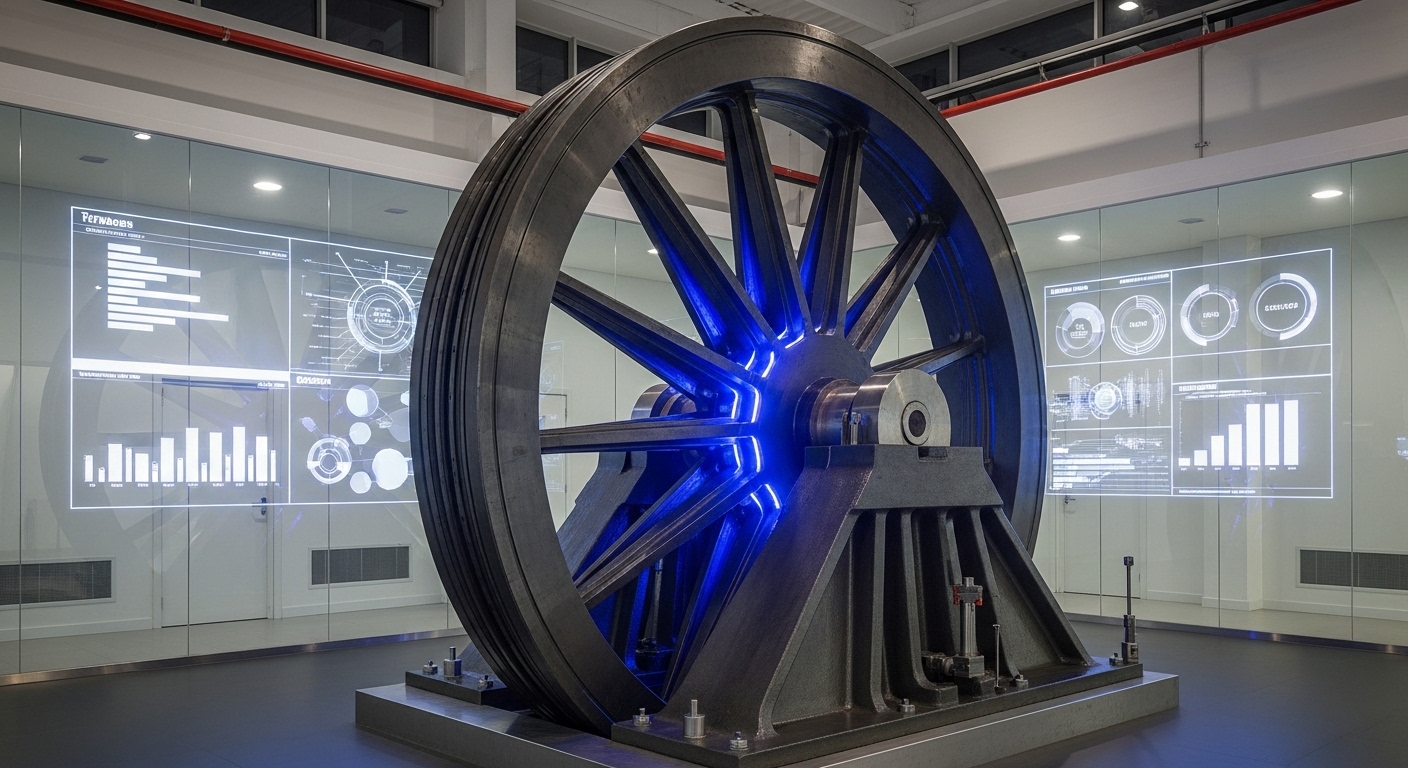
In today’s volatile economic landscape, the pursuit of operational efficiency is more than a strategic advantage—it’s a fundamental requirement for survival and growth. While many businesses treat efficiency as a series of isolated projects, the most resilient organizations build it into their cultural DNA. They create a self-reinforcing momentum, an operational flywheel that gains speed with every improvement. This approach shifts the focus from one-off fixes to building a perpetual system of optimization. Recent trends show a clear move towards integrating intelligent automation and AI-driven analytics, not just to cut costs, but to empower teams and make smarter, data-backed decisions. This article will deconstruct the modern operational flywheel, exploring the critical components that work together to create sustainable, compounding gains in performance. We will examine how to measure what truly matters, the core principles that stabilize the system, and the established frameworks that provide the initial push to get your flywheel spinning, transforming your operations into a true competitive differentiator.
The energy of input: defining and measuring efficiency metrics
Before an operational flywheel can gain momentum, it needs a reliable source of energy: data. The adage ‘what gets measured gets managed’ is the foundational bearing of this entire system. Without clear, consistent, and relevant metrics, any effort to improve efficiency is simply guesswork. The goal is to move beyond vanity metrics and identify Key Performance Indicators (KPIs) that directly reflect the health and velocity of your operations. These metrics can be broadly categorized into four critical areas. First, financial metrics like Operating Margin and Cost Per Unit provide a high-level view of profitability and resource allocation. They answer the fundamental question: are our operational activities financially sustainable? Second, process metrics such as Cycle Time (the total time from start to finish of a process) and Throughput (the rate of production) measure the speed and capacity of your workflows. These are vital for identifying bottlenecks. Third, resource metrics like Capacity Utilization reveal how effectively assets are being used. Finally, and increasingly critical, are customer-focused metrics. KPIs such as First Contact Resolution—the percentage of customer issues solved in a single interaction—directly link operational performance to customer satisfaction. As one operational leader noted, efficiency gains that frustrate customers are not gains at all. A successful measurement strategy doesn’t track dozens of disconnected data points; it builds a balanced dashboard that provides a holistic view, ensuring that improvements in one area don’t inadvertently create problems in another. This data-driven approach is the initial push that sets the flywheel in motion.
The weight of the wheel: core pillars of a high-performance operation
The flywheel itself is composed of several weighted pillars that, once in motion, are difficult to stop. These pillars represent the core, non-negotiable elements of a truly efficient organization. The first and most significant is Process Excellence. This involves a relentless focus on designing, analyzing, and refining workflows to eliminate waste and reduce variability. It’s about standardizing the predictable so you can better handle the unpredictable. The second pillar is People and Culture. An engaged workforce, empowered with the autonomy to identify and implement improvements, is an unstoppable force. Fostering what is often called a ‘Kaizen culture’ of continuous, incremental improvement ensures that the flywheel is constantly being accelerated by everyone, not just management. The third pillar is Strategic Alignment. Every operational improvement, no matter how small, must connect to the broader strategic goals of the company. Without this alignment, you risk becoming incredibly efficient at doing the wrong things. Technology Integration serves as the fourth pillar, acting as the lubricant for the entire system. Effective integration of automation, data analytics platforms, and AI tools doesn’t just speed up tasks; it enhances human capabilities and provides the insights needed for smarter decisions. Finally, a deep-seated Customer Focus is the fifth pillar, ensuring the flywheel is always turning in the right direction—towards delivering more value to the customer. When these pillars are robust and interconnected, they create a massive, heavy wheel that maintains its momentum through market shifts and internal challenges.
Applying the force: leveraging frameworks to build momentum
While the pillars form the weight of the flywheel, specific frameworks are the tools used to apply consistent force and build momentum. These established methodologies provide structured, repeatable approaches to problem-solving and process improvement. Think of them as the proven techniques for pushing the wheel. Lean Manufacturing is a foundational framework focused on maximizing customer value by systematically eliminating waste—any activity that consumes resources but brings no value. Its principles guide organizations to map value streams and create a smooth, uninterrupted flow of work. Another powerful framework is Six Sigma, a highly disciplined, data-driven methodology that aims to achieve near-perfect quality by eliminating defects and reducing process variation. It employs a structured problem-solving cycle: Define, Measure, Analyze, Improve, and Control (DMAIC). For organizations in fast-moving sectors, the Agile methodology offers an iterative approach that prioritizes flexibility, collaboration, and rapid feedback loops, allowing teams to adapt to change quickly. The Theory of Constraints (TOC) offers a different but complementary perspective, focusing on identifying and alleviating the single biggest bottleneck that is limiting the entire system’s output. By applying the principles of TOC, a company can apply a massive amount of force to the one area that will provide the greatest acceleration to the entire flywheel. These frameworks are not mutually exclusive; in fact, the most effective organizations often create a hybrid model, using the principles of Lean to identify waste, the tools of Six Sigma to solve complex problems, and the mindset of Agile to remain adaptable.
Intelligent automation: the frictionless bearing of the modern flywheel
If data is the energy and frameworks are the force, then intelligent automation is the advanced, near-frictionless bearing on which the modern operational flywheel spins. The latest trends for 2024 are dominated by the integration of Artificial Intelligence and Machine Learning to not only automate repetitive tasks but to augment human decision-making. This goes far beyond simple robotic process automation (RPA). We are now seeing the rise of what is termed ‘Intelligent Automation,’ which combines AI, machine learning, and automation to create systems that can learn and adapt. For example, AI-driven business planning tools can now analyze vast datasets to forecast demand, optimize complex supply chains, and identify potential disruptions before they occur. The democratization of Generative AI is another significant accelerator. It empowers employees at all levels to innovate by creating new process documentation, generating code for simple automation scripts, or analyzing operational data through natural language queries. This workforce enablement transforms every team member into a potential efficiency champion. As a recent report stated,
“The convergence of AI and automation is creating a new paradigm of operational excellence, where systems are not just automated, but are self-optimizing.”
This shift reduces the manual effort required to keep the flywheel turning, allowing it to spin faster and more smoothly than ever before. It allows organizations to focus less on pushing the wheel and more on directing its incredible momentum toward strategic objectives.
Sustainable momentum: linking efficiency with environmental and social governance
A truly perpetual operational flywheel must be sustainable, not just economically, but also environmentally and socially. In recent years, a powerful trend has emerged: the recognition that sustainability is not a cost center but a direct driver of operational efficiency. This pillar adds a crucial stabilizing element to the flywheel, ensuring its long-term viability and relevance. Companies are discovering that initiatives aimed at reducing waste, optimizing energy consumption, and creating circular supply chains lead to significant cost savings and operational benefits. For instance, redesigning packaging to use less material not only lowers environmental impact but also reduces material and shipping costs. Similarly, optimizing logistics routes to cut fuel consumption reduces both carbon emissions and operational expenses. Beyond environmental concerns, social governance plays a key role. Creating a safe, equitable, and empowering workplace—a core component of a strong ‘People and Culture’ pillar—directly impacts efficiency by boosting morale, reducing employee turnover, and attracting top talent. High turnover is a massive source of operational friction, requiring constant resources for recruitment and training. A sustainable and ethical operation builds a stronger brand reputation, which attracts both customers and talent, adding further energy and mass to the flywheel. This integration of Environmental, Social, and Governance (ESG) principles transforms operational efficiency from a purely internal metric into a powerful public statement of corporate responsibility and resilience, ensuring the flywheel’s momentum is positive for all stakeholders involved.
The compounding effect: fostering a culture of continuous improvement
The ultimate goal of the operational flywheel is to reach a point where it generates its own momentum. This is achieved when a culture of continuous improvement is so deeply embedded that the system becomes self-perpetuating. This cultural component, often associated with the Japanese philosophy of Kaizen, is arguably the most critical for long-term success. It is the invisible force that ensures everyone, every day, is looking for small ways to push the flywheel forward. This culture is not built through memos or posters; it is cultivated through consistent leadership, clear communication, and empowering systems. It requires creating psychological safety, where employees feel secure enough to experiment, suggest improvements, and even fail without fear of reprisal. It involves providing teams with the training and tools necessary to analyze their own workflows and implement changes. And most importantly, it requires a feedback loop where the impact of these small improvements is measured, celebrated, and shared across the organization. When an employee on the factory floor redesigns a tool layout and shaves three seconds off a process, that small win must be recognized. This recognition reinforces the desired behavior and inspires others to act. Over time, these thousands of tiny, incremental improvements compound, resulting in massive gains in efficiency, quality, and morale. The flywheel begins to accelerate under its own power, driven by the collective energy of an entire organization aligned and engaged in the pursuit of excellence. This is the stage where operational efficiency transcends being a business strategy and becomes the fundamental way the organization operates.
In conclusion, viewing operational efficiency not as a project but as a dynamic flywheel provides a powerful mental model for building a resilient and high-performing organization. The initial energy comes from a commitment to clear, data-driven measurement, identifying the vital signs of your operational health. The wheel itself is constructed from the foundational pillars of process excellence, a strong culture, strategic alignment, technology integration, and an unwavering customer focus. Consistent force is applied through proven frameworks like Lean, Six Sigma, and Agile, which provide the structured push needed to build initial momentum. In the modern era, this system is supercharged by the frictionless bearing of intelligent automation and AI, allowing for unprecedented speed and adaptability. By further grounding this system in the principles of sustainability and ESG, the flywheel gains long-term stability and purpose. Ultimately, the compounding effect of a fully embedded culture of continuous improvement allows the flywheel to generate its own momentum, creating a state of perpetual efficiency. Building this flywheel is not a simple or quick endeavor, but for those who commit to the process, it creates a formidable and enduring competitive advantage that is incredibly difficult for rivals to replicate. It transforms an organization from a machine that requires constant tinkering into a living system that perpetually improves itself.