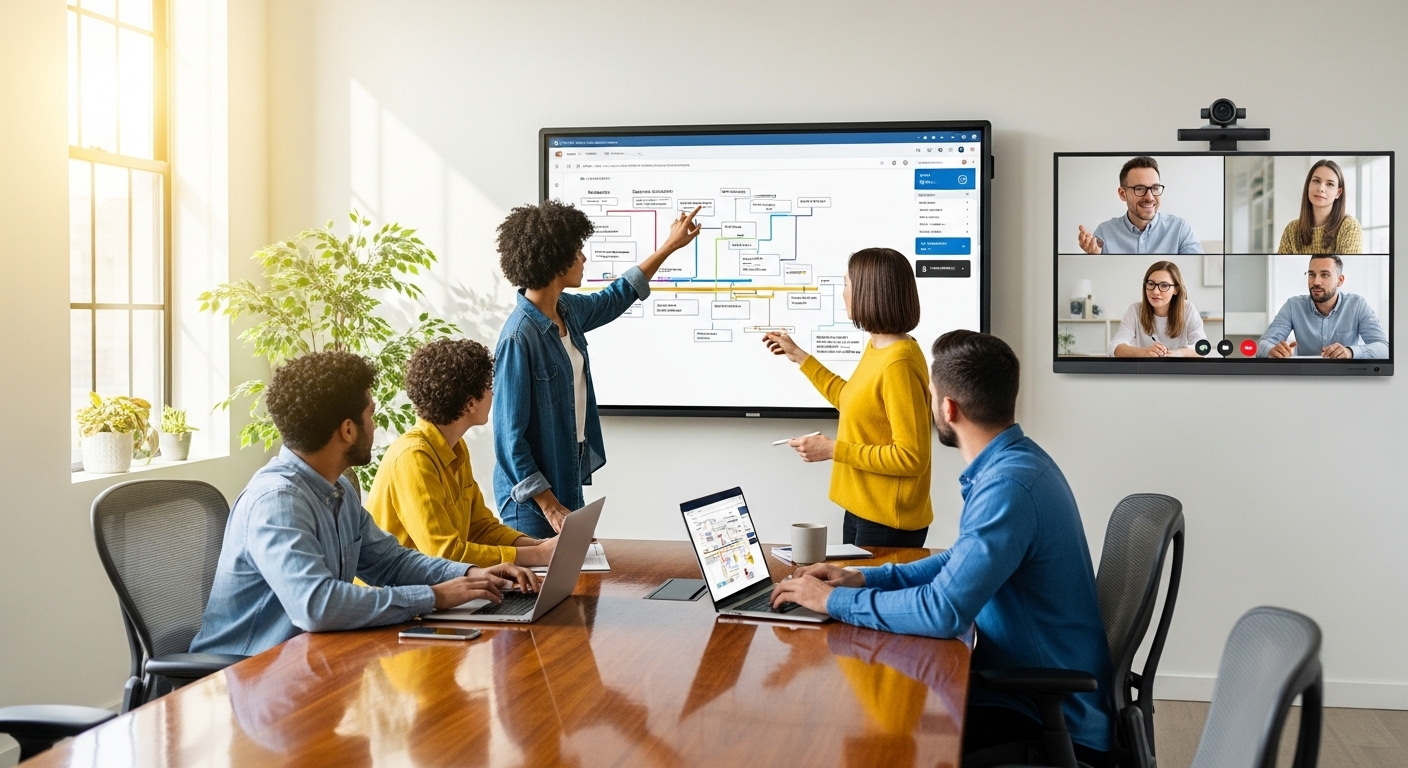
In today’s dynamic work environment, the ability to collaborate effectively is no longer a soft skill—it’s a critical business imperative. As organizations navigate the complexities of hybrid models, generational shifts, and rapid technological advancements, the very definition of teamwork is being rewritten. Gone are the days when collaboration simply meant gathering in a conference room. The new era demands a more intentional and structured approach. Recent trends show a massive pivot towards AI-powered tools and a digital-first mindset, with over 74% of businesses now operating on a hybrid model. This shift requires a framework that harmonizes technology, fosters genuine human connection, and builds a resilient culture. This guide provides that framework, breaking down the essential pillars for fostering collaboration in the modern workplace, from leveraging the right digital tools to cultivating the psychological safety necessary for true innovation.
The digital foundation: choosing your collaboration technology stack
In a hybrid or remote-first world, technology forms the central nervous system of team collaboration. Without a robust and intuitive digital toolkit, communication falters, workflows fracture, and a sense of disconnection prevails. The foundation of a modern collaboration framework is a carefully curated technology stack that supports both synchronous and asynchronous work. This goes beyond simply having a video conferencing platform; it involves creating an integrated ecosystem where information flows seamlessly. Key components include a central communication hub like Slack or Microsoft Teams for real-time conversations, a project management tool such as Asana or Jira for tracking tasks and progress, and a shared knowledge base like Confluence or Notion to serve as a single source of truth for documentation. The latest trend in this space is the integration of AI-powered assistants, like Google Duet and Microsoft Copilot, which are becoming instrumental in summarizing meetings, drafting communications, and automating routine tasks, thereby freeing up cognitive space for more creative, collaborative work. When selecting these tools, the focus should be on integration capabilities and user experience. A disjointed collection of apps creates more friction than it removes. The goal is to build a digital headquarters that is accessible, equitable, and empowering for every team member, regardless of their physical location, ensuring everyone has the same opportunity to contribute and stay informed.
Psychological safety: the bedrock of innovative teamwork
Technology can connect people, but it cannot, on its own, create the conditions for genuine collaboration. For teams to move beyond simple cooperation and achieve true synergy, they need a culture of psychological safety. This is the shared belief that team members can take interpersonal risks—like proposing a radical idea, admitting a mistake, or challenging the status quo—without fear of punishment or humiliation. Without this safety net, creativity is stifled, and valuable insights remain unspoken. Leaders play the most critical role in cultivating this environment. It starts with modeling vulnerability and fallibility. When a leader openly acknowledges their own errors or uncertainties, it signals to the team that it’s okay not to have all the answers. Another key practice is to foster intellectual curiosity by framing work as a series of learning problems rather than execution challenges. Instead of asking “who is responsible for this failure?” a leader should ask “what can we learn from this outcome?” This shifts the focus from blame to growth. Actively soliciting input from every team member, especially the quieter ones, and responding to all ideas with respect are also crucial behaviors. Psychological safety isn’t about being artificially nice; it’s about creating a climate of mutual respect and trust that allows for candid debate and productive conflict, which are the hallmarks of a high-performing, innovative team.
Communication protocols: creating clarity in a complex environment
In a distributed workforce, assuming everyone knows how, when, and where to communicate is a recipe for chaos. The constant barrage of notifications, misunderstandings from brief text messages, and the ever-present fear of missing out can lead to burnout and inefficiency. Establishing clear and explicit communication protocols is essential for creating a calm and productive collaborative environment. These protocols should act as a user manual for team interaction. The first step is to define the purpose of each communication channel. For example, use email for formal, external communication; a platform like Slack for urgent, internal queries and informal team bonding; and a project management tool for all task-related updates and questions. This prevents important information from getting lost in the wrong channel. Next, set clear expectations for response times. Acknowledging that not every message requires an immediate reply helps support asynchronous work and allows for deep, focused work blocks. A simple guideline might be a 24-hour response window for emails and a 3-hour window for direct messages during work hours. Finally, create standards for meetings. This includes always having a clear agenda, defining the desired outcomes, and clarifying whose attendance is essential versus optional. By creating this structure, you reduce the cognitive load on every team member, eliminate ambiguity, and ensure that communication remains a tool for collaboration, not a source of stress.
Leadership’s role: from director to facilitator
The command-and-control leadership style of the past is fundamentally incompatible with a collaborative culture. In the modern framework, a leader’s primary role is not to direct and delegate but to facilitate and empower. They are the architects and guardians of the collaborative environment. This requires a significant shift in mindset and skillset. A facilitative leader focuses on creating the conditions for the team to succeed on its own terms. They ensure resources are available, remove organizational roadblocks, and protect the team from external distractions. Instead of providing answers, they ask powerful questions that guide the team toward its own solutions, fostering a sense of ownership and autonomy. Recognizing and rewarding collaboration is another critical function. When performance evaluations and recognition programs are solely focused on individual achievements, it can inadvertently create competition and discourage teamwork. Leaders must recalibrate these systems to celebrate and elevate team-based accomplishments. They should publicly praise cross-functional successes and highlight individuals who excel at helping others. By championing a “we over me” ethos and actively modeling collaborative behavior, leaders can dismantle silos and inspire a collective spirit that drives the entire organization forward.
Hybrid harmony: bridging the digital and physical divide
Fostering collaboration in a hybrid team presents a unique set of challenges, primarily the risk of creating an inequitable two-tier system where in-office employees have a superior experience to their remote counterparts. Achieving hybrid harmony requires a deliberate, digital-first approach to all team activities. This means that if even one person is joining a meeting remotely, the entire meeting should be conducted as if it were fully remote. All participants, including those in the office, should join from their own devices with their cameras on. This equalizes the experience and prevents side conversations that exclude remote colleagues. The physical office space itself must also be reimagined. It should transition from a place for individual desk work to a hub designed specifically for collaboration. This means investing in high-quality video conferencing equipment for all meeting rooms, creating flexible project spaces with shared digital whiteboards, and providing quiet zones for focused work when needed. Furthermore, leaders must be intentional about creating social rituals that include everyone. This could involve virtual coffee breaks, hybrid team-building events, or simply starting meetings with non-work-related check-ins to foster personal connections. The goal is to ensure that location is not a barrier to opportunity, influence, or belonging, creating a truly unified team culture.
Measuring and refining: creating a continuous improvement loop
Fostering collaboration is not a one-time initiative; it’s an ongoing process that requires continuous attention and refinement. To ensure your efforts are effective, it’s crucial to establish a feedback loop for measuring what’s working and what isn’t. This doesn’t have to be overly complex. Regular, lightweight surveys can provide valuable insights into team dynamics. Using simple tools like pulse surveys, you can ask employees to rate statements such as, “I feel comfortable sharing a dissenting opinion with my team” or “I know who to approach for help on a different team.” These metrics provide a quantitative snapshot of psychological safety and cross-functional collaboration. Another powerful method is the team retrospective, a practice borrowed from agile methodologies. At the end of a project or a specific work period, the team gathers to discuss what went well, what was challenging, and what they want to change going forward. This structured conversation empowers the team to solve its own collaboration challenges. It is vital that leadership not only collects this feedback but also acts on it transparently. Sharing survey results and communicating the specific actions being taken in response builds trust and demonstrates a genuine commitment to creating the best possible collaborative environment, ensuring the framework evolves with the team’s needs.
Ultimately, building a truly collaborative organization is a journey, not a destination. It requires a holistic framework that thoughtfully integrates technology, champions psychological safety, and is guided by facilitative leadership. The trends are clear: the future of work belongs to teams that can effectively blend digital tools with deep, trust-based human connection. By moving beyond outdated, top-down structures and embracing a more dynamic and empowering approach, companies can unlock the collective intelligence of their people. This is about more than just boosting productivity or streamlining workflows; it’s about creating a resilient, innovative, and deeply human-centric culture where every individual feels valued and empowered to contribute their best work. The organizations that commit to this modern collaboration framework will not only survive the constant flux of the modern economy but will be the ones to lead and define it.