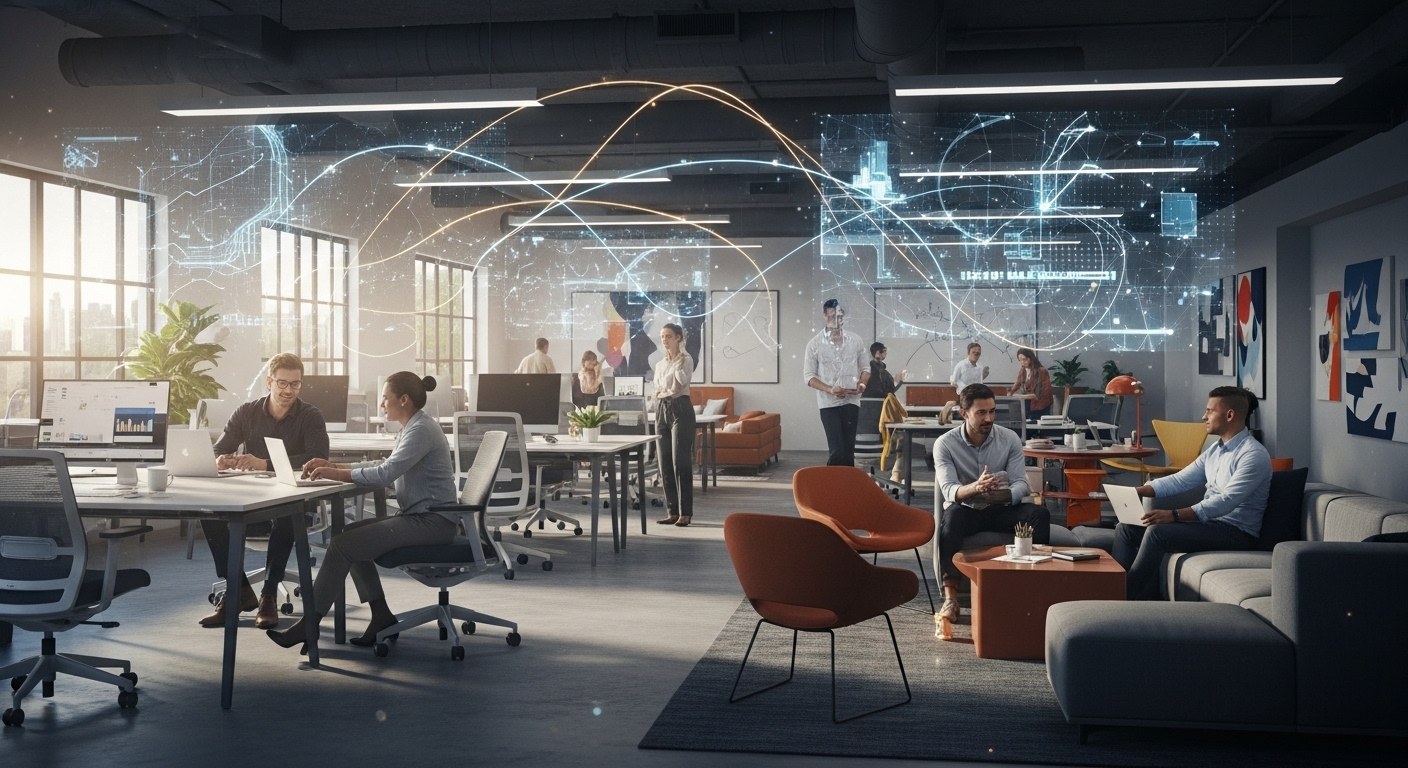
The modern office is undergoing a quiet revolution, moving beyond superficial smart devices to become a truly intuitive and responsive environment. Imagine a workplace that not only accommodates you but anticipates your needs—adjusting the light as you arrive, preparing a meeting room the moment you enter, and ensuring the air you breathe is clean and healthy. This isn’t science fiction; it’s the reality being built by a sophisticated network of sensor technology. As businesses embrace hybrid work and prioritize employee well-being, these invisible systems are becoming the central nervous system of the future of work. They are the key to unlocking unprecedented levels of efficiency, sustainability, and human comfort, transforming the very definition of a productive workspace. This article will explore the critical role of sensor technology, from optimizing spatial layouts and enhancing well-being to driving energy efficiency and streamlining collaboration, while also addressing the crucial data privacy concerns that accompany such a connected environment.
Optimizing space with occupancy sensors
One of the most significant challenges in the era of hybrid work is understanding how physical office space is actually used. An empty office is a costly asset, and a crowded one is a drag on productivity. Occupancy and motion sensors provide the solution by delivering real-time, actionable data on space utilization. These unobtrusive devices, often using infrared or computer vision technology, can monitor which desks are occupied, how frequently meeting rooms are used, and which collaborative areas are most popular. This data is invaluable for facilities managers and corporate real estate teams. By analyzing long-term trends, companies can move beyond guesswork and make data-driven decisions about their office layouts. For instance, if data shows that smaller, four-person meeting rooms are constantly booked while larger boardrooms sit empty, the floor plan can be reconfigured to meet actual demand. This not only optimizes the existing footprint but also informs future real estate investments, preventing unnecessary spending on underutilized space. Furthermore, this technology powers sophisticated desk-booking and room-reservation systems, allowing employees to instantly find and reserve available spaces through a mobile app, reducing friction and improving the daily office experience.
Enhancing employee well-being with environmental sensors
The focus on employee well-being has rightly taken center stage, and environmental sensors are a cornerstone of creating healthier work environments. These sensors continuously monitor a range of atmospheric conditions that have a direct impact on cognitive function, comfort, and health. Air quality sensors can detect levels of carbon dioxide (CO2), volatile organic compounds (VOCs), and particulate matter, automatically adjusting HVAC systems to increase ventilation when needed. High CO2 levels, for example, have been directly linked to drowsiness and decreased cognitive performance, so maintaining optimal levels is crucial for a productive workforce. Similarly, light sensors (photometers) can measure the intensity and color temperature of ambient light, adjusting artificial lighting throughout the day to mimic natural circadian rhythms. This helps reduce eye strain and improve employee alertness. Temperature and humidity sensors also play a vital role, maintaining a consistently comfortable environment that prevents employees from feeling too hot or cold, which can be a major distraction. By creating an office that actively manages its own environment for the benefit of its inhabitants, companies can demonstrate a tangible commitment to employee health, leading to higher satisfaction, reduced absenteeism, and improved talent retention.
Driving sustainability through smart energy management
Corporate sustainability is no longer a peripheral concern but a core business imperative. Smart sensors are a powerful tool for reducing a building’s environmental footprint and operational costs. The most direct application is in the automation of lighting and HVAC (heating, ventilation, and air conditioning) systems, which are typically the largest consumers of energy in a commercial building. Motion sensors ensure that lights automatically turn off in unoccupied rooms, hallways, and common areas, eliminating a significant source of energy waste. Occupancy sensors can provide more granular control, feeding data to the building management system (BMS) to dynamically adjust heating and cooling based on the number of people in a specific zone. Why heat an entire floor if only a handful of employees are present? By integrating with calendar systems, the BMS can even pre-cool or pre-heat meeting rooms just before a scheduled meeting and return to an energy-saving mode immediately after. This intelligent automation leads to substantial reductions in energy consumption, directly lowering utility bills and helping companies meet their ESG (Environmental, Social, and Governance) targets. The data collected by these sensors can also be used to generate reports that track energy usage and identify further opportunities for conservation, making sustainability an ongoing, data-informed initiative.
Streamlining collaboration with presence detection
In a dynamic and often hybrid work environment, facilitating seamless collaboration is essential. Presence detection technology, powered by a network of sensors, removes the friction from finding and utilizing collaborative spaces. Instead of relying on outdated booking systems or wandering the halls in search of an empty room, employees can use a central application to see a real-time map of available spaces. More advanced systems take this a step further. For instance, when a group of employees enters an unbooked huddle space, sensors can detect their presence and automatically check them into the room, updating its status to ‘in use’ on the company-wide system. This prevents interruptions and double bookings. Conversely, if a team books a room but never shows up, the system can detect the continued absence and automatically release the reservation, making the space available for others. This ‘smart’ scheduling maximizes the availability of high-demand resources. This technology can also integrate with video conferencing equipment, automatically powering on displays and connecting to a scheduled call as soon as participants enter the room, saving valuable time at the beginning of every meeting and allowing teams to focus on the work at hand.
Securing the workspace with advanced access control
Modern office security has evolved far beyond traditional keys and keycards. Advanced sensors are creating more secure, intelligent, and user-friendly access control systems. Instead of fumbling for a badge, employees can now use their smartphones with NFC or Bluetooth technology to gain entry, with the system logging their access in real-time. More sophisticated systems employ biometric sensors, such as facial recognition or fingerprint scanners, to provide a higher level of security for sensitive areas. These systems are not just about controlling entry points; they are part of an integrated security ecosystem. Motion sensors and glass-break detectors can be armed automatically when the system detects the last employee has left for the day. This same occupancy data can be used in emergencies to provide first responders with a real-time headcount and the last known location of employees within the building. Furthermore, visitor management can be streamlined, with temporary access credentials sent directly to a guest’s phone, allowing for a seamless check-in process while maintaining a secure and detailed log of who is in the building at all times. This creates a safer environment for employees and protects the company’s physical and intellectual property more effectively than ever before.
The data dilemma: navigating privacy and security
The deployment of a vast sensor network capable of monitoring an office environment raises legitimate and important questions about employee privacy and data security. While the goal is to create a better workplace, the potential for misuse of data cannot be ignored. To build trust and ensure ethical implementation, companies must adopt a transparent and privacy-first approach. It is crucial to anonymize the data being collected. The system needs to know that a desk is occupied, but it doesn’t need to know *who* is sitting there. Occupancy data should be aggregated to show trends, not to monitor individual employees’ work habits or time at their desks. Clear policies must be established and communicated to all employees, explaining what data is being collected, why it’s being collected, and how it will be used and protected. The network itself must be fortified with robust cybersecurity measures to prevent unauthorized access to the sensor data. This includes end-to-end encryption, regular security audits, and secure network protocols. The success of an intuitive workplace depends not just on the sophistication of its technology, but on the trust of the people within it. By prioritizing privacy and being transparent about data usage, organizations can harness the power of sensor technology responsibly and ethically.
The shift towards an intuitive workplace, powered by the invisible yet powerful network of sensor technology, marks a pivotal moment in the evolution of the office. By gathering and acting upon real-time data, these systems are creating environments that are more efficient, sustainable, and fundamentally more human-centric. From optimizing floor plans to ensure no square foot is wasted, to meticulously managing air quality and lighting for enhanced well-being, sensors are the key to unlocking a workspace that actively supports its inhabitants. They are breaking down the barriers to collaboration in hybrid teams and fortifying the physical security of the office. However, this technological leap must be managed with a profound sense of responsibility. The ethical considerations of data privacy and security are not just a footnote but the very foundation upon which employee trust is built. As we move forward, the most successful smart offices will not be the ones with the most gadgets, but the ones that seamlessly integrate technology to create a supportive, responsive, and secure environment where people can do their best work. The true ‘smart’ office is one that intelligently serves its people.