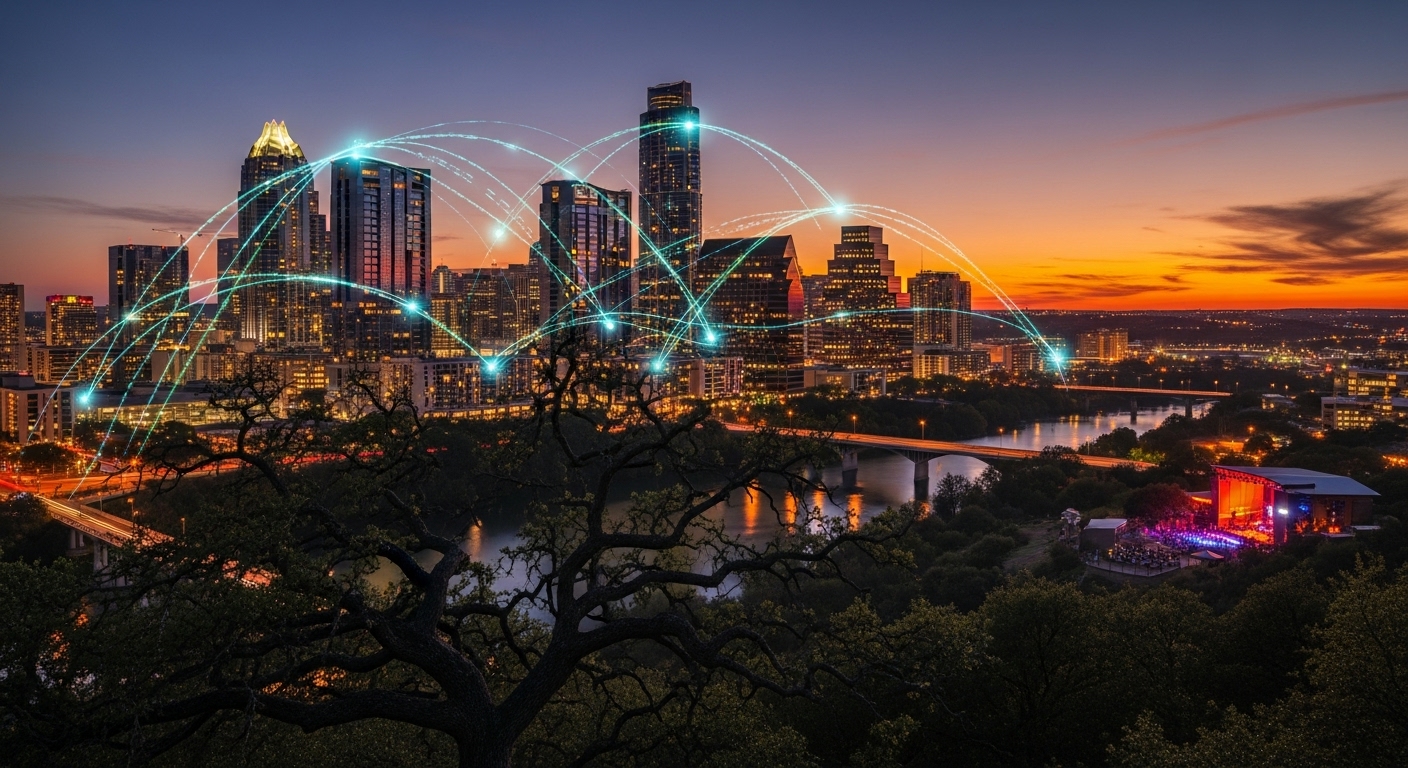
The narrative of the Americas’ tech landscape is no longer a monologue dominated by Silicon Valley. A grand decentralization is underway, scattering talent, capital, and innovation across the continent to create a vibrant mosaic of specialized hubs. In this new geography of technology, few cities have captured the imagination and investment quite like Austin, Texas. It has evolved from a quirky college town with a legendary music scene into a bona fide global tech powerhouse, often dubbed ‘Silicon Hills.’ But to label it a mere alternative to California’s tech behemoth is to miss the point. Austin is forging its own distinct identity, built on a unique confluence of factors—a relentless influx of talent, a diverse and resilient industrial base, and a cultural fabric that both attracts and adapts to the technological boom. This article explores the intricate formula behind this Sun Belt city’s ascent and examines the blueprint it offers for other emerging tech centers across the Americas.
The gravitational pull of talent and capital
The foundation of any thriving tech ecosystem rests on two pillars: human talent and financial investment. In the last five years, Austin has become a powerful magnet for both. The city’s tech talent workforce saw the highest growth rate of any market in the United States, expanding by nearly 30% between 2018 and 2023. This migration isn’t just a collection of individual relocations; it represents a systemic shift of intellectual capital drawn by opportunity and a high quality of life. Even as the global tech market faced corrections in 2024, Austin’s job market showed remarkable resilience, with analysts viewing a slight dip in employment as a healthy normalization after a period of explosive growth. Projections for the coming years anticipate a swift rebound, cementing its status as a top-tier destination for tech professionals. This influx of talent is mirrored by an equally impressive flow of venture capital. In 2024 alone, funding reached approximately $4.5 billion, a significant increase from the previous year. This capital is not just speculative; it’s targeted, fueling innovation in high-growth sectors and supporting a maturing startup ecosystem. Investors are clearly betting on the city’s long-term viability, favoring larger, more substantial funding rounds for ventures with proven potential.
Beyond the marquee names: a diverse tech ecosystem
While the headlines are often captured by the corporate giants setting up massive campuses, the true strength of Austin’s tech scene lies in its diversity. The city is a fertile ground for a wide array of technology sectors, preventing the kind of monoculture that can make other hubs vulnerable to industry-specific downturns. Artificial Intelligence is a dominant force, with the city ranking as a top 10 market in North America for AI-specialized talent. This expertise is being integrated across various local industries, creating a robust local AI economy. Furthermore, the semiconductor industry has a deep-rooted history here, and it’s experiencing a major resurgence. Bolstered by federal initiatives and the construction of massive new fabrication plants by companies like Samsung, the region is solidifying its role as a critical node in the global chip supply chain. This, in turn, is attracting a cluster of international businesses focused on hardware and manufacturing. Beyond these established strengths, Austin is rapidly becoming a leader in emerging fields like greentech, health tech, and cybersecurity, with a vibrant startup scene continually pushing the boundaries of innovation in these critical areas.
The impact of corporate giants on Silicon Hills
The arrival and expansion of multinational tech corporations like Apple, Oracle, and Tesla have been a transformative force, acting as both a catalyst and a complication for the region. On one hand, their presence has unequivocally legitimized Austin as a top-tier tech destination. They have created tens of thousands of high-paying jobs, injecting billions into the local economy and attracting a vast network of suppliers, partners, and ancillary businesses. This corporate anchor has a powerful multiplier effect, fostering a deep talent pool and creating opportunities for smaller companies and startups to thrive in their orbit. However, this influx is a double-edged sword. The immense gravitational pull of these companies has put significant pressure on the city’s resources. The competition for talent has intensified, and the cost of living, particularly housing, has skyrocketed, creating affordability challenges for many long-term residents and employees in other sectors. The very success brought by these giants has forced the city to confront difficult questions about sustainable growth, equity, and preserving its unique identity in the face of massive corporate influence.
The cultural equation: innovation meets ‘weird’
What truly distinguishes Austin from other tech hubs is its deeply ingrained and fiercely protected cultural identity. The city’s unofficial motto, “Keep Austin Weird,” is more than just a slogan; it’s a philosophy that permeates its social and professional landscapes. This vibrant, creative, and non-conformist atmosphere has been a key ingredient in its success, attracting the type of innovative thinkers and creative problem-solvers who are essential to a thriving tech scene. The world-renowned SXSW festival is the ultimate embodiment of this fusion, having evolved from a music festival into a global stage for technology and interactive media. This intersection of art and tech is visible across the city, with tech companies frequently collaborating with local artists and musicians. However, this cultural dynamism faces its own set of challenges. The rapid influx of a more corporate tech culture has led to concerns about gentrification and the potential erosion of the very authenticity that made the city so attractive in the first place. Striking a balance between embracing the future and preserving its unique spirit is the central challenge for the community in Austin.
Navigating the challenges of hypergrowth
No city can undergo the kind of explosive expansion Austin has experienced without facing significant growing pains. The rapid population increase has placed an immense strain on the city’s infrastructure, most notably its transportation networks. Traffic congestion has become a daily reality, a stark symbol of a city whose growth has outpaced its capacity. In response, local authorities are undertaking massive infrastructure projects, including airport expansions and new public transit systems, but these are long-term solutions to an immediate problem. The most pressing issue for many residents is the housing crisis. The surge in demand, fueled by the influx of high-earning tech professionals, has caused housing prices to soar, displacing some long-term residents and making homeownership a distant dream for many. While there have been recent signs of the market cooling, the fundamental challenge of affordability remains. These issues highlight the critical need for strategic urban planning and policy-making to ensure that the benefits of the tech boom are distributed equitably and that the city can grow sustainably without sacrificing its livability for all its citizens.
Forging the future: what’s next for Austin’s tech scene?
Looking ahead, the trajectory for Austin’s tech scene remains incredibly bright, though its path is evolving. The era of unchecked, breakneck growth is likely stabilizing into a more mature and sustainable phase of development. The key to its future success will lie in its ability to build upon its diverse industrial strengths while proactively addressing its infrastructural and social challenges. Continued investment in sectors like artificial intelligence, life sciences, and sustainable technology will be crucial for maintaining its competitive edge. Furthermore, the powerful role of the University of Texas as a consistent engine of research and a producer of top-tier talent cannot be overstated; strengthening the ties between academia and industry will be vital. The city must also prove that it can manage growth thoughtfully, finding innovative solutions for mobility and housing that don’t compromise its quality of life. The future for Austin will be defined not just by the technology it creates, but by its success in building an equitable, resilient, and enduring community that can support and sustain that innovation for decades to come.
In the evolving map of the Americas’ tech scenes, Austin has firmly established itself as a capital of innovation. Its journey offers a powerful case study in how a city can cultivate a world-class technology ecosystem by leveraging a dynamic blend of factors. It is a story of more than just corporate relocations; it’s about the magnetic pull of a unique culture, the power of a diverse industrial base, and the constant influx of ambitious talent. The city’s success is not without its significant challenges, from strained infrastructure to pressing affordability concerns, which serve as a crucial reminder that rapid growth demands equally rapid and thoughtful solutions. As Silicon Hills continues to mature, its greatest test will be to scale its success without losing the very ‘weirdness’ and vibrancy that made it a beacon for innovators in the first place. By navigating these complexities, Austin is not just participating in the new tech landscape—it is actively writing the rules for what a next-generation American tech hub can be.