In the wake of a global shift in work culture, the conversation around the ideal office is no longer just about location or amenities; it’s about purpose, health, and environmental responsibility. This evolution is particularly pronounced in global innovation hubs, where the competition for talent and the drive for a smaller carbon footprint are reshaping commercial real estate. At the forefront of this movement, a new paradigm is emerging, one that places sustainability at the core of workplace design and strategy. This isn’t a fleeting trend but a fundamental re-evaluation of how physical environments can support both human well-being and planetary health, creating spaces that are not only productive but also regenerative. The focus has expanded beyond mere energy efficiency to encompass a holistic view of sustainability, including air quality, natural light, non-toxic materials, and a deep connection to nature, directly influencing employee satisfaction and a company’s bottom line.
The new mandate for green buildings
The demand for sustainable workspaces is no longer a niche preference but a growing mandate from employees and investors alike. In today’s competitive talent market, a company’s commitment to environmental, social, and governance (ESG) principles is a significant differentiator. Potential hires, especially from younger generations, are actively seeking employers whose values align with their own, and a green-certified office is a tangible demonstration of that commitment. This pressure is complemented by stringent municipal regulations. Cities are enacting ambitious green building codes that mandate higher standards for energy performance, water conservation, and waste reduction for both new constructions and major renovations. For instance, the ongoing development in San Francisco showcases a strong adherence to these green mandates, with a significant portion of its new commercial projects aiming for LEED Platinum or Gold certification. This dual pressure from both the workforce and regulators is compelling developers and companies to invest in sustainable design, not as a cost, but as a crucial long-term strategy for resilience and relevance in a rapidly changing world. The result is a built environment that is healthier for its occupants and less taxing on the planet.
Biophilia and the human-centric workspace
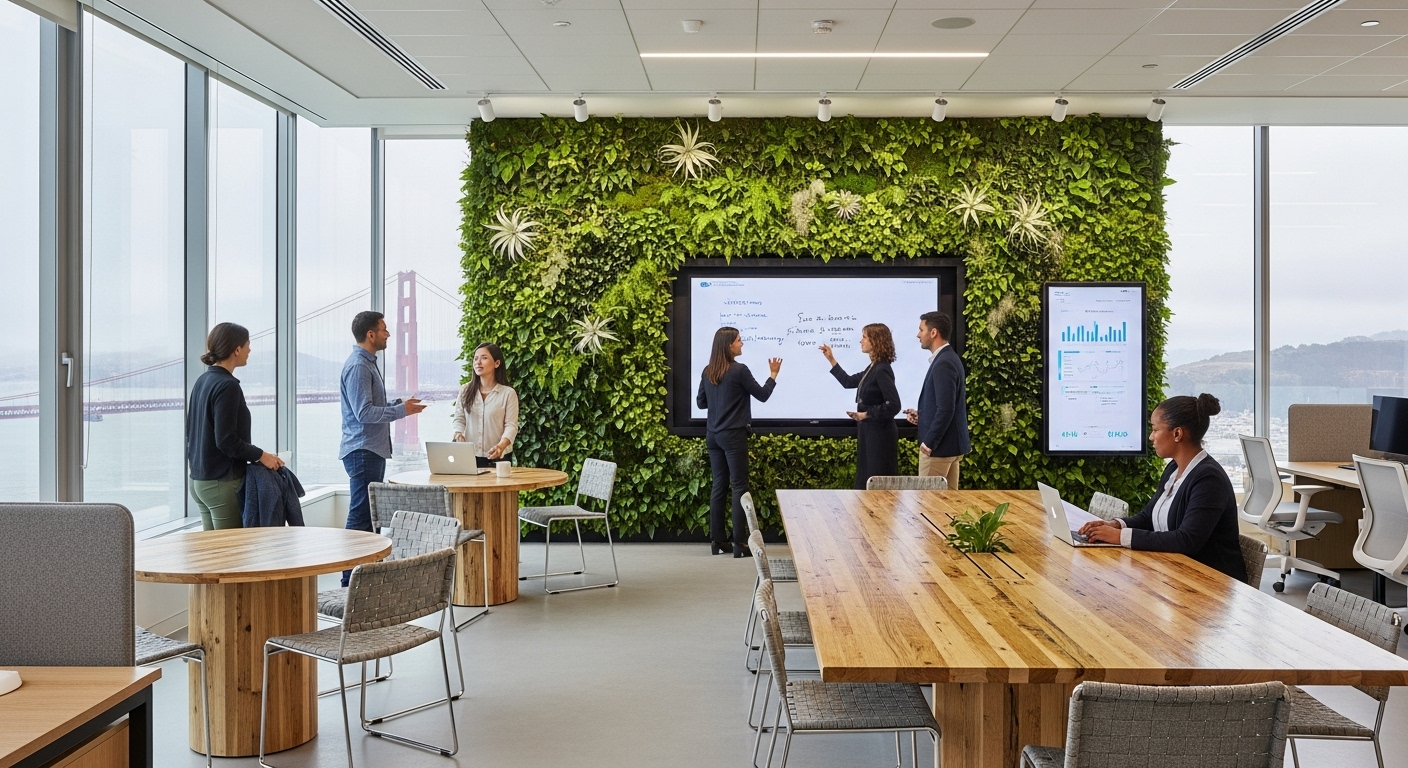
A core principle of modern sustainable design is biophilia—the idea that humans have an innate tendency to seek connections with nature. Integrating biophilic design into the workplace goes far beyond placing a few potted plants on desks. It involves a strategic effort to weave natural elements into the fabric of the office environment. This includes maximizing natural light, providing views of outdoor green spaces, and utilizing natural materials like wood and stone. The benefits are well-documented and profound. Exposure to nature, even in a simulated form, has been shown to reduce stress, improve cognitive function, and enhance creativity and well-being. Companies are now designing spaces with living walls, indoor gardens, and water features, creating calming and restorative atmospheres that combat the fatigue of a typical workday. This human-centric approach recognizes that employee wellness is inextricably linked to productivity and innovation. By creating environments that cater to our inherent need for nature, businesses are fostering healthier, happier, and more engaged workforces, proving that what’s good for people is also good for business.
The circular economy in office design
The traditional linear model of ‘take, make, dispose’ is being decisively replaced by the principles of a circular economy in the context of office design. This forward-thinking approach prioritizes the entire lifecycle of materials, from procurement to end-of-life. Instead of demolition and new construction, there is a growing emphasis on the adaptive reuse of existing buildings, preserving their embodied carbon and historical character while retrofitting them for modern, sustainable performance. When it comes to furnishing these spaces, procurement policies are shifting towards products made from recycled, renewable, or responsibly sourced materials. This includes everything from carpets made from reclaimed fishing nets to desks made from salvaged wood. Furthermore, furniture-as-a-service models are gaining traction, allowing companies to lease, rather than own, their office furniture. This not only reduces upfront capital expenditure but also ensures that at the end of its use cycle, the furniture is returned to the manufacturer to be refurbished, reused, or recycled, effectively closing the loop and minimizing landfill waste. This circular mindset is reshaping the supply chain and fostering a new wave of innovation in sustainable materials and business models.
Smart technology as a sustainability driver
Technology is a critical enabler of the sustainable workspace, offering powerful tools to optimize building performance and reduce environmental impact. Smart building technology, powered by the Internet of Things (IoT), allows for real-time monitoring and control of energy and water consumption. Sensors can detect occupancy levels and adjust lighting and HVAC systems accordingly, eliminating energy waste in unused areas. These intelligent systems can also monitor indoor air quality, temperature, and humidity, automatically making adjustments to ensure a healthy and comfortable environment for occupants. This data-driven approach not only leads to significant operational cost savings but also provides valuable insights that can inform future design decisions. For example, analyzing usage patterns can help companies right-size their real estate portfolio in a hybrid work era, ensuring that the space they have is used efficiently. As seen in many tech-forward offices in San Francisco, the integration of smart technology is fundamental to achieving ambitious sustainability goals, proving that a high-performance building is also a high-tech one.
Flexibility and the future of sustainable offices
The rise of hybrid work has fundamentally altered the purpose of the physical office. It is no longer just a place to work but a destination for collaboration, innovation, and connection. This shift is driving a demand for smaller, higher-quality office spaces that are both sustainable and highly flexible. Companies are trading sprawling, underutilized campuses for strategically located ‘trophy’ spaces that offer a premium experience worth the commute. These new offices are designed as dynamic, choice-filled environments with a variety of work settings, from quiet focus pods to large collaborative hubs and social lounges. This flexibility allows employees to choose the environment that best suits their task and work style, boosting engagement and productivity. From a sustainability perspective, this model is inherently more efficient. It reduces the overall real estate footprint, and the focus on quality often goes hand-in-hand with high-performance, green-certified buildings. The emphasis is on creating a magnetic workplace culture, and a healthy, sustainable, and inspiring physical environment is a cornerstone of that strategy.
Measuring the ROI of green workspaces
While the environmental and social benefits of sustainable workspaces are clear, the financial case is equally compelling. The return on investment (ROI) extends far beyond simple energy savings. Green building certifications like LEED and WELL are increasingly correlated with higher asset values, command premium rental rates, and experience lower vacancy rates. For tenants, the benefits are measured in human capital. Studies have consistently shown that healthy buildings lead to improved employee health, reduced absenteeism, and enhanced cognitive performance. The cost of a few sick days or a dip in productivity can far outweigh the initial investment in a better ventilation system or improved lighting. Furthermore, a strong commitment to sustainability enhances a company’s brand reputation, attracting not only top talent but also customers and investors who prioritize ethical and responsible business practices. This comprehensive ROI, encompassing operational savings, talent attraction and retention, and brand equity, makes the investment in sustainable workspaces one of the most strategic decisions a modern organization can make.
The path forward for urban workspaces
The journey towards a sustainable future of work is a continuous evolution, driven by innovation, regulation, and a collective shift in consciousness. The workspaces of tomorrow will be more than just buildings; they will be dynamic ecosystems that support the holistic well-being of their occupants and the health of the planet. We can expect to see an even greater integration of nature, with buildings that function like living organisms, purifying their own air and water. The principles of the circular economy will become standard practice, with every material chosen for its ability to be reused or regenerated. Smart technology will become more sophisticated, creating personalized environments that adapt to the needs of individual users in real time. Ultimately, the most successful workspaces will be those that foster a strong sense of community and purpose, connecting people to each other and to a shared mission of creating a more sustainable and equitable world. This vision for the future of work, being actively prototyped in cities like San Francisco, is not a distant dream but an emerging reality, setting a new global standard for what it means to work well.
In conclusion, the movement towards sustainable workspaces represents a critical convergence of economic, social, and environmental imperatives. It is a response to the urgent challenges of climate change and a reflection of our growing understanding of the profound link between our physical environment and our overall well-being. By embracing green building practices, biophilic design, circular economy principles, and smart technology, companies are not just reducing their environmental footprint; they are creating healthier, more inspiring, and more resilient organizations. This green shift is more than a trend; it is a fundamental redefinition of the workplace, one that places human and planetary health at the heart of its design. As we move forward, the most innovative and successful companies will be those that recognize that their greatest asset is not their real estate, but the people and the planet they serve. The future of work is not just flexible or remote; it is, and must be, sustainable.