In the evolving narrative of the future of work, ‘sustainability’ has graduated from a peripheral buzzword to a central pillar of corporate strategy. For years, the concept of a ‘green office’ was often viewed as a costly aesthetic choice, a luxury reserved for tech giants and boutique firms. However, recent trends and a wealth of data reveal a profound shift in this understanding. Today, creating a sustainable workspace is no longer just an environmental statement; it is a critical business decision with a clear and measurable return on investment (ROI). This transformation is driven by the convergence of economic pressures, a new generation of talent demanding corporate responsibility, and a deeper understanding of how our physical environment directly impacts productivity and well-being. This article moves beyond the abstract, exploring the tangible, data-backed benefits of investing in sustainable workspaces—from significant operational cost savings and enhanced employee performance to a powerful advantage in the competitive war for talent.
Redefining the bottom line: cost savings and energy efficiency
The most direct and quantifiable return on investment from sustainable workspaces comes from reduced operational costs. At the forefront of this is a strategic focus on energy efficiency. Modern green buildings are engineered to minimize energy consumption through a combination of intelligent design and advanced technology. This includes the installation of LED lighting, which uses up to 75% less energy and lasts 25 times longer than incandescent lighting, and high-efficiency HVAC systems that regulate temperature with minimal waste. The integration of smart building technology, such as IoT sensors that automatically adjust lighting and climate control based on occupancy and time of day, further amplifies these savings. Beyond electricity, water conservation measures like low-flow fixtures and rainwater harvesting systems can drastically cut utility bills. Furthermore, the push for renewable energy is becoming a cornerstone of sustainable design. On-site solar panel installations, for example, not only reduce reliance on the grid but can also generate surplus energy, creating an additional revenue stream in some regions. These initiatives collectively lead to a significant reduction in overheads, freeing up capital that can be reinvested into core business activities, innovation, and growth, proving that what’s good for the planet is also exceptionally good for the balance sheet.
The talent magnet: attracting and retaining top performers
In today’s competitive job market, the values a company upholds are as important as the salary it offers, particularly for Millennial and Gen Z workers who prioritize purpose-driven employment. A demonstrable commitment to sustainability has become a powerful differentiator in attracting and retaining this new wave of talent. A sustainable workspace is a physical manifestation of a company’s values and its commitment to corporate social responsibility. It signals to potential hires that the organization is forward-thinking, responsible, and invested in the well-being of its employees and the wider community. This creates a strong employer brand that resonates deeply with conscious professionals. Moreover, employees are increasingly aware of the health implications of their work environment. A workplace that prioritizes clean air, non-toxic materials, and natural light is inherently more attractive than a traditional, sterile office. By investing in a healthy and sustainable environment, companies are not just reducing their carbon footprint; they are investing in their people. This leads to higher employee engagement, increased loyalty, and lower turnover rates, which translates into significant savings on recruitment and training costs. Ultimately, a green office is a key component of a compelling employee value proposition in the modern economy.
Productivity by design: the impact of biophilic elements
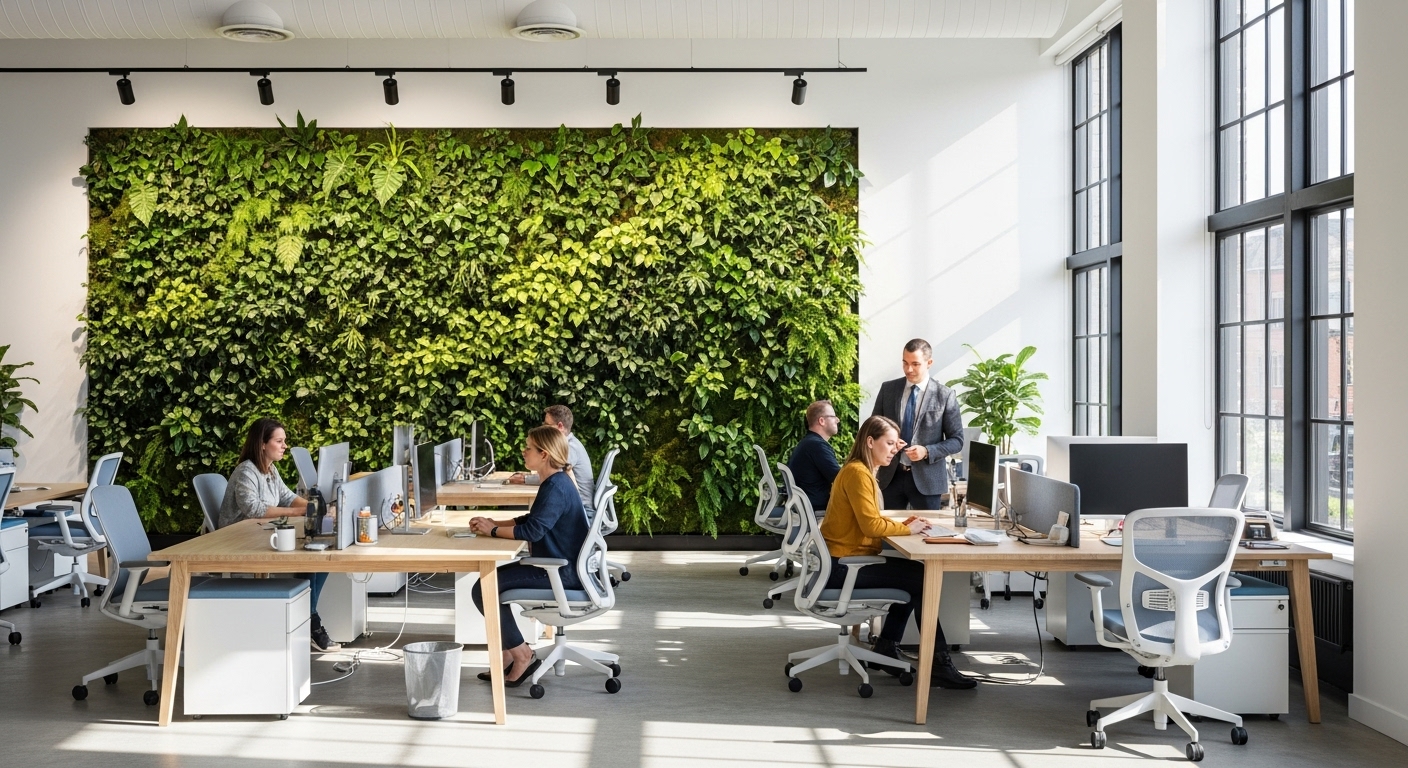
One of the most compelling arguments for sustainable workspaces lies in their proven ability to enhance employee productivity and cognitive function. This is largely achieved through the principles of biophilic design, an approach that seeks to connect building occupants more closely to nature. Incorporating natural elements like living green walls, indoor plants, water features, and maximizing natural light has profound psychological and physiological benefits. Studies have consistently shown that environments rich in natural elements can reduce stress, improve creativity, and sharpen focus. For instance, access to natural light throughout the day helps regulate circadian rhythms, leading to better sleep and higher energy levels during work hours. Poor air quality, common in conventional office buildings, is known to cause fatigue, headaches, and a decline in cognitive performance. Sustainable buildings, in contrast, prioritize superior ventilation and use low-VOC (volatile organic compound) materials, resulting in cleaner air and healthier, more alert employees.
A study by the Harvard T.H. Chan School of Public Health found that employees in green-certified buildings had 26% higher cognitive function scores and 30% fewer sick-building symptoms.
This direct link between the physical environment and mental acuity means that an investment in biophilic design is an investment in the core output of the business: the performance and innovation of its people.
Building a circular workplace: from waste reduction to resourcefulness
The transition to a sustainable workspace involves a fundamental rethinking of resource management, moving from a linear ‘take-make-dispose’ model to a circular one that emphasizes reduction, reuse, and recycling. This circular approach begins with conscious procurement. It involves selecting furniture, equipment, and materials that are made from recycled content, are sourced sustainably, and are designed for durability and eventual disassembly. This not in itself reduces the environmental impact but can also lead to long-term cost savings by prioritizing quality and longevity over disposability. A robust waste management strategy is another critical component. This goes beyond placing a few recycling bins in the breakroom; it involves comprehensive programs for composting organic waste, recycling electronics, and minimizing single-use plastics. By conducting waste audits, companies can identify major sources of refuse and implement targeted strategies to reduce them. Engaging employees in these initiatives, such as through ‘zero-waste’ challenges, fosters a culture of mindfulness and shared responsibility. Adopting a circular mindset transforms the workplace from a consumer of resources into a more self-sustaining ecosystem, significantly diminishing its environmental footprint and often uncovering new efficiencies in the process.
Health and wellness as a corporate asset
A sustainable workspace inherently promotes the health and wellness of its occupants, which has become a top priority for forward-thinking organizations. The focus on superior indoor environmental quality (IEQ) is a key factor. This encompasses air quality, thermal comfort, lighting, and acoustics. As mentioned, green buildings utilize advanced air filtration systems and low-VOC materials to reduce pollutants, allergens, and other irritants that can lead to respiratory issues and other health problems. The emphasis on maximizing natural light over harsh fluorescent lighting not only boosts mood and productivity but also reduces eye strain and headaches. Furthermore, the principles of sustainable design often extend to encouraging healthy behaviors. For example, creating inviting staircases can promote physical activity, while incorporating green spaces or rooftop gardens provides areas for relaxation and mental decompression. By creating an environment that actively supports physical and mental well-being, companies can see a marked reduction in absenteeism and presenteeism (working while sick). A healthy workforce is a resilient and productive workforce, making the investment in a wellness-centric, sustainable environment a direct investment in the company’s most valuable asset—its people.
Implementing the shift: a practical roadmap to a greener workspace
Transitioning to a sustainable workspace doesn’t have to be an overwhelming, all-or-nothing endeavor. It can be a phased process tailored to an organization’s specific budget and goals. The first step is to conduct a comprehensive audit of the current workspace, assessing energy consumption, water usage, waste streams, and indoor air quality. This data provides a baseline and helps identify the areas with the greatest potential for improvement. For existing buildings, retrofitting can yield significant results. This could involve upgrading to energy-efficient lighting and appliances, installing smart thermostats, or improving insulation. Pursuing green building certifications like LEED (Leadership in Energy and Environmental Design) or BREEAM (Building Research Establishment Environmental Assessment Method) provides a structured framework for implementing best practices and offers a credible, third-party validation of a company’s sustainability efforts. Crucially, employee engagement is key to the success of any sustainability initiative. Forming a ‘green team’ of passionate employees, providing education on new recycling programs, and encouraging sustainable commuting options can help embed sustainability into the company culture. By starting with measurable goals and scaling up efforts over time, any organization can begin to reap the substantial rewards of a greener, healthier, and more efficient workspace.
In conclusion, the movement towards sustainable workspaces represents a landmark evolution in our understanding of the work environment. It is a strategic convergence of economic wisdom, ecological responsibility, and human-centric design. The evidence is clear: investing in sustainability is not a cost center, but a powerful value driver. From the hard numbers of reduced utility bills and lower staff turnover to the equally impactful, if less tangible, benefits of enhanced productivity, creativity, and brand reputation, the ROI is multifaceted and profound. For leaders looking to build resilient, competitive, and forward-thinking organizations, the question is no longer *if* they should invest in a sustainable workspace, but *how quickly* they can make the transition. By embracing green principles, businesses are not just building better offices; they are building a more profitable, more productive, and more purposeful future of work for everyone.