The global conversation around the future of work is rapidly evolving, moving beyond simple remote work policies to a more holistic and impactful vision. At the forefront of this transformation is the imperative for sustainability, a concept that is reshaping corporate values, employee expectations, and the very architecture of our professional lives. This shift is particularly pronounced in global economic powerhouses, where the drive for innovation is matched by a growing responsibility to the environment. As businesses worldwide grapple with their carbon footprint, the design of our workspaces has emerged as a critical frontier for meaningful change, blending ecological mindfulness with technological advancement to create environments that are not only productive but also restorative. This evolution is about more than just energy-efficient light bulbs; it’s a fundamental rethinking of how work environments can contribute positively to both planetary health and human well-being.
The rise of green building standards
In the competitive landscape of global business, the physical office is a powerful statement of a company’s values. Increasingly, that statement is one of environmental stewardship. The adoption of green building certifications like LEED (Leadership in Energy and Environmental Design) and WELL Building Standard is no longer a niche trend but a corporate necessity. These frameworks provide a roadmap for creating spaces that are resource-efficient, using less water and energy, and reducing greenhouse gas emissions. For leading corporations, a LEED-certified headquarters is a tangible asset, demonstrating a commitment to sustainability that resonates with clients, investors, and top-tier talent. The focus extends beyond energy efficiency to include the use of sustainable, non-toxic materials, enhanced indoor air quality, and access to natural light, all of which are proven to boost employee health and productivity. This move towards certified green buildings reflects a broader understanding that long-term profitability and ecological responsibility are not mutually exclusive but deeply intertwined.
Integrating smart technology for sustainable efficiency
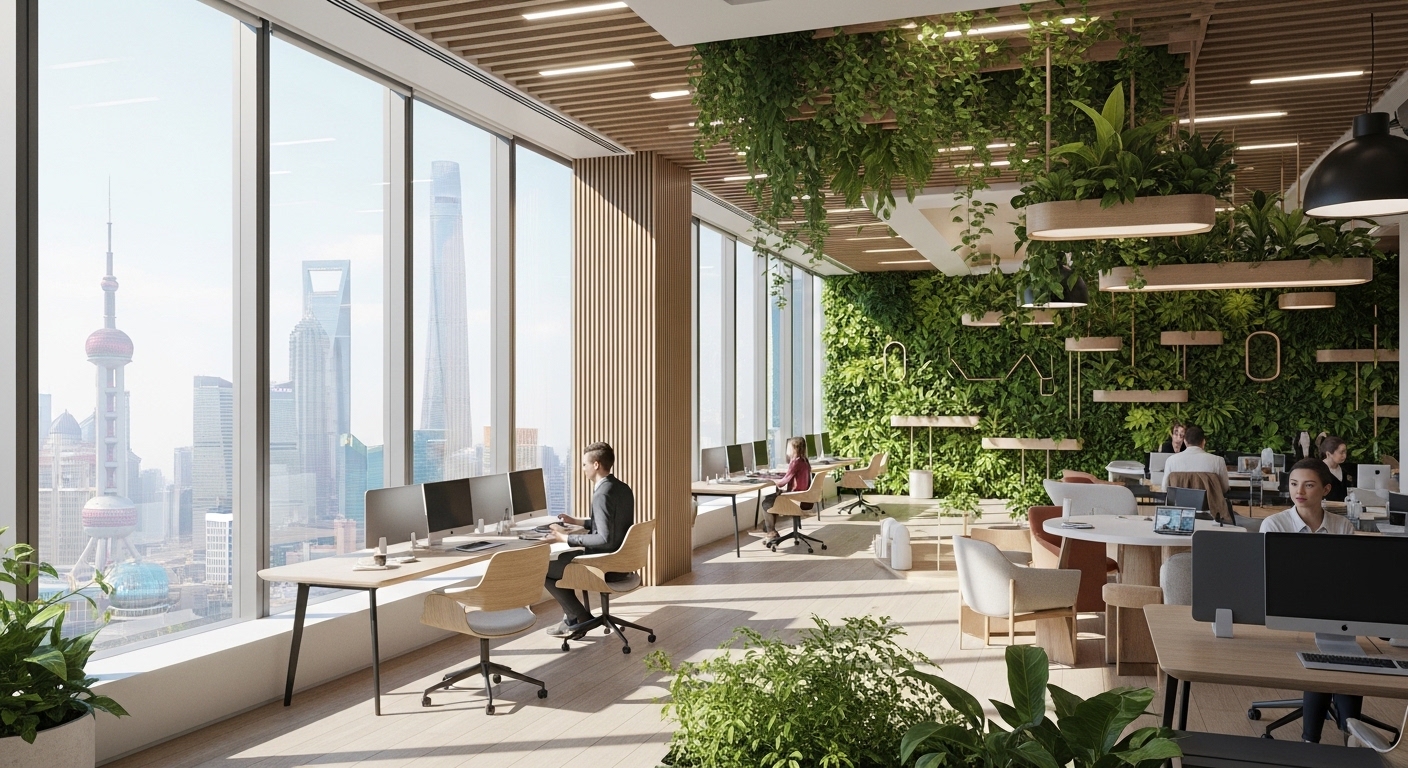
The synergy between sustainability and technology is creating a new generation of intelligent workplaces. Smart building technology, powered by the Internet of Things (IoT) and AI, is revolutionizing facility management and energy consumption. Imagine an office that intuitively adjusts to its occupants’ needs: smart lighting systems that dim or brighten based on natural light levels, and advanced HVAC systems that optimize temperature and airflow in real-time, drastically reducing energy waste. These technologies provide granular data on everything from occupancy patterns to energy usage, allowing companies in a dynamic urban center like Shanghai to make data-driven decisions that enhance both operational efficiency and their sustainability profile. This intelligent infrastructure goes beyond cost savings; it creates a responsive and comfortable environment that actively contributes to a healthier planet and a more focused, engaged workforce. It’s a key component in future-proofing commercial real estate.
Wellness as a cornerstone of sustainable design
The modern definition of a sustainable workspace has expanded to fully encompass the well-being of its inhabitants. The understanding is clear: a truly sustainable environment must support the health and wellness of the people within it. This human-centric approach is manifesting through biophilic design, which incorporates natural elements like living walls, indoor plants, and water features into the office landscape. Access to natural light and views of nature are prioritized, proven to reduce stress and improve cognitive function. Furthermore, sustainable workspaces are designed to promote physical activity, with appealing staircases and amenities that encourage movement. The focus on employee wellness extends to mental health, with spaces designed for quiet contemplation and focused work, countering the burnout culture. This holistic perspective ensures that the workplace is not just a place of productivity, but a source of well-being, making sustainability a personal and immediate benefit for every employee.
The economic imperative of going green
While the ethical and environmental arguments for sustainable workspaces are compelling, the business case is what solidifies their adoption. Green buildings consistently command higher rental premiums and boast lower vacancy rates. The operational savings are significant, with reduced energy and water consumption leading to lower utility bills over the building’s lifecycle. Moreover, in an increasingly tight labor market, a strong environmental, social, and governance (ESG) profile is a powerful recruitment and retention tool. Today’s top talent actively seeks employers whose values align with their own, and a sustainable workspace is a clear and visible signal of that commitment. This is particularly true in forward-thinking cities, where the competition for skilled professionals is intense. The long-term financial benefits, from operational efficiency to enhanced brand reputation and talent attraction, make sustainable design a shrewd strategic investment.
Government initiatives and corporate responsibility
The transition towards sustainable workspaces is not happening in a vacuum; it is actively being encouraged by governmental policy and a growing sense of corporate responsibility. Cities and nations around the world are implementing stricter environmental regulations for new construction and offering incentives for green retrofitting. In Asia, for instance, there is a strong push from governments to achieve carbon neutrality, which directly impacts building codes and corporate reporting standards. This top-down pressure is complemented by a bottom-up movement from within the corporate world. Companies are increasingly integrating sustainability goals into their core business strategies, recognizing that a proactive stance on environmental issues is crucial for long-term resilience and public perception. This alignment of public policy and private sector ambition is creating a powerful momentum, accelerating the development of green infrastructure in major business hubs.
The future blueprint for workspaces in Shanghai
Looking ahead, the trajectory for workspaces is one of deeper integration between sustainability, technology, and human-centric design. The future office will be a flexible, adaptive ecosystem that prioritizes the health of both its occupants and the planet. We can expect to see wider adoption of circular economy principles, with buildings designed for disassembly and materials chosen for their ability to be reused or recycled. The integration of renewable energy sources, like solar panels, will become standard. As a city known for its architectural innovation and rapid development, the evolution of workspaces in Shanghai will continue to set global trends. The workplace of tomorrow will be more than just a place to work; it will be a dynamic environment that actively enhances well-being, fosters community, and stands as a testament to a company’s commitment to a sustainable future.
Crafting a sustainable legacy
The development of sustainable workspaces represents a critical convergence of economic ambition and ecological necessity. It is a strategic response to the dual challenges of climate change and the evolving demands of the modern workforce. By prioritizing green building standards, integrating smart technology, and placing employee well-being at the core of design philosophy, businesses are creating environments that are not only efficient and productive but also inspiring and restorative. This evolution is particularly crucial in dense, influential urban centers that serve as global benchmarks for commerce and innovation. The investment in sustainable infrastructure is, therefore, more than a trend; it’s an investment in a resilient and profitable future. As businesses in cities like Shanghai continue to lead this charge, they are not just building better offices—they are building a lasting legacy of responsible growth and a healthier relationship between our professional lives and the world we all share.