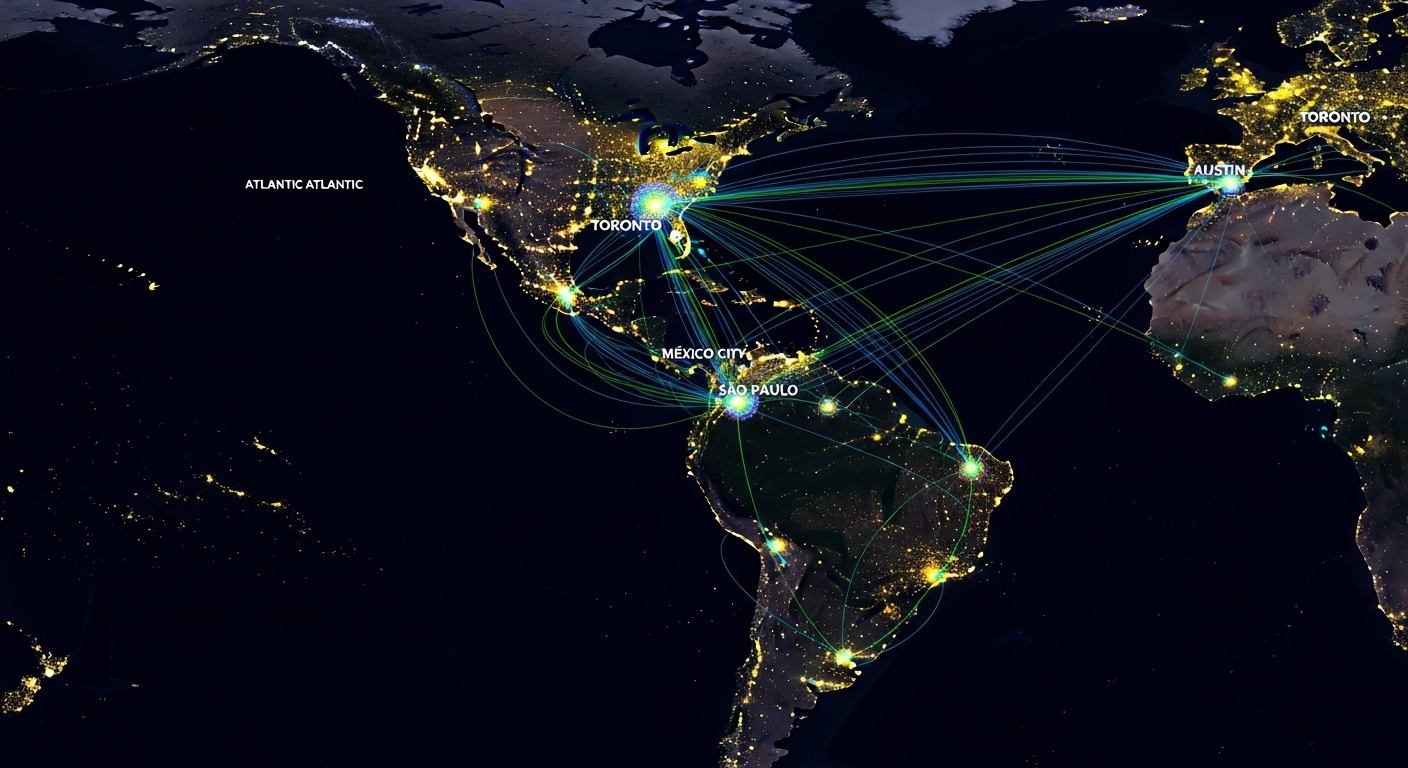
The technology landscape of the Americas is undergoing a profound transformation. While Silicon Valley and New York City remain epicenters of innovation, a continental shift is redistributing influence, investment, and talent. Across North and South America, a new network of specialized, high-growth tech hubs is emerging, creating a more decentralized and dynamic ecosystem. This evolution is driven by a confluence of factors: a recalibration in venture capital strategy, the explosive growth of specific sectors like fintech and AI, and a deliberate increase in cross-border collaboration. For business leaders and investors, understanding this new map is no longer optional—it’s critical for identifying untapped opportunities and navigating the future of technology in the hemisphere. This analysis will explore the key cities leading this charge, from Canada’s AI corridors to the fintech powerhouses of Latin America, providing a strategic overview of the forces reshaping the Americas’ tech scenes in 2024 and beyond.
The established titans: North America’s evolving tech strongholds
The traditional power centers of North American tech, primarily the San Francisco Bay Area and New York City, continue to command significant influence and a large share of venture capital. However, their dominance is no longer absolute as other cities mature into specialized hubs. Austin, Texas, often called ‘Silicon Hills,’ has solidified its status as a major destination for tech companies and talent, fostering a vibrant ecosystem particularly strong in software development and cybersecurity. Its business-friendly climate and growing talent pool continue to attract corporate relocations and startup activity. Similarly, Seattle remains a global leader in cloud computing and AI, anchored by the immense presence of Amazon and Microsoft, which fuels a secondary ecosystem of startups and research initiatives. In Canada, Toronto has unequivocally emerged as a top-tier North American tech hub, distinguished by its high concentration of AI talent and significant job growth. The city’s diverse talent pool and supportive government programs have made it a magnet for global companies looking to establish a North American presence. Meanwhile, Montreal has carved out a world-class reputation specifically in AI research, supported by institutions like the Mila – Quebec AI Institute. This specialization demonstrates the broader trend within North America: established hubs are not fading, but rather evolving, deepening their expertise in specific verticals and fostering a more diverse, resilient, and geographically distributed tech landscape.
The southern boom: Latin America’s fintech and e-commerce revolution
Latin America is in the midst of a tech renaissance, moving from the periphery to a central role in the global digital economy. This transformation is most evident in the fintech sector, which is fundamentally reshaping financial services for millions. São Paulo, Brazil, stands as the continent’s undisputed tech capital. It is a sprawling metropolis of innovation and home to a staggering number of fintech startups that are revolutionizing everything from digital payments to credit. The city’s dynamic environment attracts the lion’s share of international investment in the region, fueling a cycle of growth and maturation. Not far behind, Mexico City has cemented its position as a critical hub, boasting a vibrant ecosystem of nearly 1,000 fintech ventures. Its strategic proximity to the U.S. market and a large, digitally-savvy population make it a hotbed for software development and financial innovation. The impact is profound; in 2023, digital credit fintechs in Brazil saw the volume of credit granted increase by 52%. Beyond these two giants, other cities are making significant strides. Bogotá, Colombia, is gaining recognition for its focus on social innovation and digital inclusion, while Santiago, Chile, is pioneering advancements in clean energy technology. This regional boom is not just about creating unicorns; it’s about leveraging technology to solve endemic problems, foster financial inclusion, and build sustainable economic growth from the ground up.
The new capital landscape: navigating post-boom venture investment
The flow of venture capital across the Americas has entered a new phase of strategic caution. The ‘growth-at-all-costs’ mentality of previous years has been replaced by a more discerning focus on sustainable growth and clear paths to profitability. In the United States, while VC funding saw a dip in 2023 from previous highs, it remained above the ten-year median, indicating a market correction rather than a collapse. For 2024, the trend points toward investors prioritizing startups with proven business models and resilient revenue streams. Artificial intelligence remains a sector of intense interest, consistently attracting significant capital. This cautious optimism extends to Latin America, where VC funding is rebounding to pre-pandemic levels after a brief slowdown. Brazil and Mexico continue to attract the majority of investment, with fintech being the primary recipient. However, sectors like climate tech, proptech, and enterprise software are gaining significant traction. A key trend across the hemisphere is the increasing dominance of later-stage funding rounds. This indicates a preference among investors for more mature, de-risked companies over early-stage ventures, a sign of a maturing ecosystem. For startups, this new climate demands a greater emphasis on solid fundamentals and a well-defined strategy for long-term financial health to attract the more prudent capital now available.
Canada’s northern advantage: leading the global AI charge
Canada has methodically and successfully positioned itself as a global superpower in the field of artificial intelligence. This leadership is not accidental but the result of a concerted, long-term strategy involving government support, academic excellence, and a thriving startup culture. The cities of Toronto and Montreal are the twin pillars of this success. Toronto’s Vector Institute and Montreal’s Mila have become world-renowned centers for AI research, attracting top-tier global talent and fostering a deep pool of highly skilled professionals. These institutions act as anchors for the entire ecosystem, spinning out cutting-edge research that fuels a vibrant community of AI-driven startups. The Canadian government has played a crucial role, providing proactive support through strategic funding and initiatives designed to nurture the AI sector. This stable and supportive environment has not gone unnoticed by global tech giants, many of which have established major research labs in the country to tap into its rich talent base. The result is a self-reinforcing cycle of innovation where academic research, startup dynamism, and corporate investment feed off one another. Canada’s AI prowess demonstrates how strategic national investment in a specific technological domain can create a powerful and sustainable competitive advantage on the global stage, making it a critical hub in the Americas’ tech landscape.
Building bridges: the rise of cross-border tech collaboration
A defining feature of the modern tech landscape in the Americas is the intentional and growing collaboration between ecosystems in the northern and southern hemispheres. This move towards integration is fostering a more resilient and innovative continental network. High-level initiatives are providing the framework for this cooperation. The Americas Partnership for Economic Prosperity, for instance, is bringing together nations to work on shared goals in the digital economy, clean energy, and cybersecurity, with a specific focus on directing semiconductor investments towards Latin America. This top-down support is complemented by grassroots, organization-level partnerships. Canadian institutions are actively forging ties with their Latin American counterparts to accelerate technology commercialization. For example, the Chamber of Commerce Brazil-Canada has partnered with Mitacs to help Brazilian companies expand into the Canadian market and collaborate on R&D with local universities. The City of Toronto has also signed direct agreements with Mexico City and organizations like LatAm Startups to create smoother pathways for Latin American tech companies to establish a foothold in Canada. These partnerships are more than just symbolic; they are creating tangible channels for knowledge transfer, talent mobility, and market access, breaking down historical barriers and fostering a truly hemispheric tech ecosystem where innovation can flow more freely across borders.
Strategic implications for global business leaders
The multipolar nature of the Americas’ tech scene presents both complex challenges and significant opportunities for global business leaders. A monolithic, Silicon Valley-centric strategy is no longer sufficient. Instead, a nuanced, regional approach is required to effectively tap into the diverse strengths of the hemisphere’s various hubs. For talent acquisition, this means looking beyond traditional locations and recognizing the deep pools of specialized expertise available elsewhere. A company in need of top-tier AI researchers should have Montreal and Toronto at the top of its list, while a firm looking to innovate in financial services must have a strong presence or partnership in São Paulo or Mexico City. For market expansion, the burgeoning middle class and increasing digital adoption in Latin America represent one of the largest growth opportunities of the next decade. However, entering these markets requires a deep understanding of local consumer behavior, regulatory environments, and payment infrastructures. Furthermore, investment strategies must adapt to the new venture capital climate, prioritizing companies with strong fundamentals and a clear understanding of their target markets. The rise of cross-border partnerships also offers a new avenue for growth, allowing companies to leverage complementary strengths—for example, combining Canadian AI technology with Brazilian market access—to create powerful synergies and accelerate innovation across the Americas.
In conclusion, the technological landscape of the Americas is more vibrant, diverse, and interconnected than ever before. The narrative is no longer solely dictated by a few established hubs in the United States. Instead, we are witnessing the rise of a truly hemispheric network, with powerful centers of excellence emerging from Toronto to São Paulo. The fintech revolution in Latin America, Canada’s dominance in AI, and a more strategic approach to venture capital are defining the current era. The increasing collaboration across borders is weaving these disparate hubs into a more cohesive and powerful whole. For businesses, investors, and innovators, the message is clear: the map of opportunity has been redrawn. Success now depends on the ability to see the Americas not as a collection of separate markets, but as an integrated, dynamic, and collaborative ecosystem, rich with specialized talent and untapped potential. The future of tech in the hemisphere will be built on the bridges connecting these thriving scenes.