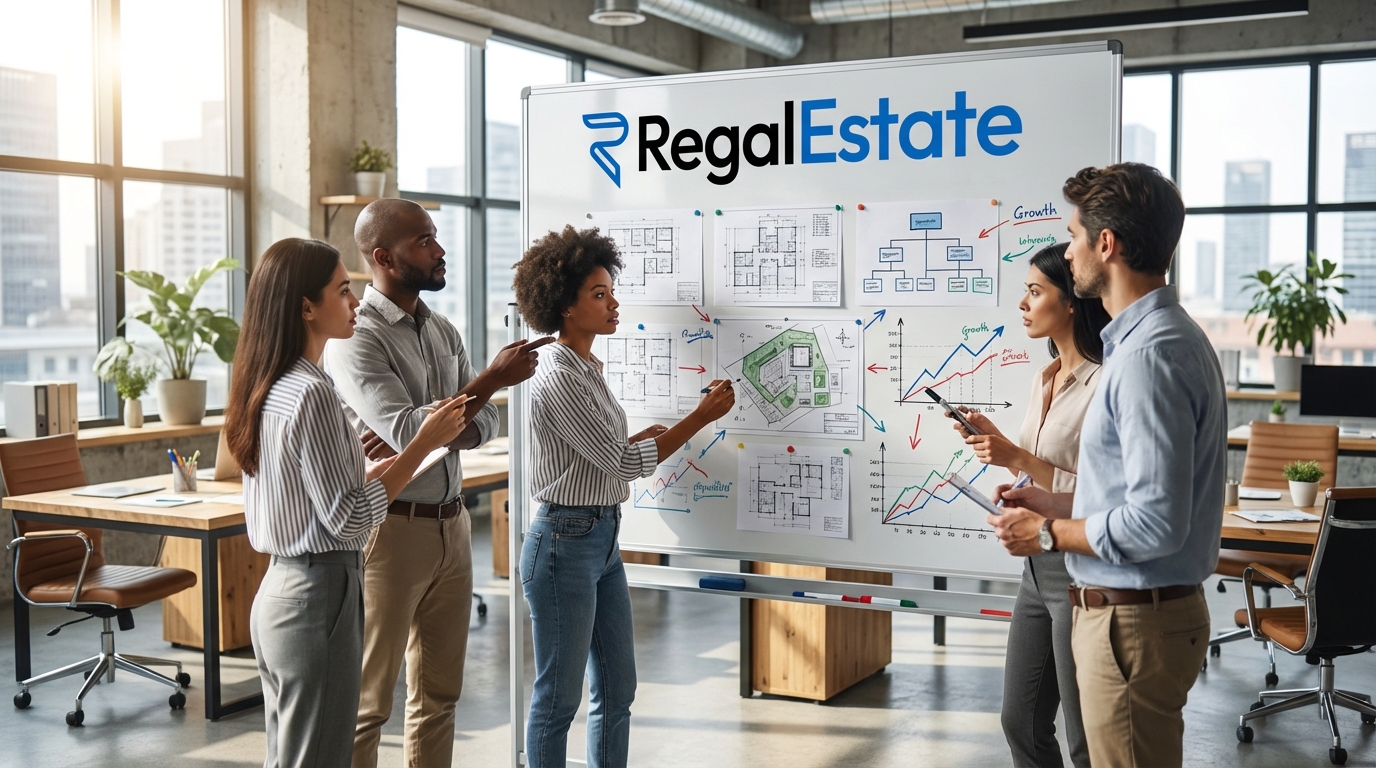
Rapid growth is the dream, but for many businesses, it quickly morphs into a chaotic reality. The frantic pace of hiring to meet demand often leads to diluted culture, communication breakdowns, and fractured workflows. The traditional approach of simply adding more people—increasing the headcount—is a flawed metric for success. True scalability isn’t about getting bigger; it’s about getting better, stronger, and more efficient as you grow. In today’s competitive landscape, leaders are shifting their focus from raw numbers to strategic capacity-building. Recent trends show a move towards agile team structures, data-driven talent acquisition, and the integration of technology to create a resilient and high-performing organization. This framework moves beyond the simplistic goal of hiring more staff and focuses on building a sustainable architecture for your team. We will explore how to redefine growth, establish a scalable culture, design agile operational units, and leverage technology to build a team that is truly built to last, ensuring that your expansion is a strategic advantage, not an operational bottleneck.
Redefining growth: moving from headcount to capability
The most fundamental shift in modern team scaling is the move away from vanity metrics like headcount and toward a more meaningful measure: capability. A large team is not inherently a powerful one. Strategic scaling focuses on what the team can do, not just how many people are on the payroll. This means conducting a deep analysis of your current operational strengths and, more importantly, your weaknesses. Before a single job description is written, leaders must map out the skills, competencies, and expertise required to achieve the next set of business objectives. This involves looking beyond immediate needs and anticipating the challenges and opportunities that will arise in the next 12 to 24 months. By identifying these future-state requirements, you can build a targeted talent acquisition strategy that prioritizes roles that will have a multiplier effect on the rest of the organization. For instance, instead of hiring five junior developers to tackle a backlog, a more capable-focused approach might prioritize hiring one senior architect who can redesign a system to eliminate that backlog entirely. This mindset also champions upskilling and cross-training existing employees, recognizing that the most valuable assets are often already within the company. Investing in their growth builds loyalty and develops a more versatile, resilient workforce. Ultimately, this approach transforms the conversation from ‘Who can we hire?’ to ‘What capabilities do we need to build?’ This ensures that every new addition to the team is a strategic investment in the company’s long-term capacity for innovation and success.
The foundation: documenting culture and communication protocols
As a team expands, the unwritten rules and intuitive understanding that defined the early-stage culture begin to break down. What was once easily absorbed through osmosis in a small office now becomes inconsistent and fragmented across new hires, teams, and even departments. To scale effectively, culture cannot be an afterthought; it must be the foundational blueprint. This requires a conscious and deliberate effort to codify your company’s core values, mission, and operational ethos. Documenting your culture means creating a central source of truth that articulates what you stand for, how you treat each other, and what principles guide your decision-making. This document becomes a critical tool in the hiring process, enabling you to assess candidates for cultural alignment, not just technical skill. More importantly, it serves as a daily guide for existing employees, ensuring consistent behavior and shared purpose as the team grows. Hand-in-hand with culture is the formalization of communication. A team of ten can rely on ad-hoc conversations, but a team of fifty requires clear, documented protocols. This means establishing specific channels for different types of communication—for example, using a tool like Slack for urgent operational chat, Asana or Jira for project updates, and email for formal announcements. A communication playbook should outline these channels, set expectations for response times, and define the structure for meetings, ensuring they are productive and inclusive. By proactively documenting culture and communication, you create a stable, predictable, and positive environment that can withstand the pressures of rapid growth, preventing the formation of silos and preserving the core identity of your organization.
Architecting your team: agile pods and cross-functional units
The rigid, hierarchical department structures of the past are ill-suited for the speed and complexity of modern business growth. As organizations scale, these silos create communication barriers, slow down decision-making, and stifle innovation. The solution lies in re-architecting the team into smaller, more autonomous, and cross-functional units. Often referred to as ‘pods,’ ‘squads,’ or ‘growth teams,’ these models bring together individuals from different disciplines—such as product, engineering, marketing, and data analysis—to focus on a specific goal or customer-facing objective. This approach, famously championed by companies like Spotify, is built for agility and speed. Instead of a project being passed sequentially from department to department, a single, co-located team has all the necessary expertise to ideate, execute, and iterate independently. This dramatically reduces dependencies and shortens feedback loops, allowing the team to respond to market changes and customer needs with unprecedented velocity. Building these units requires a shift in management philosophy, moving from top-down command to a model of empowerment and trust. Each pod operates like a mini-startup within the larger organization, with clear ownership of its metrics and the autonomy to experiment and find the best path to its goals. This structure is inherently scalable; as the company grows, it can spin up new pods to tackle new challenges or market segments without disrupting the entire organizational chart. It fosters a culture of ownership, collaboration, and a shared focus on results, ensuring that as you add more people, you’re not adding bureaucracy, but rather increasing your capacity for parallel innovation.
The scalable hiring engine: data-driven talent acquisition
Scaling a team requires transforming recruitment from a reactive, inconsistent process into a predictable and efficient engine. In the early stages, hiring is often driven by gut feeling and personal networks. To scale successfully, this must evolve into a data-driven strategy that is both repeatable and optimized for quality. The first step is to create a well-defined profile for each role that goes beyond a simple list of skills. This profile should include performance metrics for success in the first 90 days, key cultural attributes, and the specific challenges the new hire will be expected to solve. This data-rich profile becomes the benchmark against which all candidates are measured, reducing bias and improving the consistency of hiring decisions. Next, building a proactive talent pipeline is crucial. Instead of waiting for a need to arise, a scalable hiring engine constantly identifies and nurtures relationships with high-potential candidates, even when there isn’t an open role. This significantly reduces time-to-hire when a position does open up. Technology is a critical enabler of this process. An Applicant Tracking System (ATS) is essential for managing candidate flow, automating communication, and tracking metrics. By analyzing data from your ATS, you can identify bottlenecks in your hiring process, determine which sourcing channels deliver the best candidates, and continuously refine your approach.
As Claire Hughes Johnson, former COO of Stripe, advises, “You can’t just say, ‘We’re going to hire great people.’ You have to design a system for hiring great people.”
This systemization ensures that as your hiring volume increases, your quality standards don’t decrease, allowing you to build a world-class team at scale.
Onboarding for impact: accelerating the path to productivity
Hiring a talented individual is only half the battle; the true return on that investment is realized through an effective onboarding process. A weak or unstructured onboarding experience can leave new hires feeling isolated, confused, and unproductive for weeks or even months. A strategic onboarding program, however, acts as an accelerant, rapidly integrating new team members into the company culture and empowering them to make a meaningful impact quickly. A world-class onboarding process extends far beyond the first-day HR paperwork and IT setup. It should be a structured, multi-week program that immerses the new hire in the company’s vision, culture, product, and processes. This includes dedicated sessions with leaders from various departments, deep-dive product demos, and clear documentation of communication norms and workflows. Assigning an ‘onboarding buddy’ or mentor is a highly effective tactic, providing a go-to resource for navigating the unwritten social and operational rules of the company. A key component of impactful onboarding is setting crystal-clear expectations from day one. A 30-60-90 day plan is an invaluable tool, outlining specific goals, learning objectives, and key relationships to build. This provides a roadmap for the new hire and a framework for their manager to provide regular, constructive feedback. By front-loading this investment, you not only shorten the ramp-up time to full productivity but also significantly improve employee engagement and long-term retention. A powerful onboarding experience sends a clear message that you are invested in your employees’ success, setting the stage for a positive and lasting relationship.
Tech-enabled efficiency: the role of automation and AI
In the context of strategic scaling, technology is the ultimate force multiplier. It allows a team to augment its capabilities, automate low-value tasks, and achieve an output that far exceeds its size. Relying solely on manual processes and human effort is a direct path to inefficiency and burnout as a company grows. Integrating the right technology stack is therefore not a luxury, but a core component of a scalable team architecture. The most immediate impact comes from automating repetitive administrative and operational tasks. Tools for project management like Asana or Trello create a single source of truth for workflows, reducing time spent on status updates and email chains. Customer Relationship Management (CRM) platforms automate data entry and streamline sales processes, while HR Information Systems (HRIS) handle payroll, benefits, and compliance, freeing up the people operations team to focus on more strategic initiatives like employee development and cultural engagement. Beyond simple automation, the rise of Artificial Intelligence (AI) is providing even more powerful leverage. AI-powered tools can analyze vast datasets to provide insights for business strategy, assist in content creation for marketing teams, and even help engineers write and debug code more efficiently. This technological augmentation allows each team member to focus on high-level problem-solving, creativity, and strategic thinking—the very activities that drive innovation and growth. By intentionally building a tech-enabled ecosystem, you create an environment where the team’s effectiveness is not constrained by its physical size. This allows for smarter, leaner growth, ensuring that your operational capacity scales in lockstep with your business ambitions.
Leadership in flux: evolving management styles for a growing team
As a company scales, the role of its leaders must undergo a profound transformation. The hands-on, do-it-all approach that works for a startup of five becomes a bottleneck in a company of fifty and a critical failure point in a company of one hundred. The most challenging aspect of scaling a team is often the evolution of its leadership from being the primary ‘doers’ to becoming effective ‘enablers’ and ‘coaches.’ For many founders and early leaders, this requires a conscious and often difficult shift in identity. It means learning to delegate outcomes, not just tasks. Instead of providing detailed instructions, a scalable leader defines the ‘what’ and the ‘why,’ empowering their teams to figure out the ‘how.’ This fosters a culture of ownership and autonomy, which is critical for engagement and innovation in a larger organization. This transition also demands a greater focus on system building. A leader’s job is no longer to be the hero who solves every problem, but to be the architect who designs the systems, processes, and cultural frameworks that enable others to solve problems themselves. This involves creating clear career ladders, establishing robust feedback mechanisms, and coaching the next layer of management. Communication skills become paramount; leaders must become experts at articulating the company vision and strategy in a way that provides clarity and alignment for a growing and diverse workforce. They must move from managing individuals to leading teams and, eventually, to leading other leaders. This personal and professional evolution is non-negotiable for sustainable growth. Without it, leaders become the ceiling for their company’s potential.
In conclusion, strategically scaling a team is an exercise in thoughtful architectural design, not just rapid acquisition. It demands a fundamental shift away from the vanity metric of headcount and towards the goal of building sustainable capability. The framework for this modern approach rests on several key pillars: a documented and living culture that acts as the organization’s foundation, an agile team structure of cross-functional units that promotes speed and ownership, and a data-driven hiring engine that treats talent acquisition as a science. This core is then amplified by a robust onboarding process that accelerates productivity and by the intelligent integration of technology, which enables the team to punch far above its weight. Crucially, this entire system is guided by a leadership team that is willing to evolve, moving from hands-on problem solvers to strategic enablers who empower others. By embracing this holistic framework, businesses can navigate the complexities of growth not as a chaotic surge, but as a deliberate and well-orchestrated expansion. This ensures that as the company grows in size, it also grows in strength, resilience, and its capacity to innovate, creating an organization that is truly built to last.