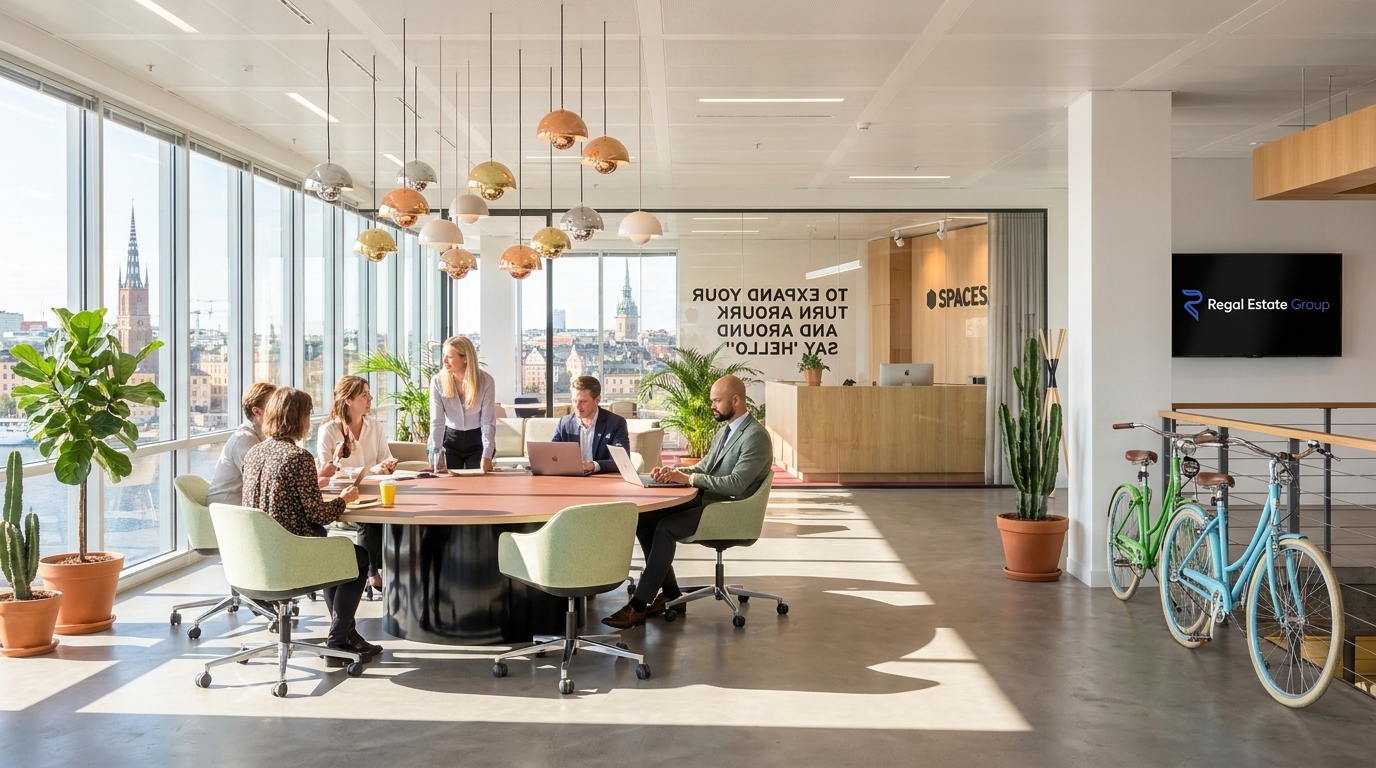
Corporate infrastructure constantly adapts to shifting global market demands. Historically, commercial real estate forced organizations into rigid financial liabilities through static physical assets. Today, forward-thinking leaders demand profound agility and robust technological integration. Implementing a comprehensive enterprise workspace strategy provides the essential framework for businesses pursuing international expansion without the friction of traditional leases. Navigating a distributed workforce requires digital platforms that instantly secure and optimize global office locations. Regal Estate Group drives this modernization by perfectly aligning physical space needs with overarching fiscal objectives. Forward-looking executives must embrace dynamic methodologies to maximize geographical reach and eliminate the massive risks inherent in conventional property commitments.
Developing an enterprise workspace strategy over static assets
Legacy leasing models depend heavily on extreme capital expenditures and speculative long-term planning. Companies previously acquired physical spaces based on inaccurate growth projections. This flawed approach regularly created severe spatial shortages during rapid scale-ups or left empty square footage during economic slowdowns. Structural inflexibility forces heavy financial burdens upon companies facing unexpected global market fluctuations. Conversely, modernizing your physical footprint means treating commercial real estate as a fluid operational service. Dynamic environments empower teams to constantly adjust their physical presence in direct correlation with immediate operational targets. Such extreme adaptability bypasses the harsh lease termination penalties that historically destroyed corporate liquidity.
Fluid operational models allow multinational firms and dynamic startups to execute immediate geographic market entries. Teams establish a localized professional presence instantly. They avoid enduring exhausting lease negotiations or financing permanent infrastructure builds. Scaling physical space upward or downward eliminates bureaucratic hurdles. Property thereby transforms from a dreaded sunk cost into a highly responsive corporate asset. Organizations enhance their overall operational resilience against unpredictable economic conditions through this methodology. Forward-thinking enterprises systematically abandon archaic physical constraints. Leaders opt instead for elastic portfolios that seamlessly support continuous talent acquisition. Realizing these profound advantages requires abandoning obsolete leasing models in favor of technologically integrated frameworks.
Formulating an enterprise workspace strategy with advanced analytics
Securing optimal modern workspaces relies heavily upon deploying sophisticated analytical technologies. Past selection methodologies utilized fragmented data and subjective broker assessments. These outdated practices routinely hid true costs and prevented objective decision-making. Current technological ecosystems demand a centralized approach to illuminate critical market variables. Instant clarity dashboards give corporate planners the power to compare diverse global alternatives side-by-side. A highly effective enterprise workspace strategy synthesizes immense datasets covering spatial dimensions, logistical amenities, and local pricing. Digital environments abstract the profound complexities of international property markets. Growing businesses leverage these tools to formulate evidence-based conclusions regarding their physical footprints.
Bypassing traditional intermediary brokers dramatically accelerates the procurement cycle. Companies simultaneously mitigate the severe risks associated with asymmetrical information exchange. Sophisticated analytical systems enable operational leaders to model intricate occupancy scenarios. Executives easily project the financial impact of building a single massive headquarters versus launching multiple regional satellite offices. Integrating advanced dashboards effectively converts speculative real estate queries into deterministic strategic execution. Capital allocations toward physical infrastructure therefore maximize operational utility and financial efficiency. Rigorous algorithmic analysis completely replaces subjective property selection methods. A landmark publication from JLL examining top global corporate real estate trends reveals that successful organizations now rely on elastic portfolios rather than static leases to support talent acquisition.
Comprehensive data synthesis forever alters the strategic planning processes of ambitious multinational corporations. Planners accurately audit operational expenditures utilizing these exact analytical frameworks. Physical environment budgets directly correlate with measurable productivity outcomes under this system. Avoiding traditional brokerage networks drastically reduces the total acquisition costs tied to standard commission structures. Technology-driven analytical instruments establish the vital foundation for objective commercial property management. Competing fiercely in the international marketplace demands this exact level of rigorous spatial analysis. Teams quickly translate raw market data into actionable geographical advantages.
Geographic dispersion shapes the modern enterprise workspace strategy
Adopting hybrid operational models forces a massive evolution in how companies distribute their talent pools. Monolithic corporate headquarters consistently fail as efficient mechanisms for housing geographically scattered workforces. Modern organizational authorities heavily favor the dynamic hub-and-spoke operational framework. This architecture seamlessly connects a central corporate facility with a massive network of localized flex spaces. Executing an agile real estate optimization requires instant access to diverse global property portfolios. Global aggregator platforms unlock thousands of unique locations to make this decentralized vision a reality. Your enterprise workspace strategy reaches its maximum potential when empowered by spatial demographic mapping.
Advanced spatial analytics allow planners to cross-reference internal talent pools against regional commuting topographies. Corporations drastically slash aggregate commuting times by mathematically linking employee residential density with optimal satellite office coordinates. Shorter commutes directly boost workforce productivity while shrinking the organizational carbon footprint. Methodical geographical dispersion guarantees that physical locations deliver maximum utility for both the company and its personnel. Establishing short-term offices across diverse jurisdictions lets leaders test emerging commercial markets rapidly. Multinational entities scale their operations dynamically in response to shifting local economies. Unprecedented rapidity defines how these resilient operational networks overcome traditional geographic borders.
Distributed spatial networks successfully decentralize operational risk. Businesses simultaneously localize their corporate presence right inside highly competitive talent markets. Empirical data dictates the exact placement of regional hubs to support intense talent retention campaigns. Sophisticated location methodologies bridge the widening gap between digital strategies and physical environmental realities. Meticulous execution of geographically dispersed workspace networks offers a massive competitive edge. Leaders navigating complex international commerce utilize this approach to dominate their respective sectors. A precise alignment of people and place ultimately dictates long-term commercial triumph.
Consolidated pricing models optimize your enterprise workspace strategy
Opaque ancillary expenditures frequently sabotage traditional commercial real estate transactions. Standard lease agreements aggressively compound base rental rates with unpredictable variable costs. Maintenance tariffs, utility fluctuations, and telecommunications installations destroy accurate corporate financial forecasting. Growing businesses regularly face severe budgetary overruns due to these hidden operational assessments. A refined enterprise workspace strategy completely resolves this financial ambiguity through consolidated pricing architectures. Aggregating rent, high-speed internet, and environmental maintenance into a single transparent invoice delivers instant fiscal clarity. Structural predictability empowers meticulous financial planning and maximum budget optimization.
Eliminating hidden fees prevents the dangerous misallocation of vital organizational capital. Financial officers readily redirect resources toward core technological innovation rather than endless structural upkeep. All-inclusive models brilliantly transfer facility management burdens from the corporate tenant directly to the workspace provider. Operational delegation allows enterprises to maintain an absolute focus on strategic growth initiatives. Administrative encumbrances no longer distract leadership teams from capturing new market share. Automated billing systems represent a massive advancement in modern corporate fiscal management. Extreme transparency guarantees budgetary integrity across all international outposts. Transparent pricing architectures ensure physical workspace expenditures align intrinsically with broader financial objectives.
Consolidating disparate logistical expenses produces highly accurate cost-benefit analyses during expansion evaluations. Financial modeling becomes incredibly deterministic when planners neutralize the variable costs of operating physical locations. Fiscal certainty hands corporate leadership the ultimate confidence needed to launch aggressive global scaling efforts. Executives sleep well knowing that structural overhead remains permanently locked within predetermined parameters. Stabilized real estate expenditures serve as the foundational pillar for sustainable enterprise growth. Exploring Europe’s new corporate geography demonstrates exactly how predictable costs drive international success. Companies that master these pricing methodologies easily outmaneuver financially constrained competitors.
Artificial intelligence transforms enterprise workspace strategy execution
Integrating artificial intelligence into commercial real estate frameworks massively escalates administrative efficiency. Managing workspace inquiries and lease renegotiations historically demanded the slow manual intervention of property managers. Human brokerage models inherently introduce frustrating temporal delays and costly errors into critical processes. Contemporary platforms completely destroy these inefficiencies by deploying highly sophisticated artificial intelligence systems. Autonomous AI concierges function as the primary interface for resolving complex logistical inquiries immediately. Advanced natural language processing tools analyze vast internal knowledge bases to solve administrative requests instantaneously. A cutting-edge enterprise workspace strategy leverages these digital entities to support distributed workforces across all global time zones.
Continuous AI accessibility ensures seamless operations regardless of geographical boundaries. Automated concierges effortlessly manage the overwhelming majority of routine spatial inquiries. Corporate facility managers consequently gain the freedom to focus entirely on high-level workforce development initiatives. Artificial systems continuously aggregate interaction data to provide profound insights into user behavior. Platform operators utilize this intelligence to iteratively refine the physical environment for maximum human comfort. Robust digital support mechanisms guarantee that administrative bottlenecks never compromise organizational velocity. Technological intervention permanently shifts facility management from a reactive chore into a proactive digital service.
Operational fluidity heavily advantages multinational corporations requiring standardized infrastructure across disparate jurisdictions. Neutralizing communication barriers establishes a frictionless environment for every employee. Uninterrupted productivity maximizes the overall return on investment for all acquired commercial spaces. Implementing artificial intelligence remains an absolutely indispensable component of highly scalable global enterprise architecture. Intelligent systems bridge the gap between human needs and physical asset capabilities. Corporations relying on smart integrations consistently report higher levels of tenant satisfaction and retention. The modern workplace demands nothing less than instantaneous, algorithmic operational support.
Structuring a bespoke enterprise workspace strategy for diverse mandates
Heterogeneous organizational structures require highly specific environments dictated by unique corporate cultures. Rigid commercial real estate approaches force diverse enterprises into standardized configurations that destroy collaborative synergies. Optimal workspace acquisition demands highly customizable solutions engineered to meet idiosyncratic corporate demands. Flexible global platforms provide an incredible spectrum of spatial configurations. Options range effortlessly from individualized transient workstations to massive exclusive enterprise headquarters. Immense structural adaptability ensures that the physical environment dynamically molds to serve the organization. Companies never modify their internal operational processes simply to fit a predetermined room.
Independent professionals secure single operational nodes to gain professional infrastructure without insane financial commitments. Established multinational corporations design sophisticated, branded environments that facilitate strict project confidentiality. Securing dedicated expansive environments within a flexible contract represents a monumental victory over traditional leasing. Customizable infrastructures empower organizations to experiment boldly with diverse spatial layouts. Leadership teams empirically determine whether open-plan zones or segmented private enclosures generate superior workforce efficiency. Modular environments permit immediate physical reconfiguration when rapid personnel scaling requires swift layout changes. Complete locational relocation becomes obsolete when your current footprint scales organically.
Continuous structural alignment guarantees that corporate real estate acts as a catalyst for productivity. Modern technological workspace platforms actively optimize corporate culture across all scales of enterprise development. Deploying bespoke architectures fundamentally redefines the intimate relationship between an organization and its domicile. Executives construct highly engaging environments that loudly broadcast their unique operational philosophy. Democratized scalable leasing frameworks hand this immense environmental control to companies of all sizes. Forward-thinking organizations perfectly synthesize structural permanence with agile operational mechanics. Sustained competitive advantage naturally follows when a masterful enterprise workspace strategy drives the business forward.