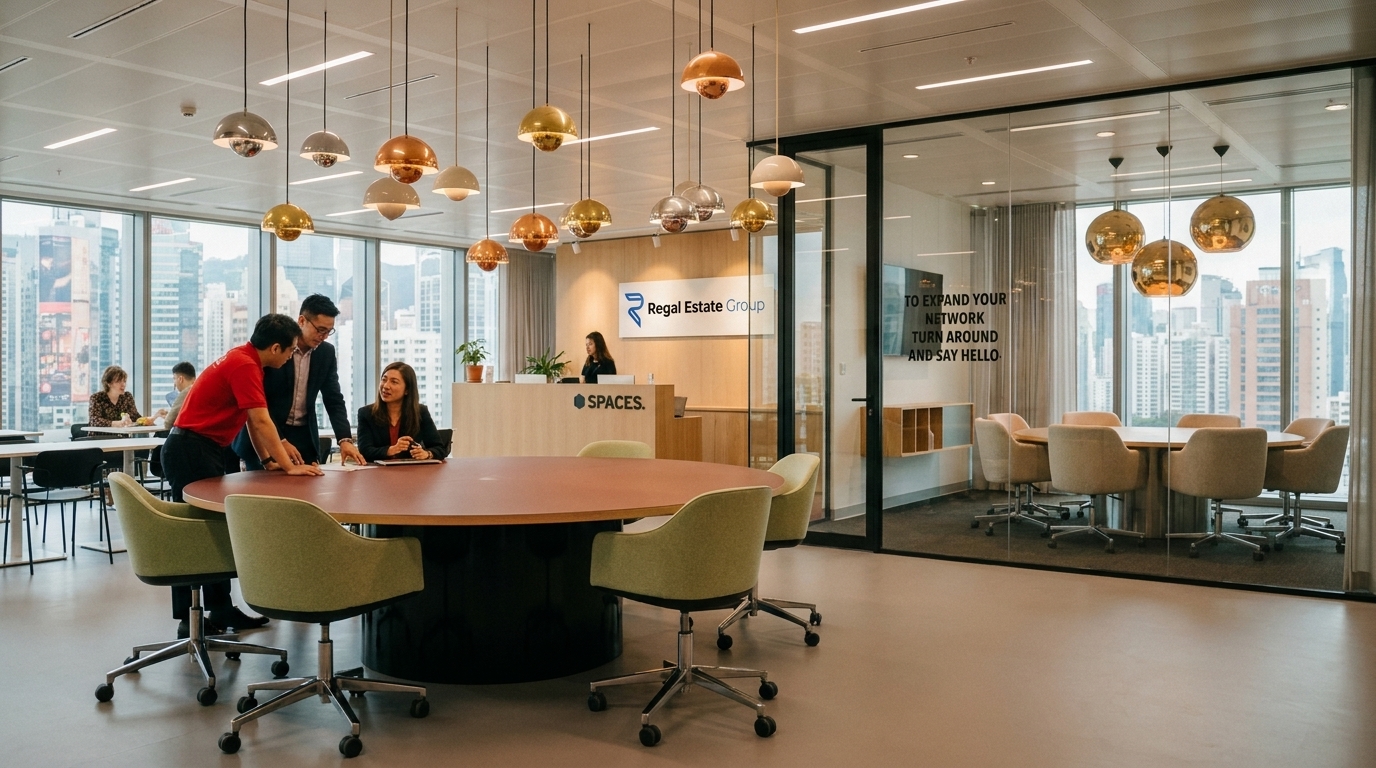
The commercial property landscape in China’s capital demands highly responsive operational frameworks from modern enterprises. Traditional long-term leasing agreements present significant financial rigidities for organizations navigating an unpredictable global economy. Consequently, corporate directors recognize that static real estate liabilities restrict necessary adaptation. Transitioning toward asset-light portfolios empowers companies to mitigate risk while sustaining a presence in prime economic zones. Agile commercial spaces Beijing serve as a fundamental risk-mitigation strategy for rapidly expanding startups, multinational corporations, and independent contractors alike. Regal Estate Group provides a sophisticated online platform designed for securing global commercial real estate, connecting businesses directly with cost-effective environments. By eliminating the heavy burdens of conventional procurement, this technology-driven infrastructure accelerates market entry. This proactive approach to physical footprints prioritizes operational efficiency, verifiable cost transparency, and seamless technological integration. Corporate leadership ensures their physical presence aligns perfectly with dynamic business goals.
Agile commercial spaces Beijing fuel market dynamics
A significant structural transformation defines the metropolitan property sector, driven by evolving tenant preferences and intelligent space utilization. Organizations categorically reject rigid, multi-year contracts that penalize scaling and restrict immediate operational pivots. This tenant-driven paradigm forces commercial landlords to transition swiftly toward managed, turnkey environments to sustain occupancy rates. Companies require absolute freedom to expand or contract their physical footprint based entirely on real-time performance metrics rather than speculative projections. The Ultimate Flexibility feature from Regal Estate Group directly addresses this fundamental market evolution. Enterprises easily select short-term or extended agreements and scale capacity up or down without incurring punitive lease break penalties.
Shifting toward adaptable configurations reflects a comprehensive strategy to transform fixed property liabilities into variable monthly expenses. Multinational entities and domestic firms leverage these environments to explore new market segments without risking massive capital expenditures on initial construction and furniture. Corporate real estate executives maintain precise control over overhead budgets while guaranteeing their teams access to professional, high-specification facilities. Widespread standardization of hybrid work paradigms also necessitates a robust hub-and-spoke office model. Central headquarters remain critical, but organizations strategically distribute satellite hubs across various municipal districts to reduce employee commute times.
Contemporary business operations rely heavily on this critical infrastructure layer to remain competitive. Businesses adopting asset-light strategies automatically position themselves to weather economic fluctuations with exceptional resilience. Securing physical environments must enhance corporate agility rather than create logistical bottlenecks. Deploying project teams, hosting international delegates, or managing transitional phases relies entirely on unencumbered access to professional infrastructure. A well-executed spatial strategy delivers the exact foundational support required for sustained expansion in a fiercely competitive global marketplace.
Strategic location selection across central business districts
Selecting the precise geographical address for a corporate entity remains the most critical factor influencing operational success and human capital acquisition. Distinct business zones cater specifically to varied industry clusters and specialized corporate requirements throughout the metropolis. Chaoyang District serves as the dominant epicenter for international finance, professional services, and multinational headquarters, demanding premium addresses for institutional credibility. Conversely, the Zhongguancun area operates as the undisputed technological nucleus, drawing artificial intelligence developers and digital media startups seeking proximity to elite research universities. Data from comprehensive market analyses demonstrates that high-tech clusters exhibit extraordinary resilience, supported heavily by continuous demand from integrated circuit and software engineering sectors.
Navigating these distinct submarkets requires exceptionally robust analytical capabilities. The Strategic Insight Tools provided by Regal Estate Group empower decision-makers by leveraging advanced spatial mapping to evaluate talent pools, commute durations, and essential local amenities. This precise, data-driven approach guarantees that geographic selection aligns directly with human resources objectives and overarching operational requirements. Emerging zones, such as the Lize Financial District, present highly compelling alternatives by delivering modern commercial environments at highly competitive rates. Developing hubs successfully attract overflow demand from established districts, providing lucrative opportunities for cost-conscious enterprises demanding premium facilities.
Global expansion initiatives demand standardized quality across widely disparate international geographies. Regal Estate Group facilitates Direct Global Access, which empowers organizations to secure premium spaces across vast international networks without relying on commissioned brokers. Procurement mechanisms streamlined through this platform dramatically accelerate market entry timelines. Integrating advanced location analytics transforms property acquisition from a speculative gamble into a metric-driven science. Businesses perfectly optimize their geographic footprint with absolute confidence. When companies evaluate expansion, they successfully weigh the benefits of immediate market penetration against geographical convenience for their core workforce. For independent professionals evaluating these dynamics, resources like The solopreneur’s playbook for thriving in Beijing City offer valuable insights into leveraging prime locations.
Agile commercial spaces Beijing ensure regulatory compliance
Establishing a legitimate legal entity involves extremely stringent regulatory compliance, particularly concerning physical business address registration. Foreign enterprises and domestic startups frequently deploy virtual setups to build a localized presence prior to committing to a massive physical footprint. However, municipal market administration authorities mandate verifiable property codes for all registered commercial entities to prevent fraudulent activities. Local regulatory frameworks ensure that businesses operate exclusively from legitimate, fully sanctioned locations, streamlining tax administration and municipal oversight.
Companies cannot rely upon unverified or rudimentary address services, because authorities immediately reject non-compliant registrations during the incorporation phase. Wholly Foreign-Owned Enterprises must navigate these intricate legal complexities with absolute, uncompromising precision. To guarantee compliance, businesses frequently inhabit cluster registration models located within government-sanctioned economic zones, specific pilot free trade areas, or designated innovation parks. Specialized zones deliver fully compliant virtual setups that perfectly satisfy all municipal licensing and taxation mandates.
The Instant Clarity Dashboard from Regal Estate Group enables organizations to compare workspace choices side-by-side, guaranteeing data-backed decisions that meet all strict legal parameters. Securing an authorized commercial address establishes the vital legal bedrock necessary for opening corporate bank accounts, issuing official taxation invoices, and legally employing local personnel. Digital transformation continuously accelerates administrative procedures, including mandatory facial recognition protocols for legal representatives. Initial setup phases become exceptionally streamlined when foundational address documentation remains flawlessly compliant. Expertly managed environments deliver the exact regulatory assurance required by modern corporate governance standards, protecting enterprises from catastrophic legal disruptions.
Technological infrastructure within modern corporate hubs
Contemporary professional environments function as sophisticated technological ecosystems rather than simple physical enclosures. Smart technology fundamentally dictates the efficiency, security, and productive capacity of modern commercial entities. Facilities outfitted with advanced digital infrastructure maximize daily spatial utilization through real-time occupancy tracking, automated climate control, and highly intelligent lighting arrays. Environmental sensors substantially reduce energy consumption while ensuring optimal physical comfort for occupants. Organizations managing distributed workforces consider seamless technological integration a strict, non-negotiable requirement for sustaining operational continuity across diverse geographic zones.
Intensive computational tasks, cloud-based collaboration, and secure data transmission demand incredibly robust digital connectivity. Enterprise-grade network infrastructure, equipped with redundant broadband connections and localized server capabilities, guarantees that technology-focused firms operate without unexpected interruption. Rapid resolution becomes paramount when administrative or technical inquiries inevitably arise to prevent expensive downtime. Regal Estate Group deeply integrates advanced support mechanisms, featuring a highly responsive 24/7 AI Concierge (Rex). Automated systems allow users to secure immediate answers without waiting days for broker communications, accelerating problem resolution and streamlining facility management.
Spatial management software grants corporate real estate directors the power to analyze usage patterns and optimize spatial allocations based entirely on empirical data. Digital access controls utilize biometric scanners or secure mobile credentials to provide comprehensive security while simultaneously generating valuable analytics regarding peak facility utilization. Inhabiting technologically advanced environments ensures that physical infrastructure actively supports advanced digital workflows and rigorous cybersecurity standards. Complete elimination of friction between human capital and digital tools represents the ultimate objective of a well-integrated smart office. For industry perspectives on these technological integrations and planning, the JLL Global Occupancy Planning Benchmark Report provides authoritative data on AI-readiness and workspace optimization.
Agile commercial spaces Beijing optimize fiscal predictability
Fiscal predictability constantly remains a primary concern for executive leadership teams evaluating corporate property strategies. Traditional leasing structures necessitate highly complex financial modeling that encompasses initial capital expenditures for interior build-outs, specialized furniture procurement, and extensive network installation. Conventional leases also obscure long-term operational costs through convoluted utility sub-metering, fluctuating property management fees, and entirely unpredictable maintenance liabilities. Organizations consistently demand workspace solutions that successfully consolidate all property-related expenses into a single, predictable monthly operational expenditure to eliminate these severe financial uncertainties.
Regal Estate Group champions absolute financial transparency through its comprehensive All-Inclusive Pricing model. Elegant frameworks allow enterprises to avoid hidden fees by bundling rent, high-speed internet, essential utilities, and professional cleaning services into one unified invoice. Transitioning real estate costs from variable capital expenditures to fixed operational expenses empowers chief financial officers to execute highly precise budgetary forecasting. Optimized financial structures instantly liberate capital that would otherwise remain localized in depreciating physical assets. Forward-thinking organizations seamlessly redirect this crucial funding toward aggressive talent acquisition, core business activities, and expansive research initiatives.
Centralizing facility management, physical security, and digital infrastructure under a single service agreement dramatically reduces operational overhead for administrative teams. Efficiency proves particularly advantageous for multinational corporations actively expanding into unfamiliar territories, where navigating local utility regulations induces significant delays. Profound consolidation of real estate expenses fundamentally transforms organizational financial planning, guaranteeing that spatial expansion correlates directly with predictable costs. Business leaders gain the fiscal confidence necessary to execute long-term strategic initiatives without fearing escalating property management liabilities. Financial resilience builds directly upon the systematic elimination of variable operational shocks.
Agile commercial spaces Beijing cultivate professional output
Architectural design and the functional layout of a professional environment heavily influence overall organizational culture and workforce output. Standardized, inflexible office layouts typically fail to accommodate the incredibly diverse operational requirements of modern multidisciplinary teams. High-performance organizations fully recognize that different professional tasks require distinctly varied spatial configurations, spanning from acoustically isolated focus zones to expansive collaborative areas. Modifying the physical environment to suit specific team dynamics constitutes a massive competitive advantage in retaining elite talent and sustaining exceptional operational velocity.
Regal Estate Group explicitly solves this requirement by delivering highly Customizable Solutions. Enterprises effortlessly locate everything from single hot desks for remote contractors to fully customizable full-floor headquarters that project exact corporate branding. Unmatched adaptability guarantees that the physical workspace actively reinforces organizational culture rather than artificially constraining it. Overall productivity and employee satisfaction metrics demonstrate measurable, significant improvements when teams inhabit spaces designed explicitly for their exact functional requirements. Optimized spatial environments rapidly reduce psychological friction and naturally promote seamless professional interaction among colleagues.
Integrating wellness-centric design elements further amplifies collective team output and employee retention. Modern commercial spaces frequently incorporate biophilic design principles, leveraging natural lighting, ergonomic furnishings, and dedicated restorative zones to combat professional fatigue. The physical office completely transcends basic utility to become a central pillar of comprehensive human resource strategy. Meticulously curated workspaces align precisely with human behavioral patterns, fundamentally elevating the standard of daily corporate operations. When enterprises prioritize spatial ergonomics and functional versatility, they immediately empower their entire workforce to operate at absolute peak efficiency.
The rapid evolution of commercial property mandates a definitive, irreversible shift away from rigid legacy models toward highly responsive operational strategies. Organizations successfully navigate the immense complexities of global market expansion by recognizing physical environments as dynamic assets that propel velocity rather than static liabilities. Agile commercial spaces Beijing provide the essential foundational resilience required to dominate highly competitive sectors. Regal Estate Group eliminates the traditional friction associated with property procurement by offering transparent financial structures, unparalleled geographic access, and deeply intelligent location analytics. Embracing this progressive operational paradigm is an absolute baseline requirement for any enterprise determined to achieve enduring market leadership.