That question comes up constantly when I talk to founders, executives, and real estate directors about finding managed office space for rent. Why do rapidly scaling companies suddenly abandon traditional ten-year commercial leases?
For me, the choice is actually very logical. I know the rigid corporate real estate world. The agile tech sector is equally familiar to me. And I understand by now how fundamentally different those two environments can sometimes be.
We used to believe a massive, fixed headquarters was the ultimate sign of business success. Now, it often feels like a heavy anchor dragging an organization down.
But a noisy, open-plan coworking desk without privacy is not the answer for a serious enterprise either. That is not better or worse. It is just different.
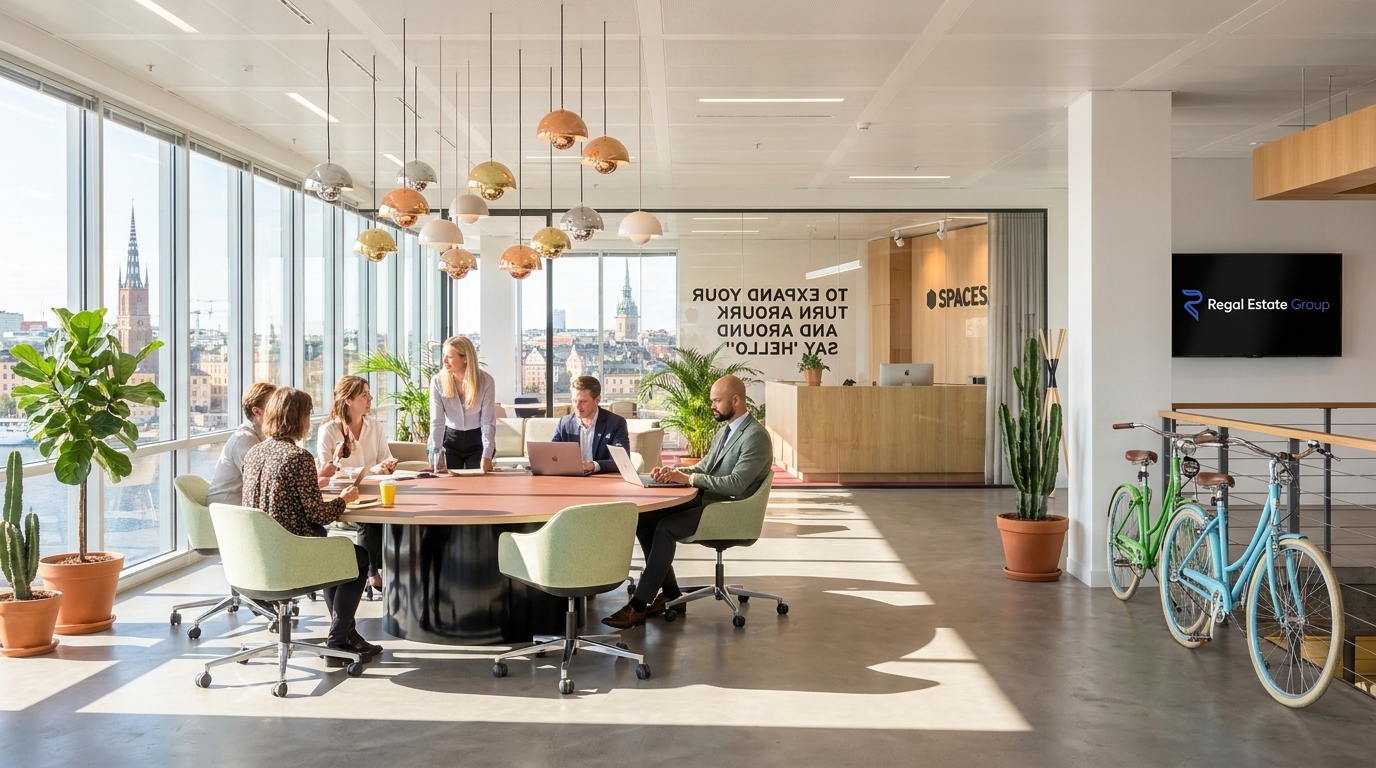
In my work, I see leadership teams demanding something right in the middle. This is exactly why managed office space for rent has become the dominant strategy. Because today, you need absolute agility without sacrificing your professional identity.
Managed office space for rent and the modern team
As someone who spent years navigating rigid commercial leases across global hubs, I know the standard drill all too well.
Finding a great location in a prime business district is usually step one. Then comes signing a decade-long legal commitment. After that, companies spend millions of dollars on a custom architectural fit-out.
And then the global market suddenly shifts. Perhaps your distributed team shrinks, or maybe it doubles in size overnight. Your physical space cannot adapt to this new operational reality.
I believe in building work environments that serve the people, not the other way around. This is where the managed model shifts the dynamic completely.
It gives you a private, branded suite operated entirely by a specialized third party. Tenants do not worry about internet downtime, daily cleaning schedules, or facilities management troubleshooting.
You just show up, open your laptop, and start working. Such a plug-and-play approach lets you focus purely on your core growth.
The friction of traditional corporate real estate
Let us look at the hard numbers for a moment. Recent global real estate data shows that 92% of corporate occupiers expect demand for managed workspaces to grow rapidly in the coming years.
Why? Because traditional leases carry massive upfront capital expenditure.
First, tenants pay for the empty concrete shell. Next, they finance the expensive interior build-out. Finally, operational costs drain budgets every single day.
If your company needs to pivot quickly, you face devastating lease break penalties.
Do you recognize this scenario? Many executives spend six months negotiating a complex legal contract, only to realize the space no longer fits their headcount by the time they finally move in.
That is exactly the financial and operational friction we eliminate with all-inclusive flexible workspace solutions. Because your real estate footprint should accelerate your operations, not slow them down.
This approach proves essential when considering how to optimize your corporate footprint on a global scale.
Why managed office space for rent solves the puzzle
On the sports field, you learn one thing very quickly: talent alone is never enough.
Coaches can have the absolute best players on the roster, but if the rest of the environment does not move in sync, the team wins absolutely nothing. In the corporate business world, I see exactly the same dynamic happening.
You can hire brilliant minds, but forcing them into an inflexible, outdated office inevitably drops their output.
That is why managed office space for rent changes the operational puzzle. It consolidates rent, high-speed internet, utilities, and daily maintenance into one predictable monthly invoice.
No hidden management fees exist here. Unexpected capital drains vanish when an HVAC system breaks, because the operator handles it entirely.
This allows you to scale your physical footprint up or down seamlessly as your team evolves. Such flexibility provides the ultimate financial clarity that growing organizations desperately need today.
Scaling with managed office space for rent globally
Corporate expansion used to be a terrifying logistical nightmare. Opening a new market meant flying executives out, touring endless empty buildings, and dealing with commissioned brokers who did not understand your internal culture.
I remember how exhausting and inefficient those international scouting trips used to be. Today, data-driven platforms fundamentally change how we approach new territories.
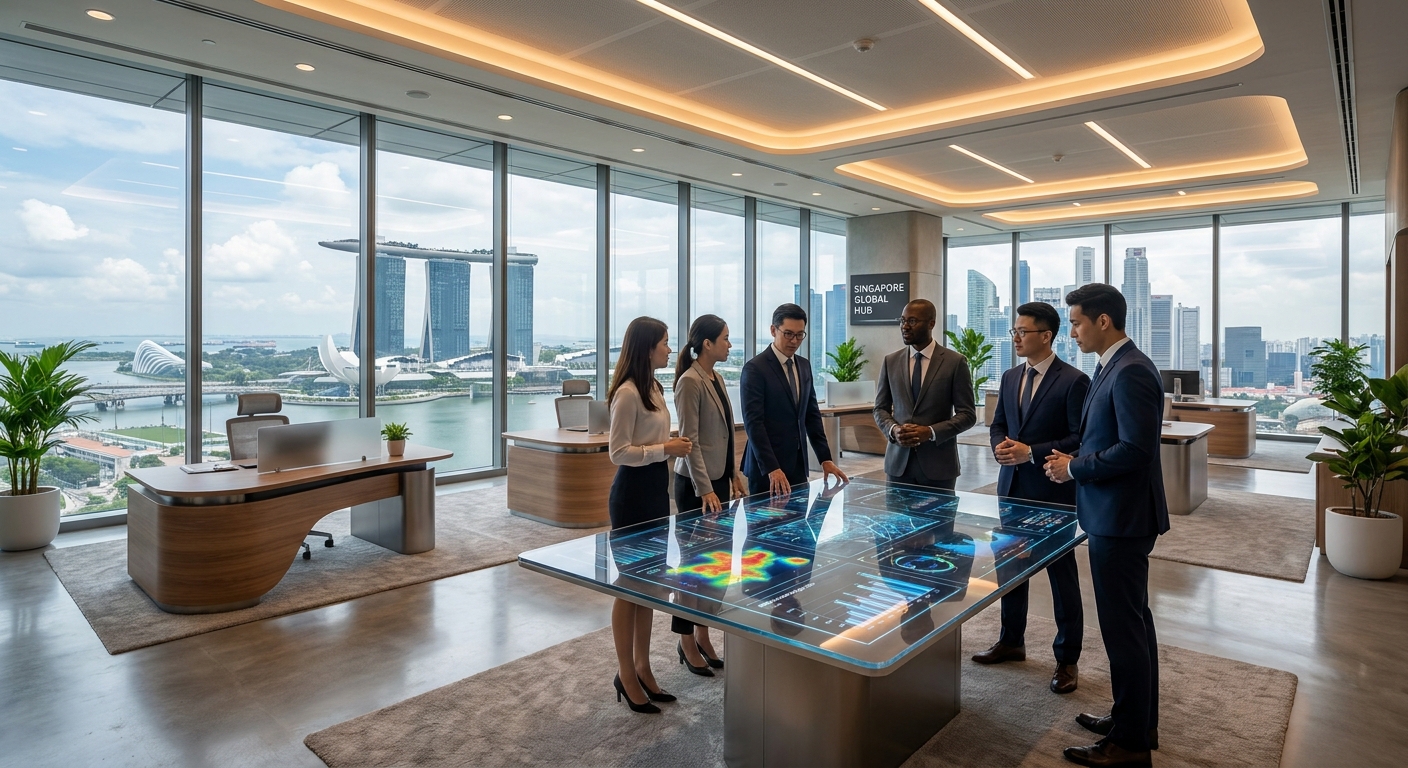
With global managed office space for rent, you can secure premium spaces across thousands of international locations instantly. Companies bypass the traditional leasing complexities completely.
Using predictive spatial analytics, teams can analyze local talent pools and commute times before signing anything. You compare workspace choices side-by-side to make decisions with absolute confidence.
Strategic moves are then made based on hard data, not just gut feelings or local broker recommendations. This is how modern brands establish a strong presence without absorbing the traditional financial risk.
Managed office space for rent for growing enterprises
This market shift is not just for small tech startups anymore. Large multinational corporations are actively restructuring their entire commercial real estate portfolios.
They are heavily adopting what industry experts call a core-plus-flex model. These organizations keep a smaller central headquarters and use enterprise managed office space for rent to support regional talent hubs.
Such a strategy provides the professional, secure environment of a traditional corporate office with the agility of a flexible lease. And it integrates perfectly with the modern distributed hybrid work culture.
If your engineering team needs a secure private suite in London and your sales team needs one in Tokyo, both can be deployed simultaneously. You maintain absolute brand consistency and operational security across every single location.
Achieving this takes only a fraction of the time it would require to negotiate a standard lease. This methodology proves vital when building a strategic framework for choosing your next workspace.
Finding managed office space for rent in a hybrid era
Technology is the invisible foundational layer that makes all of this possible. You simply cannot run an agile, distributed team efficiently without smart building infrastructure.
That is why AI-powered smart office space for rent is quickly becoming a fundamental corporate requirement.
Imagine walking into a meeting room where the environmental controls adjust automatically based on current occupancy. There, meeting equity is guaranteed because the audiovisual technology just connects and works instantly.
In my daily work, I even see teams utilizing a 24/7 AI concierge to handle immediate automated administrative support. If something breaks, the intelligent system knows and logs a ticket before anyone even has to report it manually.
This deep level of technology integration fosters a highly productive, frictionless hybrid team culture. It completely removes the daily administrative friction that usually drains employee energy and team morale.
The cultural impact of managed office space for rent
Culture is often the hardest thing to maintain when an organization scales rapidly. When expanding into new countries, the local employee experience can quickly become fragmented.
I have seen companies where the headquarters feels like a premium luxury hotel, but the regional branch feels like a forgotten basement. That inconsistency damages team morale and severely dilutes your brand identity.
By utilizing a managed workspace strategy, you standardize the employee experience across the globe. Whether your team is logging in from Paris, New York, or Singapore, the quality of the environment remains exceptionally high.
The ergonomic furniture, the premium coffee, the seamless internet: it all meets the same rigorous corporate standard. This consistency sends a very clear message to your employees globally.
That message tells them their comfort and productivity matter, regardless of their zip code. Because a strong corporate culture is not just built through remote video calls.
Genuine connection is forged through the physical spaces where your people collaborate, brainstorm, and interact every single day.
Maximizing managed office space for rent for productivity
Many leaders ask me how to measure the actual return on investment of a flexible workspace. Do you measure it purely in reduced real estate costs?
Or should we measure it in improved employee retention rates? I believe it is a powerful combination of both metrics.
When you eliminate the friction of office management, your leadership team reclaims hundreds of lost hours. Instead of dealing with broken printers or negotiating cleaning contracts, managers focus on strategy and revenue generation.
That shift in strategic focus alone often pays for the workspace itself. Furthermore, the vibrant atmosphere of a premium managed space naturally elevates team energy.
People actually want to come into the office when the space is thoughtfully designed and expertly operated. Providing a great environment is not a luxury anymore.
It has become a profound competitive advantage in a highly competitive labor market.
Choosing your managed office space for rent today
The strategic question is no longer whether your business should adopt flexible real estate. The real question is how quickly you can make the necessary transition.
Because the forward-thinking companies that adapt their physical footprint fastest will consistently attract the best talent. They will operate with significantly lower fixed overheads.
These agile organizations will also move with much greater market speed. I strongly believe the future of corporate work is fluid, data-backed, and deeply human-centric.
We need physical spaces that actively empower our people to do their best work on their own terms. Are you still locking your dynamic team into rigid ten-year financial commitments?
Or are you finally ready to build an agile environment that actually scales with your long-term vision? The choice is absolutely yours to make.