The evolution of the workplace is accelerating, driven by a fundamental shift in how and where we work. As companies embrace hybrid models and prioritize employee well-being, the office is transforming from a static location into a dynamic, intelligent ecosystem. Smart office technology is at the heart of this change, offering innovative solutions to enhance productivity, collaboration, and the overall employee experience. Recent trends show a significant move towards integrated systems where AI, the Internet of Things (IoT), and advanced communication platforms work in concert. This guide explores the key components of a truly smart office, providing a holistic framework for integrating these technologies to create a seamless, responsive, and future-ready work environment that meets the demands of the modern workforce.
The central nervous system: how IoT powers a responsive workplace
The Internet of Things (IoT) is the foundational layer of any smart office, creating a network of interconnected sensors and devices that gather real-time data about the physical environment. This ‘central nervous system’ allows the office to adapt dynamically to the needs of its occupants. For example, occupancy sensors can monitor which desks, meeting rooms, and common areas are in use. This data is invaluable for optimizing space utilization, a critical factor in flexible, hybrid schedules. Instead of relying on guesswork, facility managers can make data-driven decisions about workspace design and resource allocation. Smart lighting and climate control systems use this same occupancy data to conserve energy, automatically dimming lights and adjusting temperatures in empty rooms, contributing to sustainability goals. The global smart office market is projected to grow significantly, with the number of IoT devices in commercial buildings expected to nearly double by 2030, highlighting the rapid adoption of this transformative technology. Advanced applications are also emerging, such as predictive ergonomics, where smart furniture adjusts to an individual’s posture throughout the day, promoting wellness and reducing physical strain in a tangible way.
Artificial intelligence as the brain of the operation
If IoT is the nervous system, then Artificial Intelligence (AI) is the brain that processes the vast amounts of data collected and turns it into actionable insights. AI algorithms analyze patterns in workspace usage, employee preferences, and environmental conditions to automate and optimize office operations. By 2025, AI is expected to be deeply embedded in workplace management, moving beyond simple task automation. For instance, an AI-powered building management system can learn the typical flow of people throughout the day and proactively adjust HVAC and lighting for maximum efficiency and comfort. Generative AI is also set to revolutionize productivity by automating routine administrative tasks, freeing up employees to focus on more strategic initiatives. AI-driven analytics can personalize the employee experience by suggesting available quiet rooms for focused work or notifying staff about collaborative spaces opening up. This level of intelligent automation not only enhances operational efficiency but also creates a more intuitive and frictionless environment for everyone in the office. The integration of AI is a critical step in moving from a merely connected office to a truly intelligent one that anticipates and responds to user needs.
Fostering seamless collaboration in a hybrid world
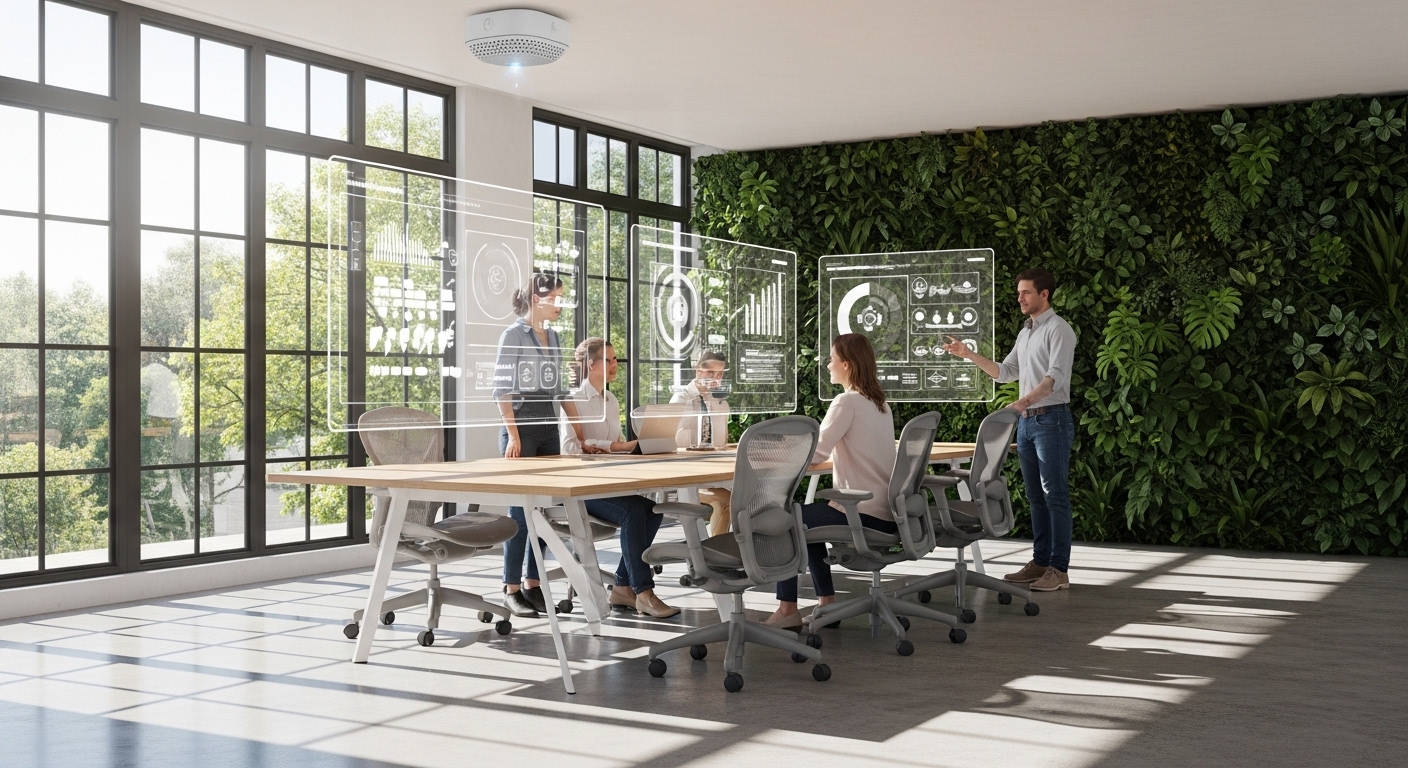
The rise of the hybrid work model has made seamless collaboration between in-office and remote employees a top priority. Smart office technology bridges this physical divide with a new generation of communication tools. Gone are the days of clunky video calls; modern platforms like Microsoft Teams and Zoom are evolving into comprehensive ecosystems that integrate chat, video, and project management into a single interface. The real innovation lies in smart meeting rooms equipped with intelligent cameras that automatically frame the active speaker, high-fidelity audio that cancels out background noise, and interactive digital whiteboards that allow real-time collaboration from any location. Augmented and Virtual Reality (AR/VR) technologies are also on the horizon, promising to create even more immersive and engaging remote teamwork experiences. These tools ensure that remote participants feel just as present and included as their in-office counterparts, fostering a sense of equity and a unified company culture. Asynchronous communication tools, which allow for pre-recorded video messages, further enhance flexibility by enabling effective communication across different time zones without requiring everyone to be online simultaneously.
Prioritizing well-being with human-centric technology
A key driver behind the adoption of smart office technology is the growing emphasis on employee well-being as a cornerstone of productivity and talent retention. The modern workplace is becoming more human-centric, using technology to create healthier and more comfortable environments. Smart sensors can continuously monitor indoor air quality, tracking levels of CO2, humidity, and airborne particulates, and automatically adjust ventilation to maintain optimal conditions. Circadian lighting systems mimic the natural progression of sunlight throughout the day, which can help regulate employees’ sleep cycles, improve focus, and reduce eye strain. Even desk booking systems contribute to well-being by giving employees the autonomy to choose a workspace that suits their task and mood for the day—be it a quiet corner for deep work or a collaborative pod for a team project. By investing in technologies that support physical and mental health, companies are not only creating a more appealing place to work but are also empowering their employees to perform at their best, signaling a clear return on investment through increased engagement and reduced absenteeism.
Strengthening security in the connected office
As offices become more interconnected, cybersecurity becomes a paramount concern. Every IoT sensor, smart device, and integrated platform represents a potential entry point for security threats. A holistic smart office strategy must therefore include a robust cybersecurity framework. This involves implementing secure network protocols, ensuring all devices have up-to-date firmware, and utilizing advanced threat detection systems that use AI to monitor network traffic for suspicious activity in real time. Access control is another critical area where smart technology enhances security. Traditional key cards are being replaced by mobile credentials or even biometric systems, providing a more secure and convenient way to manage entry to the building and sensitive areas within it. Smart surveillance systems with AI-powered analytics can distinguish between normal and unusual activity, alerting security personnel to potential issues instantly. By integrating security from the ground up, businesses can protect their data, assets, and people, ensuring that their smart office is not only efficient and productive but also safe and resilient against emerging digital threats.
The sustainable workplace and the future of smart buildings
The integration of smart technology is intrinsically linked to the growing corporate responsibility for environmental sustainability. Smart offices are at the forefront of the green building movement, leveraging technology to significantly reduce their carbon footprint. As previously mentioned, IoT-powered lighting and HVAC systems drastically cut energy consumption by ensuring resources are only used when and where they are needed. But the potential extends much further. Smart building platforms can integrate with energy grids to optimize power usage based on peak demand times and renewable energy availability. Advanced waste management systems use sensors to signal when bins are full, optimizing collection routes and reducing fuel consumption for service vehicles. Water management systems can detect leaks and monitor usage to promote conservation. This focus on sustainability is not just about environmental stewardship; it also offers significant financial benefits through reduced utility costs and can enhance a company’s brand reputation. Looking forward, the convergence of these technologies will create buildings that are not just smart but are active contributors to a more sustainable urban future, constantly learning and adapting to become more efficient over time.
Integrating smart office technology is no longer a futuristic luxury but a strategic imperative for businesses navigating the future of work. By weaving together the capabilities of IoT, AI, advanced collaboration tools, and wellness-focused systems, organizations can create a workplace that is intelligent, agile, and fundamentally human-centric. This holistic approach moves beyond isolated gadgets to build a cohesive ecosystem where the physical and digital environments merge, fostering productivity, supporting employee well-being, and ensuring operational resilience. The journey begins with a clear vision of the desired employee experience and a strategic framework that prioritizes seamless integration, robust security, and long-term sustainability. The result is not just a smarter office, but a workplace that empowers employees to thrive in a rapidly evolving professional landscape, ultimately driving innovation and growth for the entire organization.