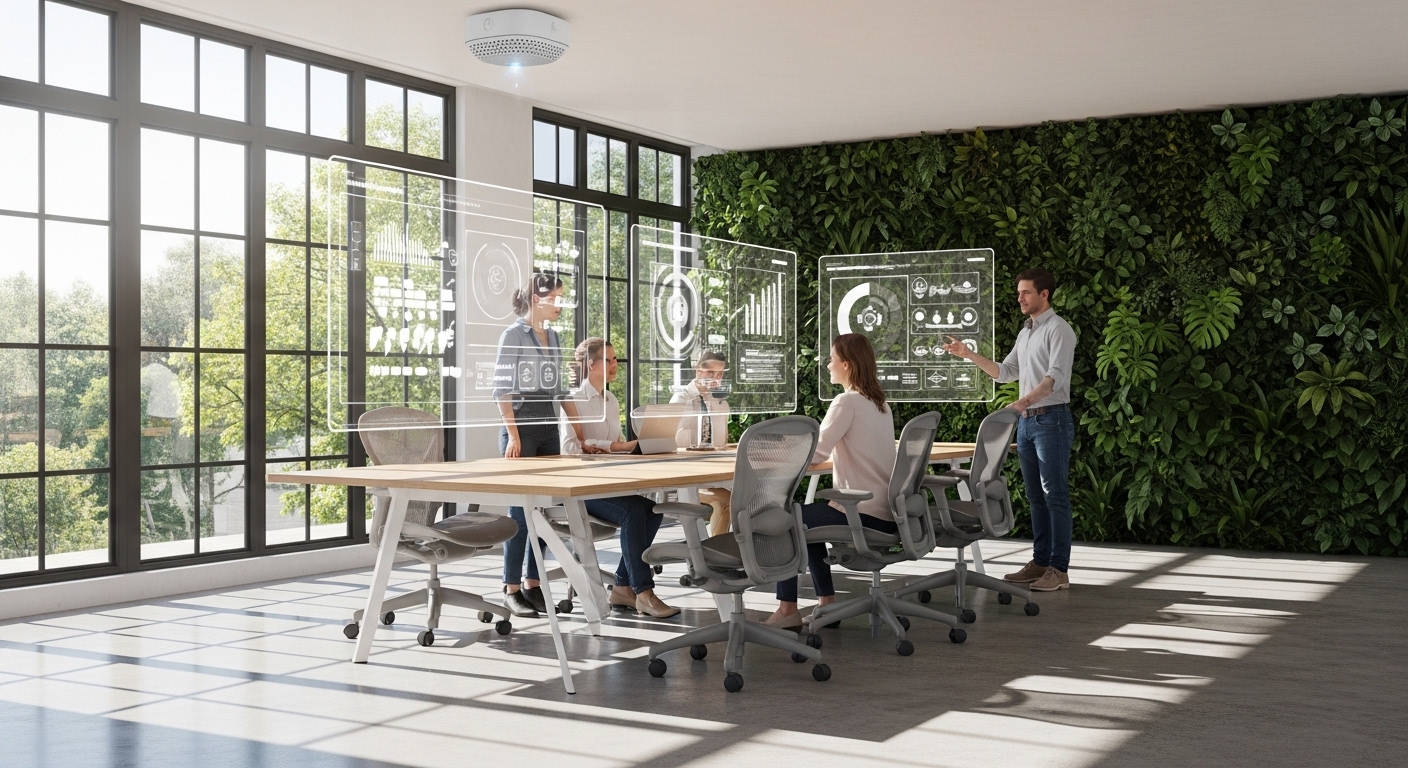
The conversation around smart office technology is rapidly evolving. For years, the focus has been on automation—lights that turn on when you enter a room, thermostats that adjust based on a schedule, and automated booking for meeting spaces. While these efficiencies are valuable, they represent only the first wave of innovation. The true future of work is not just automated; it is intelligent, predictive, and deeply personalized. As businesses navigate the complexities of hybrid models and a renewed focus on employee well-being, the cutting edge of smart office tech lies in its ability to harness vast amounts of data. This data-driven approach transforms the physical workspace from a static container into a responsive, dynamic ecosystem. It allows organizations to understand not just if a space is being used, but how, when, and by whom, enabling strategic decisions that enhance productivity, foster collaboration, and create an environment where employees can thrive. This article explores this pivotal shift from simple automation to profound workplace intelligence, examining the key technologies driving this change and the tangible benefits they unlock.
The evolution from automated buildings to intelligent ecosystems
The concept of an automated building is not new. For decades, building management systems (BMS) have controlled HVAC, lighting, and security systems to optimize for energy savings and basic operational efficiency. However, these systems were often siloed, operating independently with limited data exchange. The smart office represents a fundamental paradigm shift, moving from this fragmented automation to a fully integrated and intelligent ecosystem. This evolution is powered by the proliferation of the Internet of Things (IoT). In a modern smart office, countless sensors are embedded throughout the environment—in desks, chairs, lighting fixtures, and conference rooms. These sensors do more than detect motion; they measure occupancy, air quality, temperature, ambient light levels, and even noise. This constant stream of granular data is the lifeblood of the intelligent ecosystem. Instead of a light turning on based on a simple motion trigger, the lighting system can now adjust its color temperature and intensity throughout the day to align with human circadian rhythms, a practice shown to improve focus and well-being. Similarly, the HVAC system can react to real-time occupancy data, directing airflow to populated areas while conserving energy in empty zones, going far beyond the capabilities of a traditional scheduled system. This interconnectedness allows for holistic management, where data from one system informs the actions of another, creating a workplace that is not just automated, but truly responsive to its occupants.
Unlocking workplace analytics for strategic insights
The most significant advantage of an interconnected IoT infrastructure is the ability to perform deep workplace analytics. By aggregating and analyzing the data from thousands of sensors, organizations can gain unprecedented insight into how their physical space is actually used. Occupancy sensors, for example, reveal which desks, meeting rooms, and collaborative zones are most popular and at what times of day. This information is invaluable for strategic real estate planning. A company might discover that its large, formal boardrooms are consistently underutilized, while smaller, informal huddle spaces are always in high demand. Armed with this data, they can confidently reconfigure their layout to better match employee needs, potentially reducing their real estate footprint and associated costs. Workspace analytics also provides a clear, objective lens through which to manage hybrid work models. Heatmaps can show which departments collaborate in person most frequently, helping to inform seating strategies that foster better teamwork. It can also identify friction points in the employee experience, such as recurring difficulties in finding an available desk or meeting room. By understanding these patterns, businesses can move beyond guesswork and make evidence-based decisions that optimize their environment for productivity, efficiency, and employee satisfaction, ensuring every square foot of the office is delivering maximum value.
AI as the central nervous system of the modern office
If IoT sensors are the sensory organs of the smart office, then Artificial Intelligence (AI) is its central nervous system—processing information, learning from it, and making intelligent decisions. AI algorithms take the raw data collected by sensors and transform it into actionable insights and automated workflows. For example, an AI-powered platform can analyze historical usage patterns to predict future demand for meeting rooms or hot desks, proactively managing availability to prevent conflicts and frustration. It can personalize the office environment for individual employees; upon scanning an ID badge, the system could automatically adjust a hot desk’s lighting, temperature, and even the height of the sit-stand desk to that user’s pre-set preferences. Beyond environmental controls, AI is driving a new wave of hyper-automation through Robotic Process Automation (RPA). Software bots can handle repetitive administrative tasks, such as processing invoices or managing IT support tickets, freeing up human employees to focus on more complex, creative, and strategic work. AI also plays a critical role in enhancing security. Intelligent surveillance systems can differentiate between employees and unauthorized visitors, automatically flagging suspicious activity for security personnel without the need for constant human monitoring. By centralizing data and applying machine learning, AI elevates the smart office from a collection of connected devices to a cohesive, learning system that continually adapts to optimize its performance.
Enhancing employee well-being through responsive environments
The modern workforce places a high premium on well-being, and smart office technology is a powerful tool for creating healthier, more human-centric work environments. The ability to monitor and control environmental factors has a direct impact on employee health, comfort, and productivity. For instance, integrated sensors can continuously track indoor air quality, monitoring levels of CO2, volatile organic compounds (VOCs), and humidity. If levels exceed optimal thresholds, the system can automatically increase ventilation, ensuring a healthy and cognitively supportive atmosphere. Research has consistently shown a link between poor air quality and decreased cognitive function, making this a critical feature for any knowledge-based work. Furthermore, smart lighting systems that mimic natural daylight patterns can reduce eye strain and boost employee energy levels. Giving employees direct control over their immediate environment via a smartphone app—allowing them to fine-tune the lighting and temperature in their specific zone—fosters a sense of autonomy and satisfaction. This focus on a responsive environment demonstrates a company’s commitment to its employees’ welfare, which can in turn improve morale, reduce absenteeism, and serve as a key differentiator in attracting and retaining top talent in a competitive market.
Powering the hybrid model with seamless technology
The widespread adoption of hybrid work has made smart office technology more critical than ever. For a flexible model to succeed, the office must be a hub of seamless collaboration and productivity, and technology is the bridge that connects remote and in-office employees. Smart scheduling and space management platforms are essential. An employee planning a day at the office can use an app to see which of their teammates will also be in, view a real-time map of available desks, and book a workspace near their colleagues—all before leaving home. This eliminates the uncertainty and friction that can discourage office visits. Once on-site, smart systems can help locate colleagues or guide employees to their booked room. Intelligent meeting rooms are another cornerstone of the hybrid experience. They can be equipped with sensors that automatically start a video conference when participants enter, and feature advanced cameras and microphones that use AI to track the active speaker and suppress background noise, ensuring remote participants feel just as present as those in the room. This technological equity is crucial for effective collaboration. By providing the right tools to manage flexibility and foster inclusive communication, smart office tech makes the physical workspace a compelling and valuable destination for a distributed workforce.
Navigating the challenges of implementation and security
Despite the transformative potential of smart office technology, the path to implementation is not without its challenges. The most significant barrier is often the initial investment. The cost of sensors, software platforms, and the necessary network infrastructure can be substantial, requiring a clear business case and a strong return on investment (ROI) projection, typically framed around long-term energy savings, real estate optimization, and productivity gains. Another paramount concern is data security and privacy. A smart office collects a massive amount of data about the building and its occupants, creating a rich target for cyberattacks. Protecting this data requires a robust cybersecurity strategy, including network segmentation, data encryption, and secure access controls. It is also crucial to be transparent with employees about what data is being collected and how it is being used, ensuring that the goal is to improve the collective experience, not to monitor individuals. Finally, user adoption is key to success. A system that is complex or unintuitive will go unused, negating any potential benefits. Overcoming this requires a focus on the user experience, providing thorough training, and clearly communicating the value proposition to employees. A successful implementation is not just a technological rollout but a strategic change management process.
In conclusion, the era of the truly smart office is here, and its foundation is built on data. Moving beyond simple automation, leading organizations are now leveraging interconnected IoT devices and sophisticated AI to create workplaces that are intelligent, responsive, and deeply attuned to the needs of their employees. By harnessing workplace analytics, companies can optimize their physical spaces, reduce operational costs, and make strategic, evidence-based decisions about the future of their real estate portfolios. This technology is the engine powering a more effective hybrid work model and fostering an environment that prioritizes employee well-being, directly impacting satisfaction and productivity. While the challenges of cost, security, and adoption must be carefully managed, the competitive advantage gained is undeniable. The future of work is one where the physical office is no longer a passive structure, but an active, intelligent partner in achieving business success.