San Francisco has long been celebrated as a global epicenter for innovation, a city where forward-thinking ideas in technology and culture take root. Now, this pioneering spirit is being channeled into redefining the very spaces where innovation happens. The concept of a sustainable workspace is evolving from a niche interest into a fundamental component of corporate strategy and a crucial element in the future of work. Driven by stringent municipal regulations, a highly conscious talent pool, and a growing understanding of the link between environment and well-being, the city’s commercial landscape is undergoing a profound green transformation. This shift is not merely about environmental responsibility; it’s about creating healthier, more productive, and more resilient business environments. This article will explore the key pillars of this movement, from the circular economy and biophilic design to the smart technologies and wellness initiatives that are setting a new global standard for what a workspace can and should be.
Beyond the recycling bin: the circular economy in office design
The traditional model of office design—build, use, and discard—is becoming increasingly obsolete. In its place, the principles of a circular economy are gaining significant traction, emphasizing the importance of waste reduction, material reuse, and lifecycle thinking. This approach challenges businesses to see their physical spaces not as static assets but as dynamic systems where resources are kept in circulation for as long as possible. It starts with conscious procurement, favoring furniture and materials made from recycled content or rapidly renewable sources. Companies are partnering with vendors who offer take-back programs or design modular products that can be easily repaired, reconfigured, or disassembled for recycling. This mindset extends to construction and renovation. Instead of wholesale demolition, the focus is on retrofitting and adaptive reuse, preserving the embodied carbon in existing structures while upgrading them for modern efficiency. This model dramatically reduces landfill waste and lessens the demand for virgin materials, a critical step in lowering a company’s overall environmental footprint. The emphasis on durability and adaptability also yields long-term financial benefits, reducing the constant need for replacement and fostering a more resilient and less wasteful operational culture in San Francisco.
Nature’s dividend: biophilic design and employee well-being
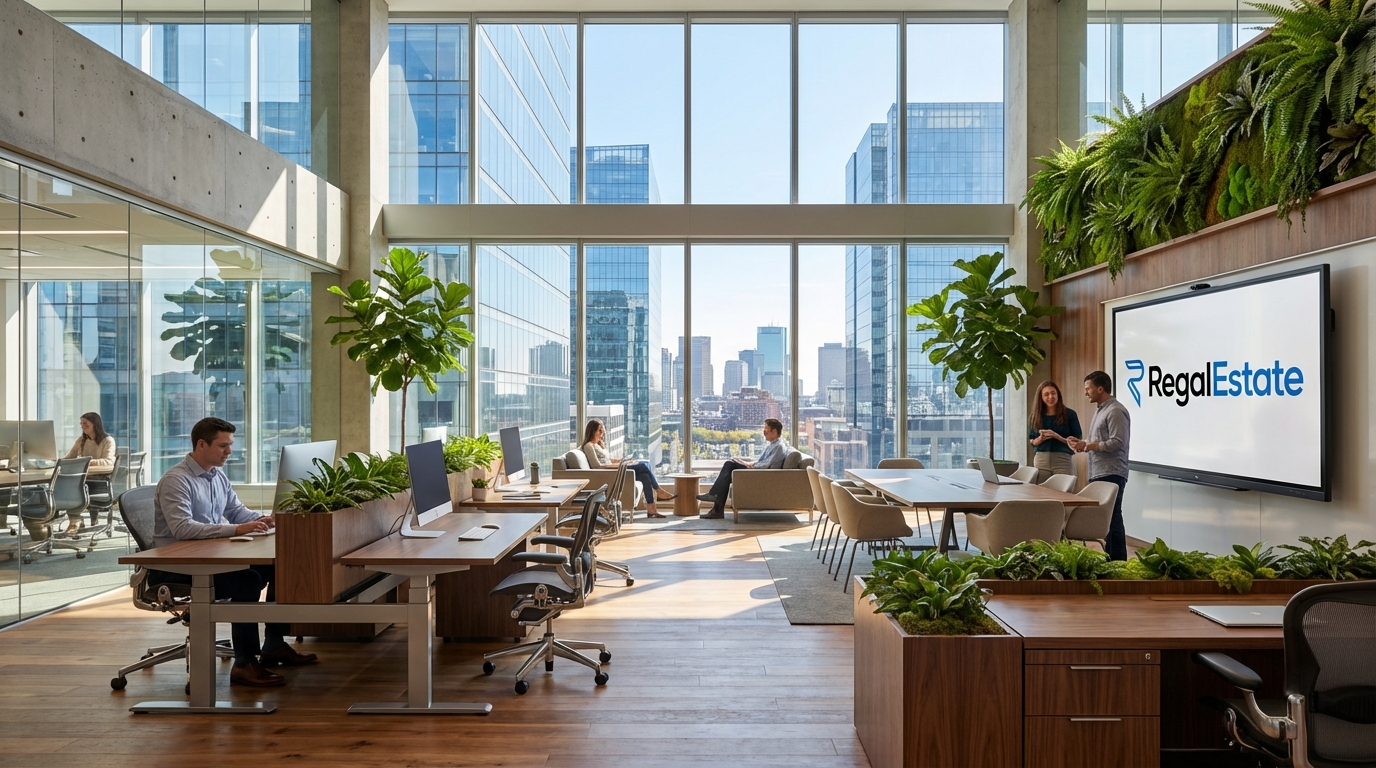
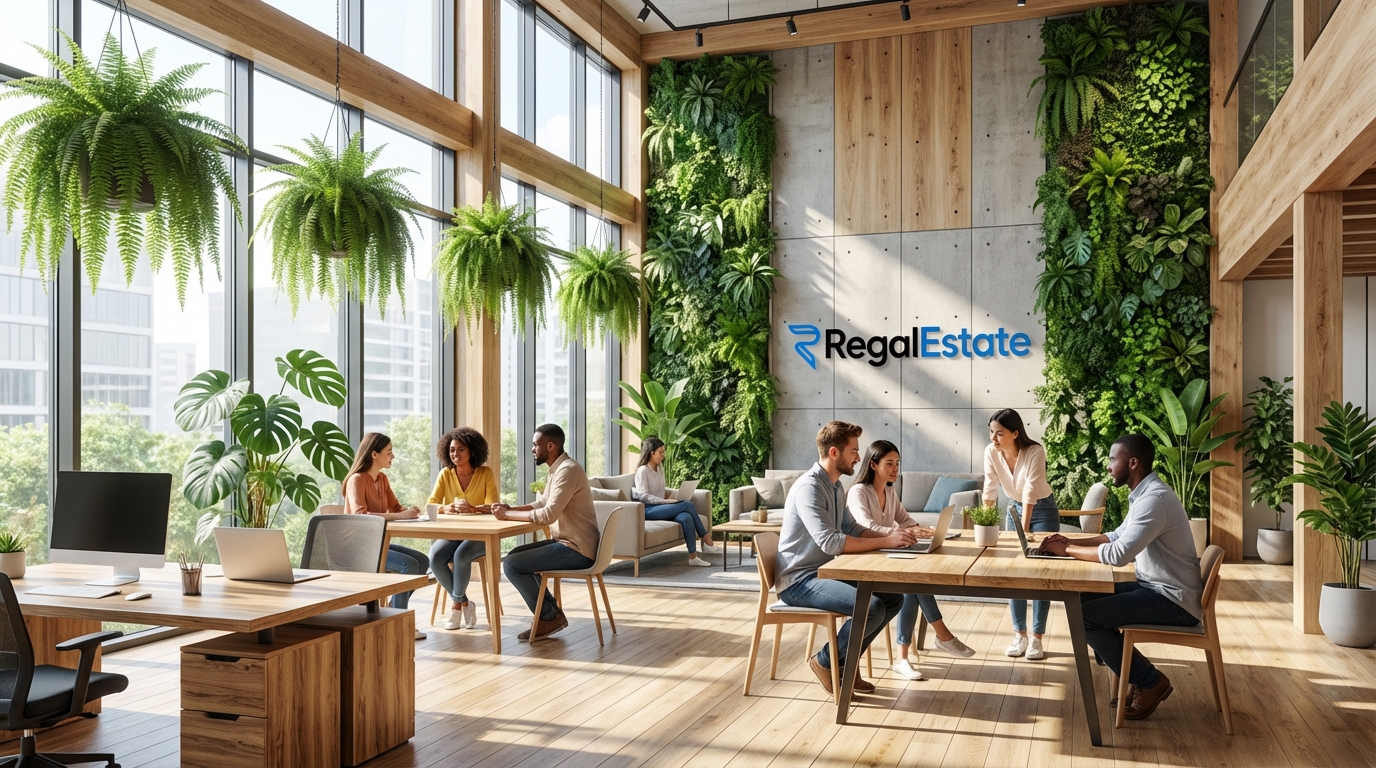
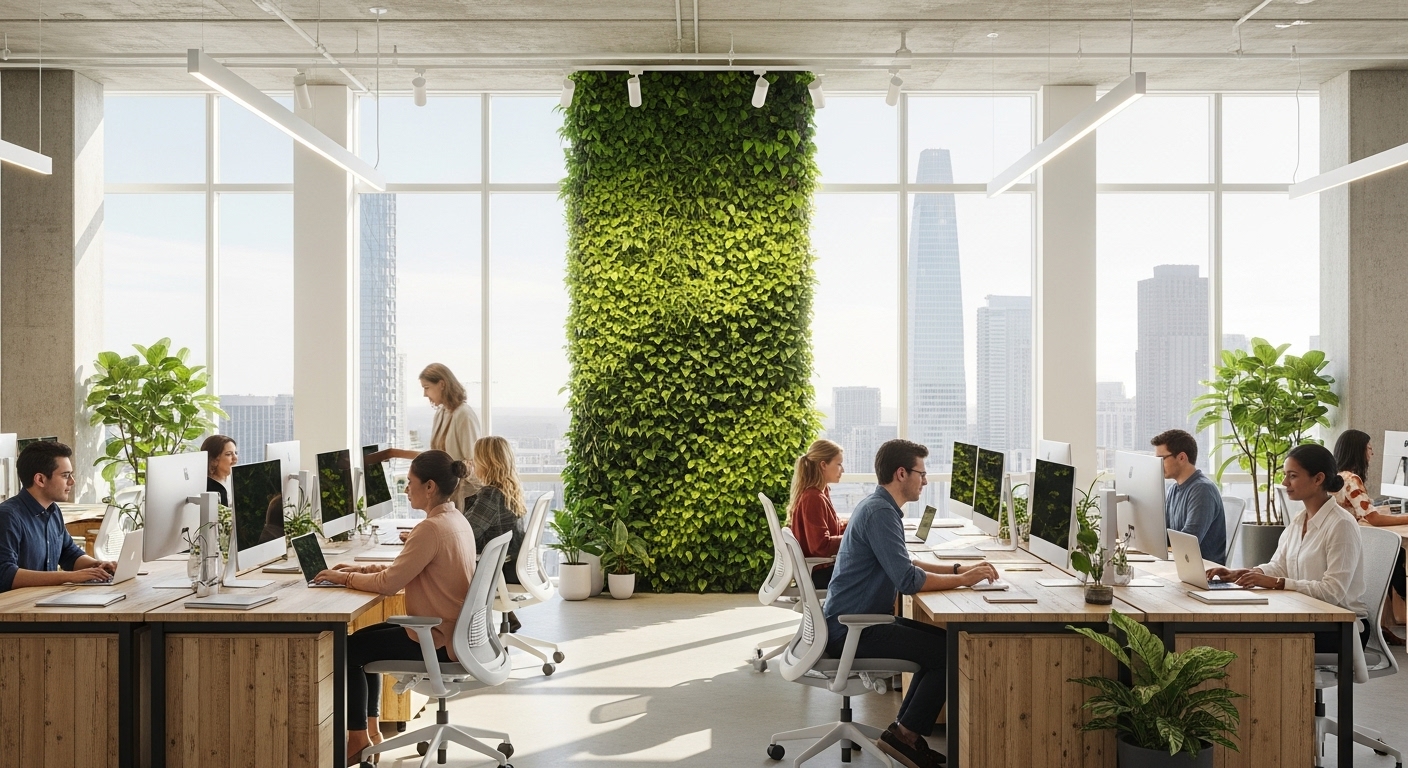
One of the most visually striking trends in sustainable workspaces is biophilic design, the practice of integrating nature and natural elements into the built environment. This philosophy stems from the understanding that humans have an innate connection to the natural world, and that nurturing this connection can lead to significant improvements in mental and physical health. In practice, biophilic design goes far beyond adding a few potted plants. It involves prioritizing natural light through large windows and smart glass, creating sightlines to outdoor green spaces, and using natural materials like wood, stone, and water features. Living walls, indoor gardens, and spaces that mimic natural patterns and textures are becoming signature features in progressive offices. The benefits are well-documented: exposure to nature has been shown to reduce stress, improve cognitive function, boost creativity, and lower absenteeism. In a competitive talent market, these advantages are invaluable. By creating environments that feel restorative and energizing, companies are investing directly in their most important asset—their people. This human-centric approach is a cornerstone of the modern sustainable workspace, proving that what is good for the planet is also profoundly good for employee well-being and productivity.
The intelligent ecosystem: smart technology’s role in sustainability
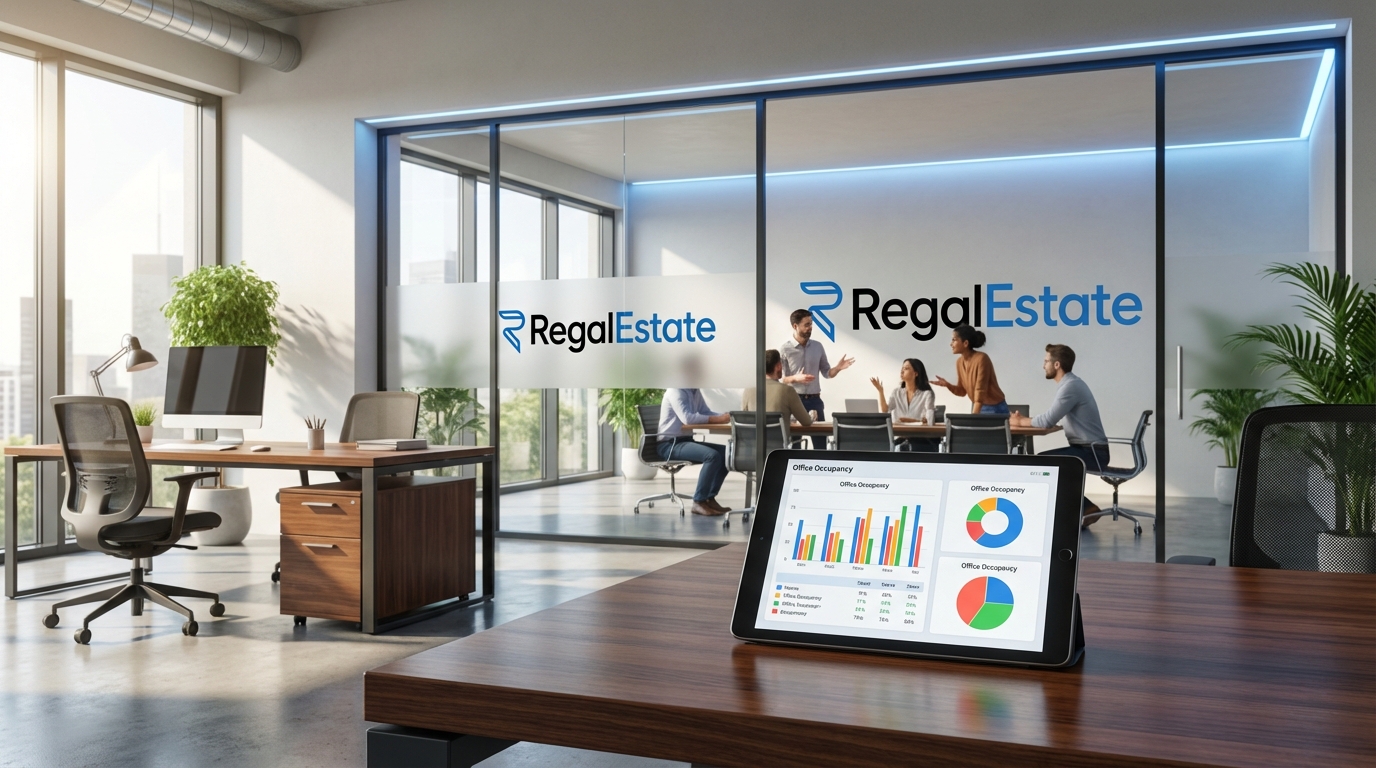
Technology is the invisible engine driving much of the progress in sustainable workspaces. Smart building systems and the Internet of Things (IoT) are providing unprecedented levels of control and insight into how offices consume resources. Advanced HVAC and lighting systems, for example, use a network of sensors to adjust to real-time conditions. They can detect occupancy levels, monitor airflow, and even respond to the position of the sun, optimizing energy use minute-by-minute and eliminating the waste associated with heating, cooling, and illuminating empty rooms. This is particularly crucial in a hybrid work era where building usage can fluctuate dramatically. Beyond energy, smart tech also enhances water conservation through sensor-activated faucets and leak detection systems. Data analytics platforms provide facilities managers with detailed dashboards, tracking consumption patterns and identifying opportunities for further efficiency gains. A recent survey highlighted this trend, noting that energy efficiency and sustainability were the most significant drivers for the adoption of smart building capabilities. For a tech-forward city like San Francisco, leveraging these innovations is a natural fit, creating a powerful synergy between technological advancement and environmental stewardship.
Healthy buildings, healthy teams: the convergence of wellness and green design
The definition of a sustainable workspace has expanded to fully encompass the health and wellness of its occupants. The ‘healthy building’ movement recognizes that the physical environment has a direct and measurable impact on employee health, focus, and overall performance. A key focus is on indoor air quality, which has become a top priority for workers. This involves installing high-grade MERV filtration systems to capture pollutants, using low-VOC (volatile organic compound) paints, adhesives, and furnishings to prevent off-gassing, and implementing real-time air quality monitoring. Access to clean, filtered drinking water and the promotion of healthy food options are also integral components. The design of the space itself can encourage movement and well-being, with features like prominent staircases, ergonomic furniture, and dedicated quiet zones for focused work or meditation. This holistic approach creates a virtuous cycle: healthier employees are more engaged and productive, and a focus on non-toxic, sustainable materials inherently benefits the planet. By treating the office as an ecosystem that nurtures well-being, companies are making a powerful statement that they value both their teams and their environmental responsibilities, a message that resonates deeply within the city’s workforce.
The framework for change: green certifications and regulations
The push for sustainable workspaces is supported by a robust framework of globally recognized certifications and ambitious local regulations. Certifications like LEED (Leadership in Energy and Environmental Design) and the WELL Building Standard provide a clear roadmap and a third-party-verified benchmark for companies to aim for. These standards evaluate a building’s performance across a range of metrics, including energy efficiency, water conservation, site selection, material use, and indoor environmental quality. Achieving certification is not just a badge of honor; it often translates into tangible ROI through lower operating costs and higher asset values. Reinforcing these standards are powerful local policies. The city’s Green Building Ordinance mandates strict environmental performance for new construction and major renovations. Furthermore, the Existing Buildings Energy Performance Ordinance requires annual energy benchmarking and regular audits, creating a culture of continuous improvement. As one report on benchmarked buildings showed, this consistent tracking leads to measurable energy reductions over time. These initiatives, combined with mandatory recycling and composting, ensure that the entire commercial real estate sector in San Francisco is moving in a sustainable direction.
The sustainable ROI: beyond environmental impact
While the ecological benefits are clear, the business case for sustainable workspaces is equally compelling. The immediate return on investment is often seen in reduced operational costs. Energy-efficient lighting, smart HVAC systems, and water-saving fixtures can slash utility bills, delivering significant savings year after year. However, the financial advantages extend far beyond the utility budget. In a highly competitive market for top talent, a certified green and healthy office is a powerful recruitment and retention tool. It signals that a company is modern, responsible, and cares for its employees’ well-being, which can be a deciding factor for high-value candidates. This leads to lower turnover costs and a more engaged, productive workforce. Furthermore, as investors and consumers increasingly prioritize ESG (Environmental, Social, and Governance) criteria, a demonstrable commitment to sustainability can enhance brand reputation and open up new opportunities. Buildings that are sustainable and resilient are also proving to be better long-term investments, holding their value more effectively in a rapidly changing market. The initial investment in green design and technology is not an expense but a strategic move that pays dividends in financial performance, human capital, and brand equity.
Conclusion
The movement towards sustainable workspaces represents a critical evolution in our understanding of the office. It’s a shift from viewing buildings as mere containers for work to recognizing them as dynamic ecosystems that profoundly impact people, the planet, and profit. The principles of the circular economy, the human-centric focus of biophilic design, the efficiency of smart technology, and the holistic approach of healthy building standards are converging to create a new paradigm for the future of work. This is not a passing trend but a fundamental re-architecting of corporate responsibility and strategy. In this global transformation, cities that lead the way, backed by progressive policy and an innovative business community, will set the standard for others to follow. By championing these initiatives, San Francisco is not just building greener offices; it is building a more resilient, healthier, and more competitive economic future, solidifying its position as a true pioneer in creating environments where both businesses and people can thrive sustainably. The green shift is more than an aesthetic change; it is the foundation of the next generation of corporate success.