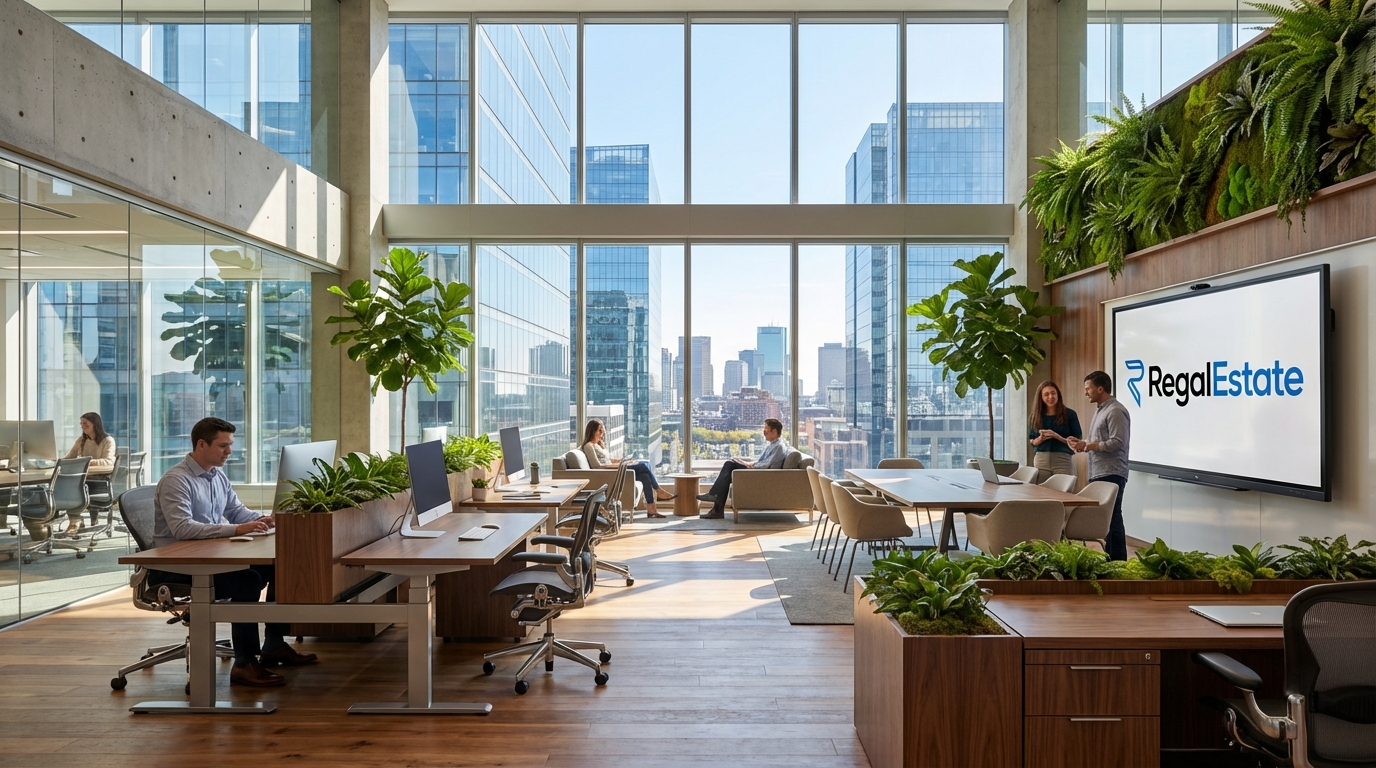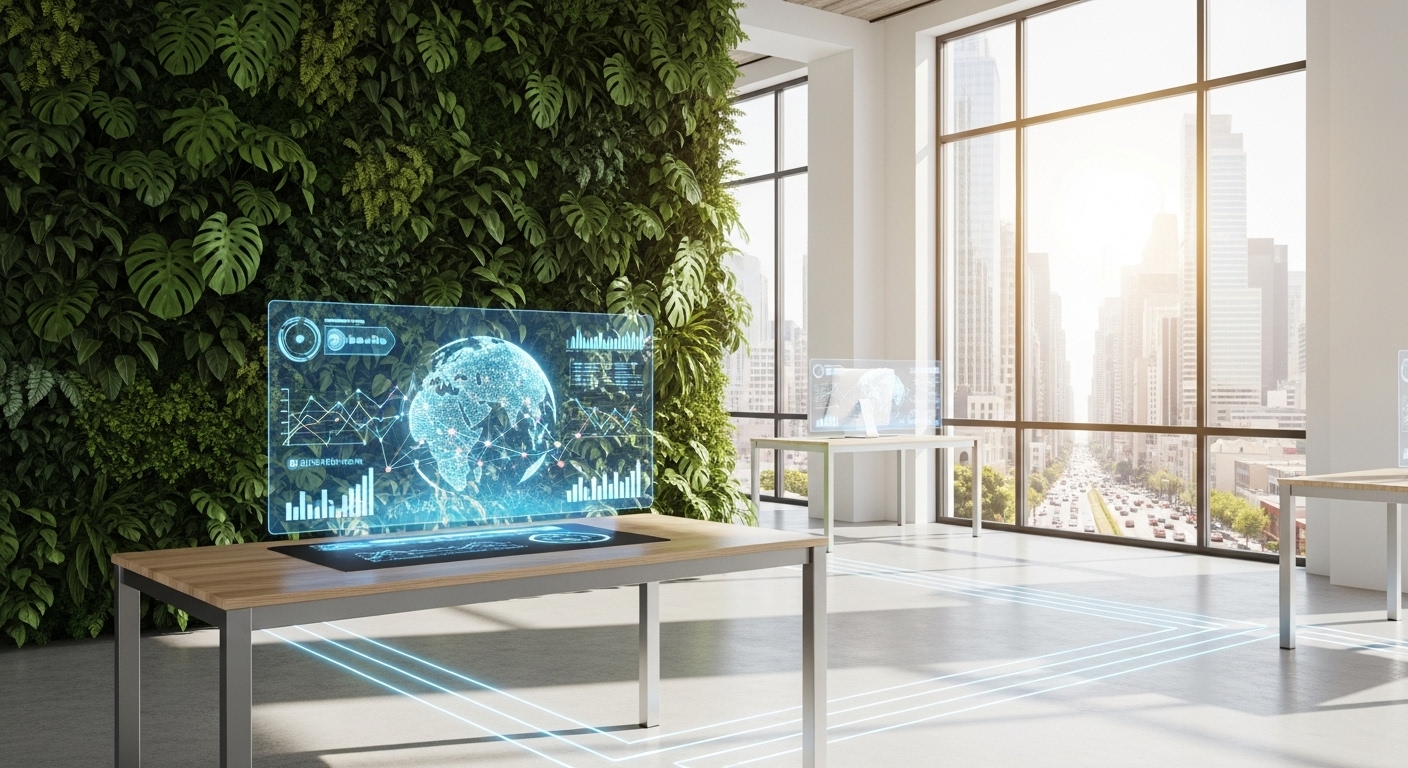
The modern workplace is no longer just a physical location; it’s a dynamic ecosystem. In the wake of the widespread adoption of hybrid work, businesses are fundamentally rethinking the purpose of the office. The challenge is clear: create an environment that is not only efficient and sustainable but also compelling enough to draw employees in. The solution lies in transforming the office into an intelligent nerve center, a cohesive space where smart technologies like the Internet of Things (IoT), Artificial Intelligence (AI), and advanced analytics converge. This integration is creating a responsive, data-driven environment that optimizes resource usage while placing employee well-being and productivity at its core. This article explores how unifying these disparate technologies creates a workplace that is greater than the sum of its parts, fostering a truly people-first future of work.
The role of AI in fostering seamless collaboration
Artificial intelligence is the brain of the intelligent nerve center, acting as a powerful engine for productivity and collaboration, especially in a hybrid setting. The primary challenge of a distributed workforce is maintaining seamless communication and workflow parity between in-office and remote team members. AI-powered tools are expertly closing this gap. Modern communication platforms, such as Microsoft Teams and Slack, are now deeply integrated with AI to offer features like intelligent meeting summaries, real-time transcription, and automated task assignments generated directly from conversations. This ensures that everyone stays aligned, regardless of where they are working. Furthermore, AI is revolutionizing project management. Tools like Asana and Trello leverage machine learning to predict project timelines, identify potential bottlenecks, and optimize resource allocation. This predictive capability shifts project management from a reactive to a proactive discipline. By automating routine administrative tasks and providing data-driven insights, AI liberates employees from low-value work, allowing them to focus on strategic thinking, creativity, and complex problem-solving. This fosters a more engaging and impactful work experience, directly contributing to higher productivity and job satisfaction.
IoT as the backbone of the efficient workspace
If AI is the brain, then the Internet of Things (IoT) is the central nervous system of the smart office. It consists of a network of interconnected sensors and devices that gather real-time data about the physical workspace, creating an environment that can adapt to the needs of its occupants. One of the most significant impacts of IoT is in energy efficiency and sustainability. Smart lighting and climate control systems use occupancy sensors to adjust lighting and temperature automatically, ensuring that energy is only consumed in spaces that are actively in use. This can lead to substantial reductions in utility costs and a smaller carbon footprint. Beyond environmental controls, IoT is critical for space optimization. In a hybrid model, understanding how and when the office is used is paramount. IoT sensors provide granular data on desk usage, meeting room occupancy, and traffic flow in common areas. This information allows facility managers to make informed decisions about office layouts, reconfiguring underutilized areas and avoiding unnecessary real estate expenses. For employees, this translates into a more convenient experience, with apps that allow them to book available desks or find quiet spaces to concentrate, eliminating friction from their daily routines and empowering them with control over their environment.
Data analytics: from insight to optimization
The vast amounts of data collected by IoT sensors are only valuable when translated into actionable insights. This is where data analytics comes in, serving as the crucial link between information and intelligent decision-making. By analyzing patterns in space utilization, energy consumption, and employee movement, organizations can move beyond guesswork and strategically optimize their physical environment. For example, analytics might reveal that smaller, collaborative meeting rooms are in high demand while larger boardrooms sit empty. This insight enables a company to reallocate its space to better support how its teams actually work, fostering more effective collaboration. A case study in workplace analytics showed that by analyzing ‘dwell time’ in different zones, a company identified a high-traffic, noisy area that was negatively impacting the concentration of nearby employees. By reconfiguring the layout based on this data, the company saw a significant increase in employee sentiment scores. This data-driven approach allows for a continuous feedback loop, where the workplace is constantly refined to better meet the evolving needs of the workforce. It transforms the office from a static structure into a living, responsive environment that actively contributes to organizational success and employee satisfaction.
Prioritizing people with wellness technology
A truly intelligent office places the health and well-being of its occupants at the forefront. Smart technology is a powerful enabler of this human-centric approach. The same IoT sensors that manage energy can also monitor environmental factors crucial for wellness, such as air quality, CO2 levels, humidity, and ambient noise. When these metrics fall outside of optimal ranges, automated systems can adjust ventilation or alert facility managers, ensuring a healthy and comfortable environment that promotes cognitive function and reduces stress. This focus on well-being extends to lighting systems that can mimic natural circadian rhythms, changing in color temperature throughout the day to boost alertness in the morning and promote relaxation in the afternoon. Furthermore, smart office platforms are integrating with employee wellness apps and wearables, providing personalized insights and encouraging healthy behaviors like taking regular breaks or staying hydrated. By creating a workspace that actively cares for its inhabitants, companies can significantly improve employee morale, reduce absenteeism, and attract and retain top talent in a competitive market.
Weaving sustainability into the office fabric
Sustainability is no longer a peripheral concern but a core business imperative, and the intelligent office is inherently a sustainable one. The technologies that drive efficiency and optimize operations also deliver significant environmental benefits. Smart energy management, powered by IoT sensors and AI-driven platforms, is the most direct contributor. By ensuring that lighting, heating, and cooling systems are only used when and where they are needed, buildings can drastically reduce their energy consumption and associated greenhouse gas emissions. This goes beyond simple automation; AI can analyze historical usage data and weather forecasts to create predictive energy models, further optimizing efficiency. Water management systems can detect leaks and optimize irrigation for indoor plants or outdoor landscaping. Moreover, space utilization analytics support sustainability by allowing companies to operate effectively within a smaller real estate footprint, reducing the environmental impact associated with constructing, powering, and servicing large office buildings. By embracing smart technology, businesses can create workplaces that are not only cost-effective and productive but also aligned with corporate responsibility goals, making them more attractive to employees and investors alike.
Overcoming the challenges of implementation
While the vision of a unified intelligent office is compelling, the path to implementation is not without its challenges. One of the primary concerns is data security and privacy. A building filled with sensors collecting data on employee movement and behavior requires robust cybersecurity measures to protect sensitive information and transparent policies to maintain employee trust. Organizations must be clear about what data is being collected and for what purpose. Another significant hurdle is technological fragmentation. Without a clear strategy, companies can end up with a collection of siloed smart devices from different vendors that do not communicate with each other, creating a disjointed and inefficient user experience. The key to success is to adopt a platform-based approach, selecting an integrated workplace management system (IWMS) that can act as the central hub, unifying data and control from various systems into a single, intuitive interface. Finally, there is the human element. Successfully deploying smart office technology requires a change management strategy that includes educating employees on the benefits and functionalities of the new systems. Without user adoption, even the most advanced technology will fail to deliver its promised return on investment.
In conclusion, the future of work is being built today, and its foundation is intelligent, integrated technology. Moving beyond isolated gadgets, the true power of the smart office is unlocked when AI, IoT, and data analytics are unified into a single, cohesive nerve center. This holistic approach creates a powerful flywheel effect: IoT sensors gather data, analytics platforms derive actionable insights, and AI-driven systems automate and optimize the environment in real-time. The result is a workplace that is not only supremely efficient and sustainable but also deeply human-centric. It’s an environment that adapts to the needs of its people, fosters seamless collaboration for hybrid teams, and actively promotes well-being. By thoughtfully integrating these technologies, businesses can create a destination office—a productive, engaging, and supportive space that empowers employees to do their best work, no matter where they are.