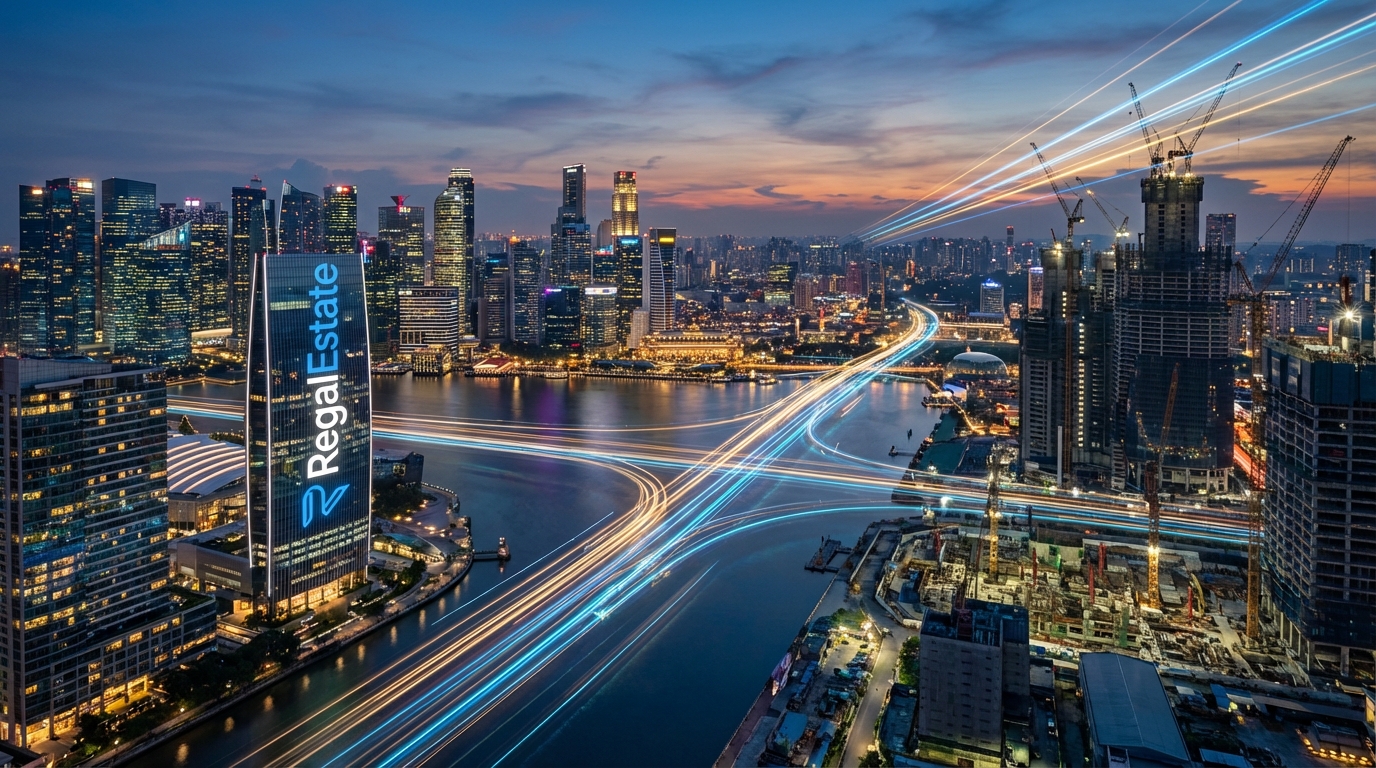
Global economic maps change rapidly, and this transformation is incredibly apparent within the Asia-Pacific region. Historically, a small handful of commercial titans like Tokyo and Singapore completely dominated narratives of international corporate success. Companies currently favor a much more decentralized approach, moving away from centralized mega-centers toward a multi-polar landscape of highly specialized cities. Digital acceleration, strategic supply chain diversification, and surging foreign investment empower a brand new class of vibrant, opportunity-rich locations. Understanding this evolving ecosystem represents a profoundly critical first step for any business planning a successful APAC corporate expansion. Modern enterprises cannot simply replace the old guard; they must fundamentally recognize the vast potential of an interconnected, networked region offering diverse capabilities across multiple borders.
The foundation of APAC corporate expansion: why Singapore and Tokyo endure
Despite rising challengers, established international powerhouses provide essential anchors for overarching regional stability. Singapore consistently delivers unmatched dominance across wealth management, biomedical sciences, and international trade logistics. Strategic geography, incredibly stable political climates, and highly favorable tax structures make the city-state an ideal regional headquarters for ambitious multinational firms. Massive foreign direct investment flows continuously into its borders, actively serving as a primary gateway to rapidly growing Southeast Asian consumer markets. World-class airports and sophisticated maritime ports function seamlessly as the foundational logistical backbone of international trade. These exceptional physical assets guarantee seamless global connectivity and unparalleled supply chain efficiency that regional competitors continually struggle to match.
Tokyo demonstrates incredible economic resilience and sophisticated technological prowess on a massive scale. Serving as the primary commercial capital for a colossal global economy, the metropolis functions as an undisputed epicenter for advanced manufacturing, deep tech innovation, and extensive scientific research. Japanese corporations heavily lead groundbreaking advancements in automotive engineering, precision robotics, and cutting-edge consumer electronics. Operating directly from this formidable command center, organizations easily access a highly skilled professional workforce and a remarkably mature consumer market. Urban leaders continuously fund advanced smart city infrastructure, ensuring the location remains a critical global financial node for decades. Companies requiring deep industrial expertise reliably integrate Tokyo into their long-term operational frameworks.
Specialist surges driving modern APAC corporate expansion
Specialized urban centers now aggressively capture global attention by cultivating world-class expertise in specific, high-growth economic niches. Seoul masterfully blends advanced digital technology with massive cultural influence to construct a phenomenal economic engine. The city heavily leads the global market in memory semiconductor production, next-generation digital communications, and extensive artificial intelligence research initiatives. Phenomenal cultural exports—widely recognized internationally as the K-wave—further amplify its profound reach across media, film, and modern music. This unique cultural capital directly fosters thriving, lucrative ecosystems for innovative e-commerce brands and diverse creative industries. Tech-savvy local consumers and hyper-connected digital infrastructure provide an unmatched urban testbed for rolling out futuristic consumer services.
Southern hemisphere markets rely heavily on Sydney as a premier anchor for advanced professional services and traditional finance. Robust, transparent regulatory frameworks continuously attract leading international banks, disruptive fintech innovators, and major investment firms to the vibrant Australian coast. High living standards and exceptional scenic environments help growing organizations effortlessly attract and retain highly competitive, globally mobile talent pools. Leading regional universities actively support a booming local startup scene heavily focused on sustainable green technology and enterprise software platforms. Strong bilateral economic relationships bridging Western and Asian markets firmly position the coastal city as a highly secure base for rapidly scaling international operations.
Southeast Asia’s role in future APAC corporate expansion
Dynamic economic evolution unfolds most rapidly and visibly across emerging Southeast Asian territories. Favorable population demographics, massive influxes of foreign investment, and notable international manufacturing migrations create uniquely fertile environments for high-growth commercial hubs. Ho Chi Minh City acts as a incredibly powerful magnet for technology hardware producers and global manufacturing firms. Energetic, youthful workforces and highly competitive local labor costs position Vietnam as a truly vital node in modern, decentralized supply networks. Pro-investment government policies and aggressive infrastructure spending significantly accelerate this incredible upward trajectory. Industry leaders actively integrate these sprawling industrial zones to maximize overall production efficiency and heavily drive rapid international market penetration.
Jakarta presents distinctly different commercial opportunities driven entirely by explosive digital content consumption. Serving as the beating heart of Southeast Asia’s absolute largest economy, the sprawling Indonesian metropolis commands immediate attention as an undisputed digital heavyweight. A massive, mobile-first young population continuously fuels intense, lucrative competition among e-commerce marketplaces, ride-hailing applications, and agile fintech pioneers. Venture capital flows abundantly into the city’s vibrant digital tech scene, reliably producing highly successful billion-dollar unicorn startups. Simultaneously, Kuala Lumpur offers incoming organizations a brilliant blend of advanced commercial infrastructure and remarkable operational cost-effectiveness. Malaysian regulatory authorities successfully developed specialized commercial niches encompassing global business services, immense regional data centers, and compliant Islamic finance.
When global leaders are choosing their path to growth, they consistently leverage this multicultural Malaysian talent pool to scale operations rapidly. Supply chain analysts and international economists frequently note how this regional shift directly mirrors broader macro trends observed in Asia’s supply chain reconfiguration. Global manufacturing operations deliberately fracture into specialized, capability-specific industrial clusters rather than relying perilously on a single vulnerable production center. Decentralization empowers businesses to mitigate geographical risks while simultaneously tapping into highly specialized local labor forces.
Subcontinental engines fueling APAC corporate expansion
Indian domestic markets currently drive monumental paradigm changes across the broader Asian economic landscape. Two distinct, powerful urban engines continuously power this national ascent: the technological furnaces of Bangalore and the incredible financial might characterizing Mumbai. Often recognized universally as the premier Indian Silicon Valley, Bangalore absolutely dominates the domestic software engineering revolution. Dense, thriving ecosystems of multinational tech corporations operate seamlessly alongside homegrown IT service giants and thousands of agile tech startups. Incoming organizations immediately access bottomless pools of exceptional software engineers, visionary application developers, and brilliant technical entrepreneurs cultivated by prestigious local academic institutions. Establishing a dedicated physical presence here grants global tech firms immediate, unfettered access to immense corporate innovation labs.
Mumbai beautifully complements this intense technological focus by serving proudly as the unquestioned commercial capital of the sprawling nation. The bustling, energetic metropolis hosts major national stock exchanges, the vital reserve bank, and the central administrative headquarters for countless powerful international conglomerates. Deepwater coastal ports efficiently handle truly massive portions of the nation’s maritime trade, cementing the city as a primary international logistical node. Robust, sophisticated financial infrastructure allows foreign institutional capital to flow smoothly into the rapidly developing subcontinent. Business leaders aggressively utilize these deep domestic capital markets to thoroughly fund massive corporate ventures across professional services, heavy manufacturing, and commercial entertainment sectors. These twin cities collectively represent truly powerful synergies driving India toward unmatched global economic influence.
Hub-and-spoke models optimizing APAC corporate expansion
Navigating extreme geographic scale and complex regulatory diversity naturally presents immensely significant logistical challenges for growing international enterprises. Savvy corporate strategists actively mitigate these inherent regional hurdles by heavily implementing sophisticated hub-and-spoke organizational models. This highly effective structural framework empowers forward-thinking organizations to balance necessary centralized administrative control with crucial localized market responsiveness. Top executives typically establish massive primary regional headquarters—the central strategic hub—within highly connected, politically stable financial environments like Singapore or Hong Kong. These formidable anchor offices directly manage vital core functions comprehensively encompassing high-level regional strategy formulation, complex corporate financial oversight, and overarching global supply chain coordination.
From this primary fortified command center, ambitious companies efficiently extend their daily operational reach into diverse, fragmented secondary markets via smaller, hyper-agile spoke offices. Dedicated local teams operating these localized strategic outposts in rapidly emerging centers like Jakarta or Bangalore focus intensely on targeted regional marketing, direct enterprise sales, and culturally nuanced customer service. Consulting an agile expansion manual frequently highlights exactly how this specific organizational structure streamlines overarching macro operations while brilliantly maintaining deep, authentic community connections. Smart corporations intelligently optimize internal resource allocation by deliberately keeping high-cost executive leadership strictly centralized while aggressively cultivating highly specialized localized expertise. Networked, decentralized approaches consistently prove far more commercially resilient and operationally adaptable than monolithic, traditional physical deployment strategies.
How digital shifts redefine APAC corporate expansion
Explosive, unprecedented digital transformation continuously redefines the strict fundamental criteria utilized by boards to evaluate prospective international business locations. Massive segments of the growing Asian population operate almost exclusively within mobile-first, highly sophisticated digital environments. This rapid technological consumer leapfrogging drives massively accelerated adoption rates across ubiquitous on-demand digital services and decentralized virtual finance platforms. Expanding companies must strictly prioritize target cities explicitly offering robust, uninterrupted internet infrastructure and highly skilled data science professionals. Failure to actively invest heavily in reliable digital corporate backbones virtually guarantees rapid commercial obsolescence, completely regardless of a specific city’s historical economic dominance. Global leadership teams actively seek out forward-thinking locations consistently producing exceptional technical talent across generative artificial intelligence and advanced commercial cybersecurity disciplines.
Environmental sustainability simultaneously transcends basic corporate social responsibility checkboxes to become an absolutely mandatory strategic corporate requirement. Global institutional investors and highly mindful retail consumers now rigorously evaluate enterprise locations based entirely on comprehensive environmental, social, and governance operational metrics. Forward-thinking municipalities actively and aggressively compete for lucrative corporate tenants by showcasing intense, verifiable commitments to municipal renewable energy grids and strict green building construction standards. Singapore’s incredibly ambitious national green initiatives perfectly illustrate exactly how established financial centers strategically position themselves to aggressively attract highly environmentally conscious global organizations. Strict sustainable mandates directly influence everything from complex international logistical frameworks to standard modern office interior designs. Aligning regional operational footprints directly with aggressive global ecological goals consistently delivers immense competitive advantages throughout modern corporate networks.
Viewing the incredibly diverse Asian commercial landscape purely through the increasingly narrow lens of a few isolated mega-hubs represents a completely outdated corporate methodology. Modern global markets have confidently entered a highly complex, beautifully interconnected evolutionary phase defined clearly by distributed networks of specialized secondary centers. Established financial pillars supply absolutely necessary institutional stability, while surging niche cities deliver unprecedented, disruptive innovation. Booming younger populations across vast emerging territories simultaneously create massive, lucrative new gravity centers for incredible digital consumption and highly specialized advanced manufacturing. Successful corporate leaders clearly recognize that sustainable regional growth requires intentionally building a deeply integrated, highly resilient presence across this beautifully diverse landscape. Modern organizational success relies entirely upon intentionally weaving resilient, dynamic operational enterprise networks that accurately and authentically reflect the vibrant, culturally rich region itself.