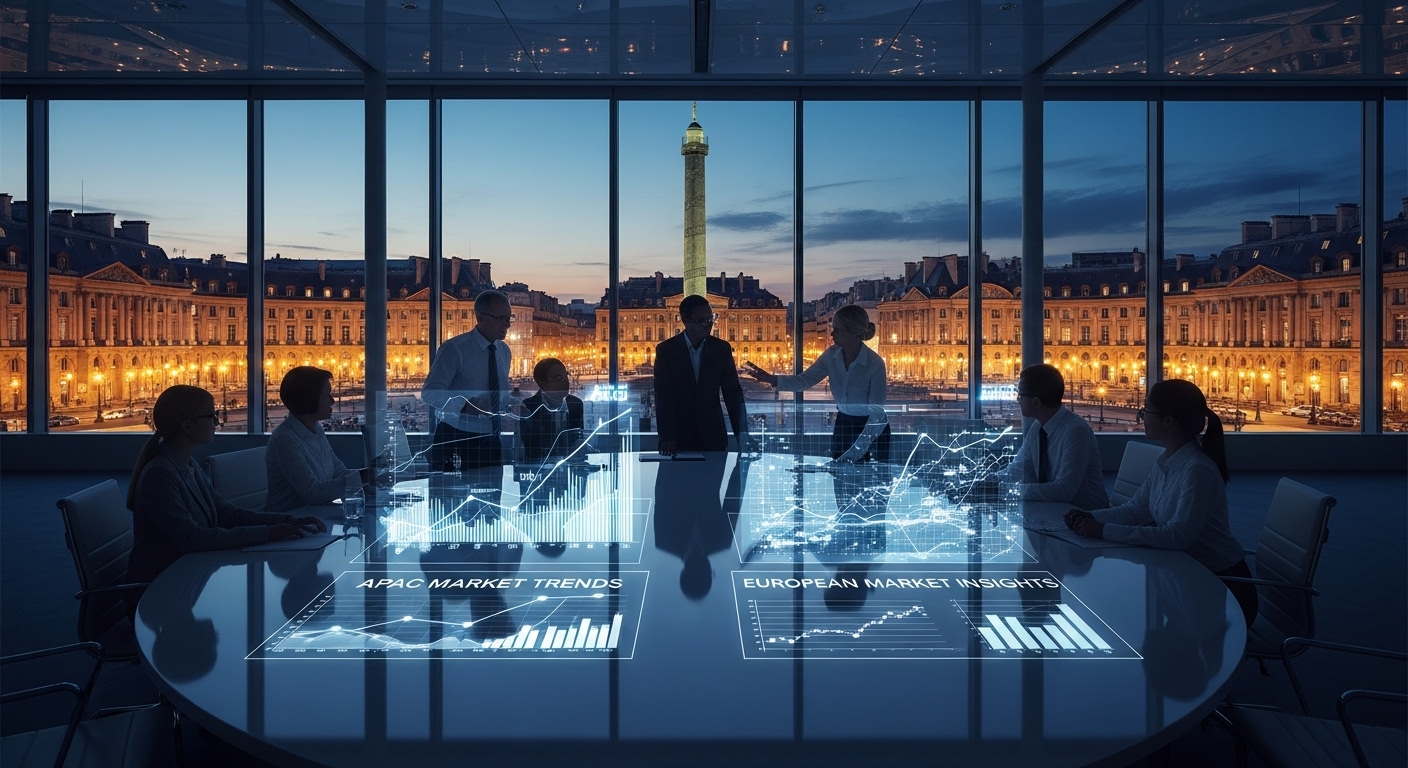
Europe’s corporate landscape is in the midst of a radical transformation. The traditional business district—once defined solely by its concentration of skyscrapers and financial institutions—is being reimagined from the ground up. Driven by a powerful convergence of forces, a new model is emerging, one where success is measured not just in economic output, but in environmental responsibility, technological innovation, and the ability to attract and nurture top talent. Recent analysis shows a clear ‘flight to quality,’ as companies increasingly seek workspaces that are not only efficient but also align with ambitious Environmental, Social, and Governance (ESG) goals. This shift is reshaping skylines and strategies from London to Warsaw, creating a dynamic and competitive new geography of work across the continent.
The green imperative: Sustainability as a foundational pillar
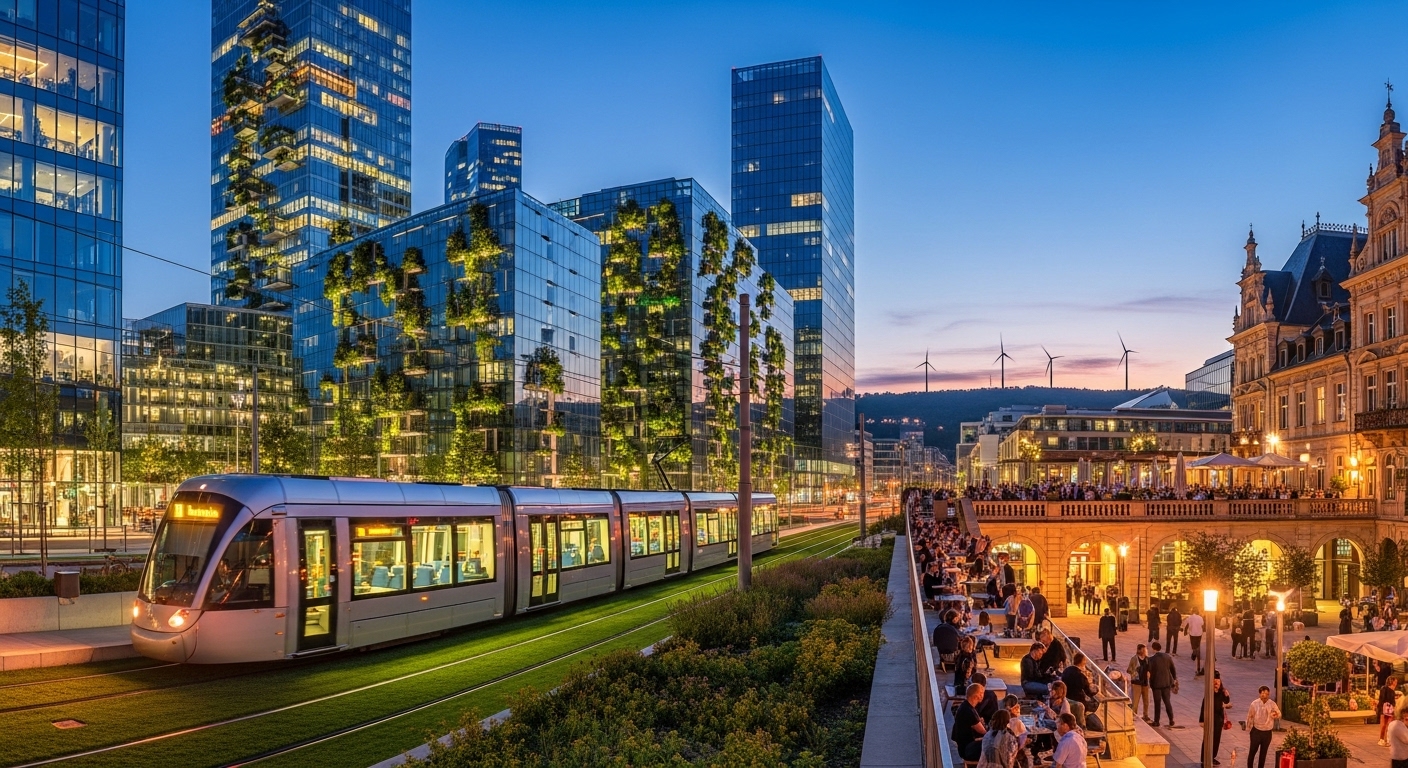
Sustainability is no longer a peripheral concern for European businesses; it has become a central pillar of corporate strategy and real estate decisions. This transition is being significantly accelerated by robust EU legislation. The Corporate Sustainability Reporting Directive (CSRD), which began its phased implementation in 2024, is a landmark regulation compelling thousands of companies to conduct extensive ESG reporting. This has created a powerful ripple effect, making the environmental performance of a building a critical factor in location strategy. Companies are now under immense pressure to occupy spaces that can help them achieve science-based targets for reducing greenhouse gas emissions. As a result, the demand for certified green buildings with high energy efficiency ratings has skyrocketed. Beyond carbon footprints, there’s a growing emphasis on biodiversity and nature-positive designs, leading to the integration of green roofs, living walls, and improved access to sustainable transport within premier business districts. The focus is shifting towards a circular economy, where waste reduction and resource management are embedded into the very fabric of the urban environment, making sustainability a non-negotiable aspect of a district’s appeal.
The digital backbone: Technology’s role in shaping the modern workspace
Fueling this green revolution is Europe’s thriving technology sector. A surge in investment, particularly in AI and deep tech, is not only creating new industries but also redefining the capabilities of the modern workplace. The widespread rollout of 5G and the universal adoption of cloud computing have provided the essential infrastructure for this digital transformation, enabling seamless connectivity and data exchange. This technological leap is being integrated directly into the physical environment of business districts. Smart building technology is rapidly becoming the industry standard, utilizing IoT sensors and AI algorithms to optimize energy consumption, manage resource allocation, and enhance the overall experience for occupants. From automated climate control to predictive maintenance, technology is making buildings more efficient and responsive. Furthermore, the integration of AI-powered tools into daily workflows is boosting productivity and enabling new forms of collaboration, cementing a district’s reputation as a forward-thinking and innovative hub capable of supporting the next generation of business.
The human-centric hub: Winning the global war for talent
In today’s competitive global market, the most critical asset for any company is its people. The post-pandemic era has solidified the move towards flexible, hybrid work models, fundamentally changing the purpose of the physical office. It is no longer just a place for individual tasks but a vital center for collaboration, innovation, and the cultivation of corporate culture. Consequently, business districts are evolving into vibrant, multifaceted destinations designed to support a holistic work-life balance. There’s a heightened focus on providing high-quality amenities, wellness facilities, green spaces, and cultural attractions. Cities that excel in offering a superior quality of life, such as Zurich, Oslo, and Barcelona, are consistently ranked as top destinations for attracting and retaining highly skilled professionals. These cities understand that a thriving business ecosystem requires more than just office towers; it needs a rich urban fabric that supports personal and professional well-being, making the district a place where people genuinely want to be, not just where they have to work.
Emerging power players: The rise of new European tech hubs
While established centers like London, Paris, and Frankfurt remain dominant, the geography of business in Europe is becoming increasingly decentralized. A new wave of dynamic tech hubs is emerging, particularly in Central and Eastern Europe, challenging the traditional hierarchy. Cities like Warsaw and Bucharest are rapidly gaining prominence as attractive markets for both talent and investment. They offer a compelling combination of a highly skilled, tech-savvy workforce, competitive operational costs, and a burgeoning innovation ecosystem. This geographic diversification of talent is a significant trend, prompting a wider range of cities to invest heavily in creating the infrastructure and urban environments necessary to compete on the European stage. This eastward and northward shift signifies a more polycentric and resilient European market, where innovation and opportunity are more distributed than ever before, fostering a new era of cross-continental competition and collaboration.
Case study: La Défense, Paris as a model of reinvention
La Défense in Paris, Europe’s largest purpose-built business district, serves as a compelling case study in this ongoing evolution. Historically characterized by its monolithic, corporate-focused towers, the district is undergoing a significant transformation to align with the new triple helix model. Ambitious sustainability projects are underway to modernize older buildings, improve energy efficiency, and drastically increase the amount of green space. Technologically, the district is embracing smart infrastructure to improve mobility, resource management, and the overall user experience. Perhaps most importantly, La Défense is actively working to become a more human-centric ‘quartier de vie’ (living quarter). This involves introducing more residential units, retail spaces, restaurants, and cultural venues to create a vibrant, 24/7 community. By focusing on creating a mixed-use environment that blends work with life, La Défense aims to shed its image as a sterile corporate zone and reposition itself as a desirable destination for the next generation of talent, proving that even the most established districts must adapt to the new realities of the European market.
Case study: The Zuidas district in Amsterdam
Amsterdam’s Zuidas district is another prime example of a European business hub successfully integrating sustainability, technology, and talent attraction. Originally designed as a traditional financial center, Zuidas has evolved into a dynamic, highly connected, and sustainable urban area. The district boasts some of the highest concentrations of BREEAM-certified buildings in Europe, a testament to its commitment to green construction and energy efficiency. Its strategic location, with direct connections to Schiphol Airport and Amsterdam’s city center, makes it exceptionally accessible. Technologically, Zuidas is a hub for fintech and professional services, supported by a state-of-the-art digital infrastructure. However, its success is equally due to its focus on livability. The master plan for Zuidas emphasizes a mix of functions, integrating high-end office spaces with residential apartments, cultural institutions, and public parks. This creates a vibrant atmosphere that extends beyond the typical 9-to-5 workday, fostering a strong sense of community and making it a powerful magnet for international talent seeking a high quality of life alongside premier career opportunities.
Looking forward: The future-proof business district
The evolution of European business districts is a clear indicator of the broader shifts in the global economy and the future of work. The most successful districts of tomorrow will be those that move beyond monolithic office parks and embrace a more integrated, ecosystem-based approach. They will be defined by their adaptability, resilience, and human-centric design. Future-proofing will require a continued commitment to the triple helix of sustainability, technology, and talent. This means investing in renewable energy and circular economy principles, fostering innovation by creating environments where tech startups can thrive alongside established corporations, and prioritizing the well-being of residents and workers through thoughtful urban planning. The winning formula is no longer a secret: create a space that is green, smart, and profoundly human. The cities and districts that champion this integrated strategy will not only attract the lion’s share of investment and talent but will also define the new standard for competitive and thriving business ecosystems on the global stage.