For the modern professional, the allure of a coworking space is undeniable. It promises a vibrant community, endless networking opportunities, and a host of amenities from high-speed internet to, yes, free-flowing coffee. Yet, as hybrid work models become the norm, many are discovering the central challenge of these dynamic environments: maintaining deep, focused productivity amidst the energetic buzz. The very elements that make coworking attractive—the social interactions and constant hum of activity—can become significant barriers to concentration. This guide moves beyond the surface-level perks to offer a strategic framework for transforming your shared workspace from a potential distraction into a powerful catalyst for your most productive work. We will explore how to structure your day, create a personal focus zone, leverage the community intelligently, and utilize the full spectrum of amenities to achieve peak performance. Mastering productivity in a coworking space isn’t about isolation; it’s about intentional integration.
Structuring for success: designing your productive workday
The flexibility of a coworking space is a double-edged sword. Without the rigid structure of a traditional office, the onus is on you to create a framework that fosters productivity. The most effective method is time blocking. Before your week begins, allocate specific blocks of time in your calendar for different types of tasks. Assign 90-minute blocks for ‘deep work’—complex, high-concentration tasks that move the needle. Reserve smaller, 30-minute blocks for ‘shallow work’ like responding to emails or administrative duties. This approach prevents the day from becoming a reactive mess of notifications and interruptions. Another powerful technique is the Pomodoro Method, which involves working in focused 25-minute intervals separated by short 5-minute breaks. This is particularly effective in a stimulating coworking environment, as the short breaks allow you to briefly engage with your surroundings without derailing your entire workflow. Crucially, you must treat these scheduled blocks with the same seriousness as a client meeting. The goal is to impose a deliberate structure onto a flexible environment, giving your brain clear signals about when it’s time to focus and when it’s okay to be distracted.
The art of the bubble: creating your personal focus zone
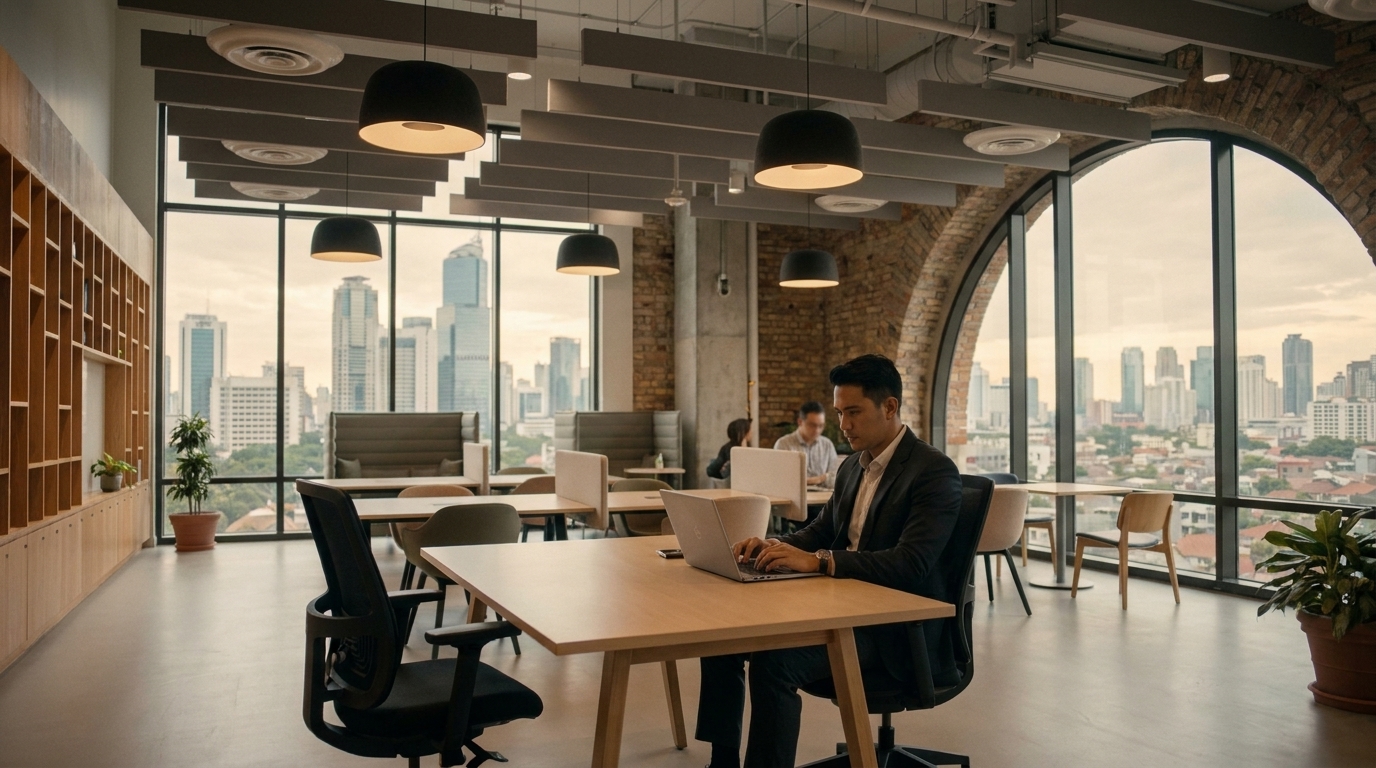
Your immediate physical environment has the single biggest impact on your ability to concentrate. In a shared space, you must proactively create a ‘productivity bubble’ to shield yourself from auditory and visual distractions. Noise-canceling headphones are the most critical tool in your arsenal. They not only block out conversations and background noise but also serve as a universal ‘do not disturb’ sign to fellow members. To further minimize interruptions, be strategic about where you sit. High-traffic areas near the entrance or kitchen are poor choices for deep work. Instead, opt for a desk in a designated quiet zone, a corner, or facing a wall to reduce visual stimuli. Many modern coworking spaces, understanding this need, now offer dedicated focus rooms or soundproof phone booths. Book these spaces in advance for tasks that require absolute concentration. Finally, maintain a tidy, organized desk. A cluttered workspace can lead to a cluttered mind, pulling your attention away from the task at hand. Keep only the essentials on your desk to create a clean, distraction-free field of vision that signals to your brain that it’s time to work.
Leveraging community without sacrificing concentration
The community is a primary benefit of coworking, but unmanaged socializing is the enemy of productivity. The key is to engage with intention. Instead of allowing for random, sporadic interruptions throughout the day, schedule your social interactions. Use your Pomodoro breaks or designated lunch break to catch up with fellow members. This satisfies the need for social connection while protecting your deep work blocks. Another powerful strategy is to find an ‘accountability partner’. This is someone you share your daily goals with each morning. A simple 5-minute check-in can create a powerful sense of commitment and make you less likely to procrastinate. You can also leverage the community for collaborative tasks. If you need to brainstorm or get feedback, schedule a specific time to work with others in a collaborative zone or meeting room. By structuring your interactions, you transform the community from a potential distraction into a valuable resource. It’s about shifting from passive, reactive socializing to proactive, scheduled engagement that complements, rather than competes with, your workflow.
The modern professional’s tech stack for shared workspaces
In a fluid work environment, your digital toolkit is just as important as your physical one. The right technology can help you stay organized, communicate efficiently, and block out digital noise. A robust task management application like Asana, Trello, or Todoist is non-negotiable. It allows you to externalize your to-do list, prioritize tasks, and maintain clarity on your objectives for the day, which is crucial when your physical surroundings are constantly changing. Secondly, for team collaboration, asynchronous communication tools like Slack or Microsoft Teams are essential, but they must be managed. Turn off non-essential notifications and set a status to indicate when you are in a deep work session. For managing digital distractions, use a website blocker like Freedom or Cold Turkey during your focus blocks to prevent yourself from mindlessly drifting to social media or news sites. Finally, consider a note-taking app like Evernote or Notion to quickly capture ideas without breaking your flow. This curated tech stack creates a digital ecosystem that supports focused work, ensuring that your most significant distractions aren’t coming from your own devices.
Beyond the desk: using space amenities to enhance output
Top-tier coworking spaces are designed with productivity in mind, offering a variety of environments beyond a simple desk. Using these amenities strategically can significantly enhance your output by aligning the space with the task. For instance, private phone booths are not just for calls. They are perfect, pre-made focus zones for an hour of intense, uninterrupted work. Use them to write a detailed report or analyze complex data. When your energy levels dip, don’t just grab another coffee. Take a 15-minute break in the designated lounge or wellness area. A change of scenery can reset your focus far more effectively than caffeine. Meeting rooms should be booked not only for client-facing activities but also for solo brainstorming sessions. Pacing around a room with a whiteboard can unlock creative ideas in a way that sitting at a desk cannot. Even the kitchen can be used strategically. Plan your lunch and coffee breaks during off-peak hours to avoid the biggest crowds and longest waits, turning your break into a moment of genuine recharge rather than another source of friction. By viewing the entire coworking facility as a toolkit, you can move between different zones throughout the day to match your energy and task requirements, creating a more dynamic and effective workflow.
The mindset shift: embracing the energy of a shared environment
Ultimately, thriving in a coworking space requires a psychological shift. Instead of viewing the ambient energy as a threat to your focus, learn to harness it. The concept of ‘social facilitation’ suggests that the mere presence of others performing similar tasks can boost performance. Seeing others working diligently can provide a subtle, motivating pressure to stay on track. Reframe the background hum as a sign of productive energy rather than a distraction. This mindset is crucial for long-term success. It’s also vital to establish firm work-life boundaries. The ‘always-on’ nature of some coworking spaces, with 24/7 access, can blur the lines between work and personal time. Create a clear ‘end of day’ ritual. This could be packing up your laptop, updating your task list for the next day, and physically leaving the building. This ritual signals to your brain that the workday is over, helping you to disconnect and recharge properly. By adopting this intentional mindset and establishing clear boundaries, you transition from simply working *in* a coworking space to truly thriving *because* of it, making you a more effective and fulfilled modern professional.
In conclusion, achieving peak productivity in a coworking space is an active, intentional process that goes far beyond simply showing up and opening a laptop. It requires a deliberate approach to structuring your day, curating your physical and digital environments, and engaging with the community on your own terms. By implementing strategies like time blocking, creating a personal focus bubble with the right tools, and leveraging the full range of amenities, you can mitigate distractions and unlock a higher level of performance. The future of work is flexible and community-oriented, and mastering these skills is no longer just an advantage—it is a necessity for the modern professional. The energy of a shared workspace can either be a current that pulls you under or a wave you learn to ride. By adopting the strategic mindset outlined here, you can ensure you are not just staying afloat, but moving forward with purpose and power, turning the promise of coworking into your daily reality.