In an era where remote work and flexible office solutions are becoming the norm, the small office, whether a private room in a coworking space or a dedicated corporate hub, has emerged as a critical environment for focused work. However, a compact space presents a unique set of challenges. Poorly designed small offices can feel cramped, chaotic, and detrimental to concentration. The key to unlocking their potential lies in a strategic and thoughtful approach to interior design. Recent trends show a definitive move towards human-centric designs that prioritize well-being, flexibility, and seamless technology integration. This isn’t just about aesthetics; it’s about creating a functional ecosystem that actively enhances productivity, boosts creativity, and supports the well-being of its occupants. By leveraging smart design principles, from color psychology to biophilic elements, any small office can be transformed from a potential constraint into a powerful asset for productivity. This guide will explore the essential strategies and frameworks for mastering the interior design of a small office, ensuring it becomes a hub of efficiency and innovation.
The psychology of color and light in compact spaces
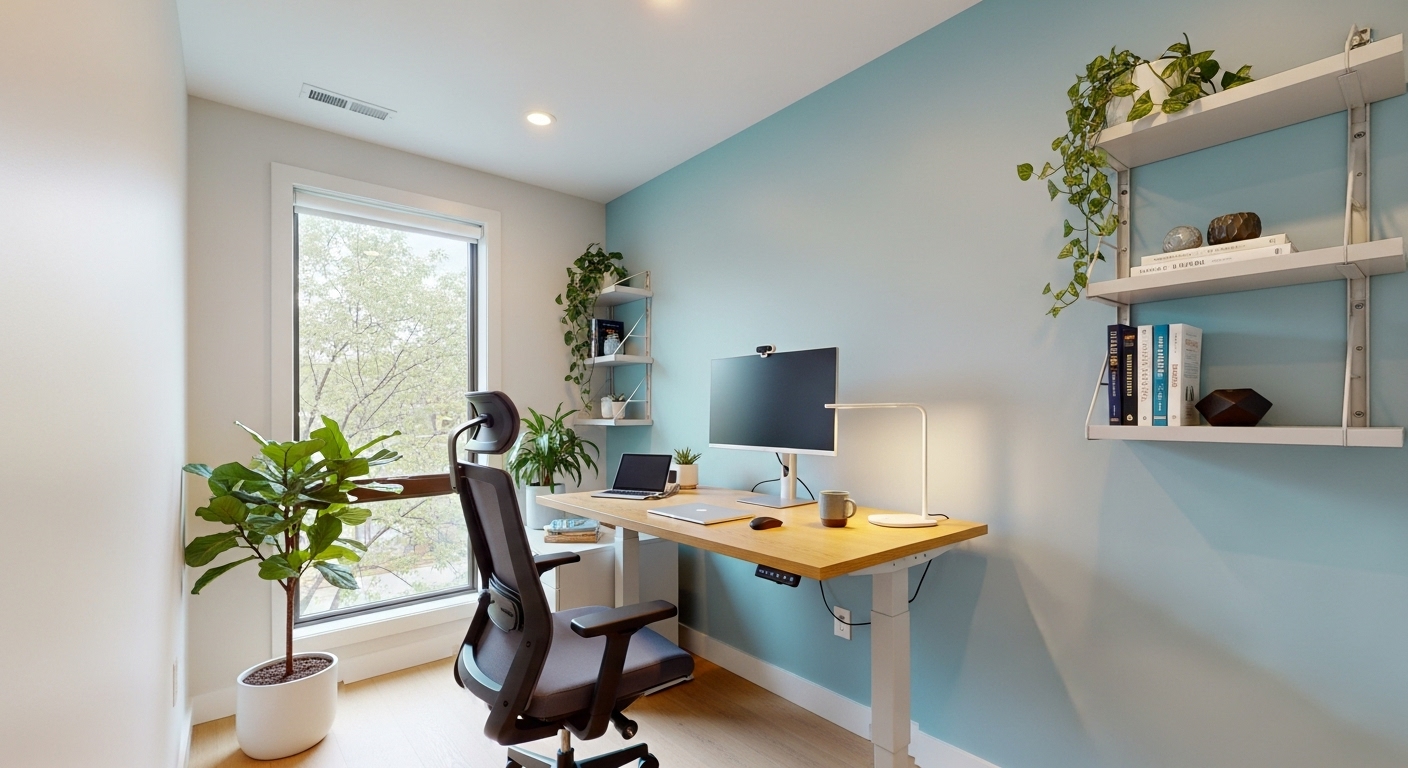
The impact of color and light on human psychology is a well-documented phenomenon, and in the constrained environment of a small office, these elements are magnified. Strategic use of color can fundamentally alter the perception of a space, making it feel larger, more open, and more conducive to specific types of work. Lighter color palettes—think soft whites, pale blues, and light grays—are highly effective at reflecting natural light, which creates an illusion of spaciousness. Light blue, in particular, is often associated with focus and mental clarity, making it an excellent choice for walls in a workspace designed for deep concentration. Conversely, while bold, dark colors can create a dramatic effect, they tend to absorb light and can make a small room feel enclosed and restrictive. Accents of brighter colors, like green or yellow, can be used strategically through furniture or decor to stimulate creativity and energy without overwhelming the space. The quality of light is equally critical. Maximizing natural light should be the primary goal, as studies have shown it can increase productivity by up to 15%. This means keeping window areas unobstructed and using mirrors to bounce light throughout the room. For artificial lighting, a layered approach is best. Ambient overhead lighting should be supplemented with task lighting, such as desk lamps, to prevent eye strain. Opting for adjustable LED lights with controllable color temperature allows users to shift from a cool, energizing blue light during the day to a warmer, more relaxing tone in the later hours, aligning the office environment with natural circadian rhythms.
Strategic furniture selection for maximum efficiency
In a small office, every piece of furniture must justify its existence. The era of bulky, single-purpose items is over; the modern, productive small office demands furniture that is ergonomic, multi-functional, and space-conscious. The cornerstone of this approach is selecting items that can adapt to various needs throughout the day. For example, a standing desk offers the flexibility to switch between sitting and standing, which is proven to boost energy levels and reduce the health risks associated with a sedentary workday. Many modern designs are sleek and minimalist, avoiding the visual weight of traditional executive desks. When it comes to storage, thinking vertically is essential. Wall-mounted shelves, tall and narrow bookcases, and modular storage units draw the eye upward and free up valuable floor space. Choosing furniture with built-in storage, such as an ottoman that doubles as a file cabinet or a bench with hidden compartments, is another effective strategy for keeping clutter at bay. Ergonomics cannot be overlooked. A high-quality, adjustable office chair that provides proper lumbar support is a non-negotiable investment in long-term health and productivity. When selecting chairs for guests or collaborative zones, consider options that are stackable or easily moved. The goal is to create a curated collection of furniture that serves a clear purpose, promotes physical well-being, and contributes to an organized, uncluttered environment where focus can flourish.
Layout and flow: designing for focus and collaboration
The physical arrangement of furniture and the resulting traffic flow can make or break productivity in a small office. A well-designed layout creates distinct functional zones without necessarily erecting physical walls. This concept, known as ‘zoning,’ helps to mentally separate different work activities, signaling to the brain when it’s time for focused tasks, collaboration, or relaxation. The primary work area, featuring the desk and ergonomic chair, should be positioned to take maximum advantage of natural light, ideally with the desk facing away from the door to minimize distractions. This creates a ‘deep work’ zone. If the space needs to accommodate more than one person or function, visual dividers can be incredibly effective. An open-backed bookshelf can separate a workstation from a small meeting area, providing storage without completely blocking light or sightlines. Similarly, a strategically placed rug can define a lounge or collaborative nook, creating a psychologically distinct space. It’s crucial to maintain clear, unobstructed pathways to avoid a cramped feeling. A minimum of three feet of walkway is a good rule of thumb. The flow should feel intuitive, guiding movement naturally from the entrance to the main workspace and any secondary zones. By carefully considering the layout, you can create an office that not only feels spacious but also intelligently supports the diverse demands of the modern professional.
Biophilic design: bringing nature in to boost well-being
Biophilic design is the practice of connecting people and nature within our built environments, and its benefits for productivity and well-being are substantial. In the confines of a small office, incorporating natural elements can drastically reduce stress, improve air quality, and enhance creativity. The simplest way to introduce biophilic design is through the use of plants. Low-maintenance options like snake plants, ZZ plants, or pothos thrive in typical office lighting conditions and are excellent natural air purifiers. Placing them on shelves, in corners, or in hanging planters adds visual interest and a sense of vitality without consuming floor space. Beyond living plants, the use of natural materials is a powerful tool. A wooden desk, a stone-topped side table, or corkboard wall panels can introduce textures that evoke a sense of calm and connection to the outdoors. Natural imagery, such as a high-quality landscape photograph or abstract art inspired by nature, can also serve as a focal point and a mental escape. Even the color palette can contribute, with earthy tones like greens, browns, and blues fostering a serene atmosphere. By weaving elements of the natural world into the interior design of a small office, you create an environment that is not just a place to work, but a space that actively nurtures focus and mental clarity, making it a more pleasant and productive place to be.
Acoustic design: controlling noise in a small office
Noise is one of the most significant disruptors of focus and productivity, and in a small office, sound can bounce off hard surfaces, creating a distracting echo chamber. Effective acoustic design is not about creating total silence but about controlling sound to create a comfortable and focused auditory environment. The first step is to introduce soft, sound-absorbing materials to counteract the reflective nature of walls, floors, and windows. An area rug is one of the most effective and aesthetically pleasing ways to dampen sound. Fabric-covered acoustic panels can be mounted on walls, doubling as art while absorbing stray sound waves. Even a fabric pinboard or a heavy curtain can make a noticeable difference. Bookshelves filled with books are excellent sound diffusers, breaking up sound waves before they can bounce around the room. For spaces that suffer from unavoidable external noise, a white noise machine can be a valuable tool. It creates a consistent, unobtrusive sound-masking ambiance (like the sound of rain or a fan) that helps to drown out jarring, intermittent noises like conversations or traffic. By strategically adding these absorptive and sound-masking elements, you can transform the acoustic profile of a small office, creating a pocket of tranquility where concentration and deep work can thrive, free from auditory distractions.
Technology integration for a seamless workflow
In a modern workspace, technology is central, but visible cables and bulky hardware can quickly create a sense of clutter and chaos, undermining the clean, focused aesthetic of a well-designed small office. The goal of technology integration is to make it both highly functional and nearly invisible. A primary challenge is cable management. Investing in a desk with built-in cable routing channels, using adhesive cable clips to run wires along the back of the desk or down a leg, and utilizing a cable management box to house power strips and adapters are all crucial steps. This not only improves the look of the space but also enhances safety. Embracing wireless technology wherever possible is another key strategy. A wireless mouse, keyboard, printer, and charger dramatically reduce the number of visible cords. Wall-mounting monitors can free up significant desk space and allow for a more ergonomic viewing height. When selecting technology, consider its physical footprint. Compact, all-in-one computers or laptops with docking stations offer powerful performance without the bulk of a traditional desktop tower. Finally, integrating smart technology, such as smart plugs for controlling lights and other devices, can add a layer of efficiency and convenience. By thoughtfully planning for technology from the outset, you ensure that the office’s digital infrastructure supports productivity without visually overwhelming the space.
In conclusion, the interior design of a small office is not merely a matter of decoration; it is a critical component of a productive work system. By moving beyond a purely aesthetic focus, we can architect an environment that actively supports deep work, creativity, and mental well-being. The key principles—leveraging the psychology of light and color, selecting strategic multi-functional furniture, and designing an intuitive layout—work in concert to maximize the perception and utility of the space. Integrating biophilic elements and managing acoustics transforms the office into a sanctuary for focus, mitigating the stresses of the modern workday. Furthermore, seamless technology integration ensures that the tools of the trade enhance, rather than hinder, the workflow. A well-designed small office proves that physical constraints do not have to limit potential. Instead, they can inspire innovative, human-centric design solutions that cultivate an ideal setting for productivity. Ultimately, a thoughtfully designed small workspace is an investment in performance, demonstrating that with the right blueprint, even the most compact area can become a powerhouse of efficiency and innovation.