The era of makeshift hybrid arrangements is over. What began as a rapid response to a global crisis has now solidified into a permanent fixture of the modern workplace. As companies move beyond survival mode, the focus has shifted from merely enabling remote work to intentionally designing equitable and sustainable hybrid models. Recent trends indicate a clear formalization of hybrid schedules and a reimagining of the physical office as a hub for collaboration. The challenge for leaders in 2024 is to create a framework that not only offers flexibility but also actively dismantles the biases and inequities that can emerge in a distributed workforce. This post provides a strategic framework for building a hybrid model that fosters productivity, maintains a strong culture, and ensures every team member, whether remote or in-office, has an equal opportunity to thrive.
Defining your hybrid philosophy
Before implementing any policies, an organization must first define its core philosophy on hybrid work. This isn’t about setting a simple two-days-in-office rule; it’s about articulating the purpose of in-person versus remote time. Is the office primarily for collaboration, mentorship, and social connection? Is remote time dedicated to focused, individual work? A clear philosophy acts as a guiding principle for all subsequent decisions. Companies should consider three main archetypes: the flexible-hybrid model, which gives employees significant autonomy; the structured-hybrid model, with fixed in-office days for teams; and the remote-first model, where the office is an optional resource rather than a default workspace. The choice depends on the nature of the work, company culture, and employee feedback. Engaging with the workforce through surveys and focus groups is crucial in this stage to ensure the chosen model aligns with their needs and work styles, which is a key factor in boosting both adoption and satisfaction.
Designing for digital and physical equity
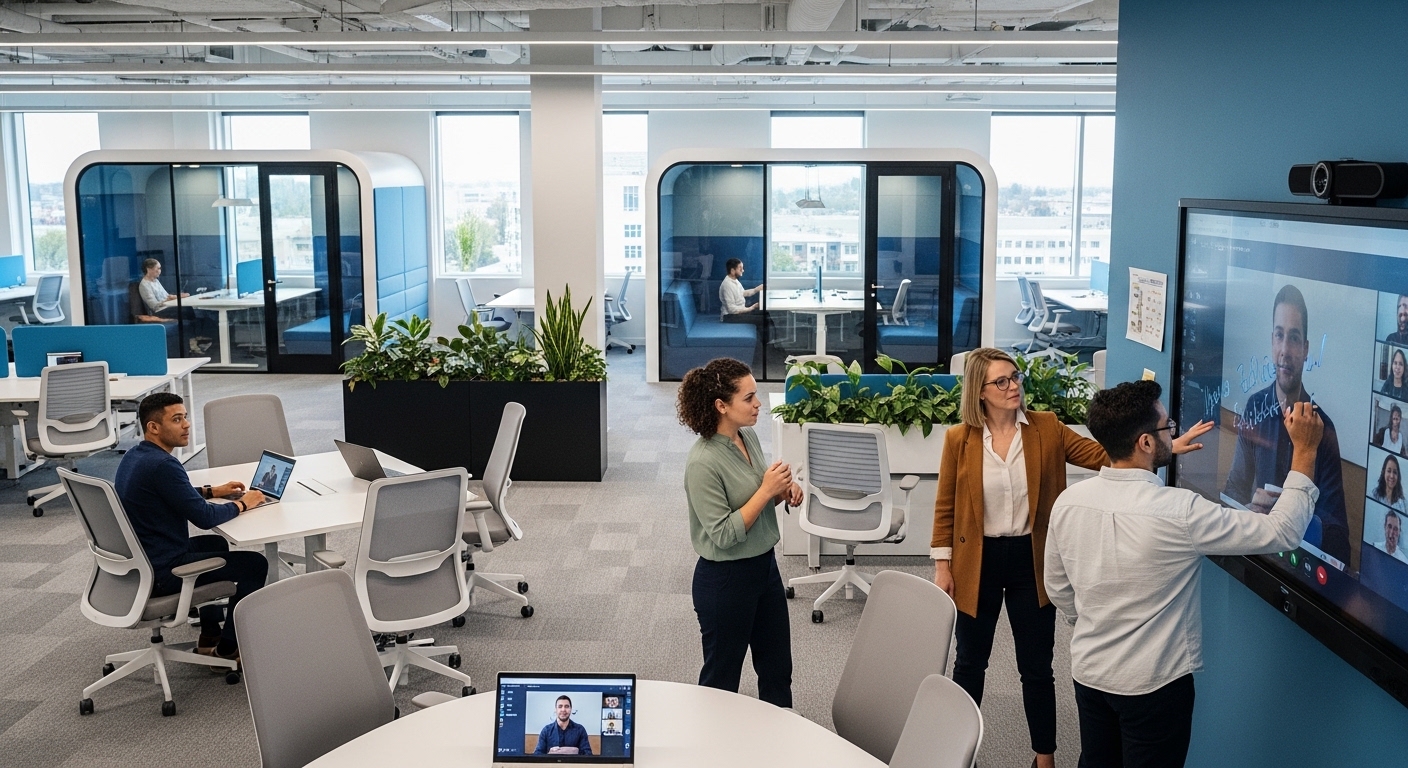
The greatest risk in a hybrid model is the emergence of proximity bias, where employees in the physical office are perceived as more productive or committed than their remote counterparts. To combat this, leaders must intentionally design for equity. This starts with technology. Every meeting should be treated as a remote meeting, with all participants, including those in the conference room, using their own cameras and microphones. This creates a level playing field for communication. Furthermore, formal communication channels like Slack and project management tools must be the single source of truth for important information, preventing side conversations in the office from becoming decision-making channels. Physical equity involves reimagining the office space. Instead of rows of desks, the focus should be on creating diverse environments: collaborative pods, quiet zones for focused work, and high-tech conference rooms that seamlessly connect remote and in-person attendees. The goal is to make the office a tool for specific tasks, not a measure of an employee’s contribution.
Cultivating a connected team culture
Maintaining a cohesive culture without consistent physical togetherness requires deliberate effort. Leaders can no longer rely on spontaneous hallway conversations to build rapport. Instead, they must engineer moments of connection. This includes structured virtual social events, like coffee chats or team-building games, as well as asynchronous channels for non-work-related discussions. When teams do gather in person, the focus should be on activities that are difficult to replicate online: strategic workshops, intensive brainstorming sessions, and social celebrations. It’s also vital to establish clear communication norms and expectations. For example, defining core collaboration hours when everyone is expected to be online and available can help bridge time zone gaps and respect work-life boundaries. Onboarding is another critical touchpoint; creating a structured, inclusive onboarding process that gives new hires, regardless of location, equal access to information, tools, and team members is essential for long-term cultural integration.
Rethinking performance and productivity metrics
In a hybrid environment, traditional metrics of productivity, often tied to presence and hours worked, become obsolete. A successful framework shifts the focus from inputs to outputs and outcomes. Managers must be trained to evaluate performance based on clear, measurable goals and results, rather than on who they see most often in the office. This requires setting clear expectations for deliverables, establishing regular check-ins to discuss progress, and providing consistent, unbiased feedback. Utilizing project management software can help track contributions and ensure transparency across the team. More importantly, this shift requires a foundation of trust. Micromanagement is toxic in any environment, but it’s a death knell for a hybrid model. Empowering employees with autonomy over their work and trusting them to deliver demonstrates respect and is a powerful motivator. As one study found, this flexibility and trust are key drivers of retention.
A recent study found that hybrid work arrangements can boost retention rates by 33%.
Empowering leadership for a distributed workforce
Leading a hybrid team requires a different skill set than managing a fully co-located one. Organizations must invest in training for managers to equip them for this new reality. Key competencies include fostering psychological safety, being an exceptional remote communicator, and learning to identify signs of burnout or disengagement through a screen. Managers need to be intentional about creating equal opportunities for visibility and development. This means actively soliciting input from remote participants in meetings, creating mentorship programs that are not location-dependent, and ensuring that project assignments are distributed equitably. Leaders must model the desired behaviors, whether that’s respecting offline hours, communicating transparently through shared digital channels, or participating equally in both virtual and in-person cultural events. The manager is the lynchpin of the employee experience, and their ability to adapt will ultimately determine the success or failure of the hybrid model.
Continuously iterating and adapting your model
A hybrid work model is not a set-it-and-forget-it policy. It is a dynamic system that requires continuous evaluation and adaptation. The needs of the business, the preferences of employees, and the capabilities of technology will all evolve over time. Organizations should establish a regular cadence for gathering feedback, perhaps quarterly, through anonymous surveys, listening tours, and performance data analysis. Key metrics to track include employee engagement scores, retention rates, productivity levels, and feelings of inclusion across different work locations. Be prepared to experiment with different approaches. A policy that works for one team may not work for another. Allowing for a degree of flexibility and autonomy at the team level, within the guardrails of the overall company philosophy, can lead to more effective and personalized solutions. The most successful hybrid organizations will be those that remain agile, listen to their people, and are willing to iterate on their framework to meet the changing demands of the future of work.
Ultimately, building an equitable hybrid work model is a strategic imperative that goes far beyond logistics. It is an opportunity to redesign work to be more inclusive, flexible, and effective. By focusing on a clear philosophy, designing for equity, intentionally cultivating culture, and empowering leaders, organizations can create a framework that harnesses the benefits of both in-person and remote work. The companies that succeed will not be those that try to replicate the old way of working in a new format, but those that embrace the chance to build a better, more human-centric workplace for everyone.