The initial, reactive shift to hybrid work is over. Now, organizations face a more complex challenge: moving from a temporary arrangement to a deliberate, sustainable, and culturally cohesive operating model. The data is clear—flexibility is no longer a perk but a core expectation. As businesses navigate this new landscape, it’s evident that a successful hybrid model is not built on policies alone, but on a foundational cultural blueprint that prioritizes equity, connection, and intentionality. Without this strategic approach, companies risk creating a divided workforce, hampering innovation, and losing their best talent. This guide provides a blueprint for leaders seeking to build a thriving, intentional hybrid work culture that transcends physical location.
Defining your hybrid philosophy
Before implementing any tools or policies, a crucial first step is to define your organization’s core hybrid philosophy. This isn’t about choosing a rigid model like “three days in, two days out,” but about establishing the principles that will guide your approach. Is your primary goal to maximize flexibility, foster in-person collaboration for specific tasks, or reduce your real estate footprint? A strong philosophy acts as a compass, ensuring that all subsequent decisions—from technology investments to office redesigns—are aligned with your ultimate objectives. For many companies, the office is being reimagined as a destination for specific purposes, a “hub” for collaboration, innovation, and social connection, rather than a place for quiet, individual work. This philosophy acknowledges that different tasks require different environments. Deep, focused work might be better suited for a home office, while brainstorming sessions and team-building activities thrive on in-person energy. Clearly articulating this purpose helps manage employee expectations and encourages them to use the office with intention. This foundational step also involves deep listening. Surveying employees and holding focus groups to understand their needs and preferences is critical. This data provides invaluable insight into what is and isn’t working, allowing you to craft a philosophy that reflects the unique dynamics of your workforce and business needs, creating a model that feels co-created rather than imposed from the top down.
Building the technological bridge
Technology is the central nervous system of any successful hybrid model, but it must be more than a collection of disparate apps. The goal is to create a seamless, equitable digital experience that bridges the gap between remote and in-office employees. This starts with standardizing core communication and collaboration platforms to create a single source of truth. When one team uses Slack, another uses Microsoft Teams, and a third relies on email, information gets siloed, and remote employees are often the first to be left out. An effective tech stack should feel like a virtual headquarters, where everything from project management and asynchronous video updates to casual social interactions can happen in one accessible place. Furthermore, technology must actively combat proximity bias. This means investing in high-quality conference room audio and video solutions that create a more inclusive meeting experience. Features like smart cameras that automatically focus on the active speaker and digital whiteboards that can be accessed by all participants, regardless of location, help level the playing field. The rise of AI-powered tools also presents a significant opportunity. AI can help automate routine tasks, provide data-driven insights into workspace utilization, and even facilitate virtual social connections, ensuring the technological infrastructure is not just functional but also a powerful enabler of a unified company culture.
Fostering equity and combating proximity bias
Perhaps the greatest cultural challenge in a hybrid model is ensuring fairness and preventing the emergence of a two-tiered system where in-office employees are favored over their remote counterparts. This phenomenon, known as proximity bias, can subtly undermine career progression, project opportunities, and overall inclusion for remote workers. Addressing it requires a conscious and multi-faceted effort. Leaders must be trained to manage by outcomes rather than by presence, evaluating performance based on tangible results and contributions, not on who is most visible in the office. This requires clear goal-setting frameworks, consistent check-ins, and performance rubrics that are applied uniformly across the entire team. To ensure equitable access to opportunities, managers should formalize the process for assigning high-profile projects. Instead of informally tapping the person at the next desk, they should announce opportunities widely and make decisions based on skills and experience. Communication protocols are also key. Establishing an “asynchronous-first” mindset for important updates ensures everyone receives critical information at the same time. Similarly, mandating that all meetings have a virtual component, even if only one person is remote, reinforces the idea that all participants are on equal footing. Ultimately, building an equitable hybrid culture means intentionally designing processes and systems that value contribution over location.
Leading with trust and transparency
The command-and-control leadership style of the past is fundamentally incompatible with a hybrid work environment. The new paradigm demands leaders who manage with empathy, trust, and radical transparency. Micromanagement is not only ineffective when you can’t see your team, but it’s also a powerful culture killer, signaling a lack of faith in your employees’ autonomy and professionalism. Instead, leaders must focus on setting clear expectations, providing the necessary resources, and then empowering their teams to deliver results in the way that works best for them. This shift from monitoring activity to measuring outcomes is critical. Transparency is the bedrock of this trust-based approach. Leaders should communicate openly and frequently about business goals, challenges, and the reasoning behind key decisions related to the hybrid model. When employees understand the ‘why’ behind a policy, they are far more likely to embrace it. This includes being transparent about how performance is evaluated and what the pathways for career advancement look like for everyone, regardless of their work location. Regular, structured feedback sessions—both formal and informal—are more important than ever. These conversations help build rapport, uncover potential roadblocks, and ensure that every employee feels seen, heard, and valued for their contributions, reinforcing a culture of psychological safety where trust can flourish.
Reimagining the office as a cultural hub
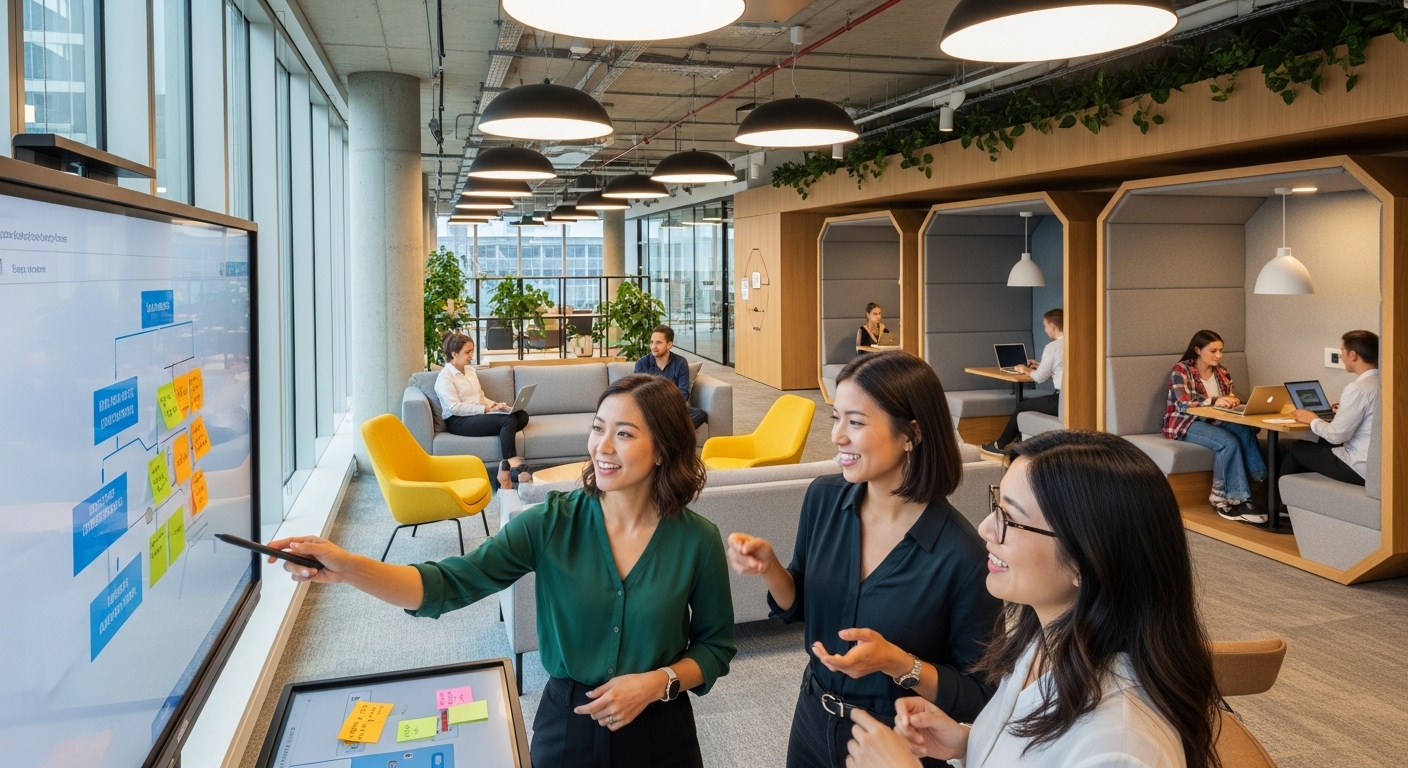
As hybrid work matures, the purpose of the physical office is undergoing a profound transformation. It’s no longer the default place for individual work but is becoming a powerful tool for intentional, high-value interactions that strengthen team culture. The redesigned office acts as a cultural hub, a destination for collaboration, mentorship, and connection that can’t be fully replicated online. Companies are shifting away from seas of individual desks and toward more dynamic, activity-based spaces. This includes creating more collaboration zones with digital whiteboards, comfortable lounge areas for informal social gatherings, and private, tech-enabled pods for heads-down work or confidential calls. The focus is on creating a variety of environments that employees can choose from based on the specific task they need to accomplish during their in-office day. To make this effective, in-office time must be purposeful. Leaders should orchestrate “core” or “anchor” days where teams come together for specific activities like strategic planning sessions, project kick-offs, and team-building events. This intentional scheduling ensures that when employees make the commute, they are rewarded with the valuable social and collaborative experiences that are the unique advantage of being physically together, reinforcing the office’s new role as a vital center for community and culture.
Cultivating connection across distances
In a hybrid model, fostering a genuine sense of connection and belonging requires deliberate effort. The spontaneous “water cooler” moments that build rapport in a traditional office setting don’t happen automatically when teams are distributed. Organizations must be intentional about creating opportunities for both professional and social interaction that transcend physical boundaries. This involves a mix of structured and unstructured virtual events. Virtual coffee chats, team lunches (with stipends for remote employees), and interest-based Slack channels can help replicate the informal social fabric of an office. All-hands meetings and department updates should be designed for a virtual-first audience, incorporating interactive elements like polls, Q&As, and breakout rooms to keep everyone engaged. Leadership plays a crucial role in modeling this behavior. When senior leaders actively participate in virtual social events and use multiple communication channels to connect with their teams, it signals that these interactions are valued. Furthermore, dedicating the first few minutes of team meetings to non-work-related conversation can do wonders for building personal connections. It’s about consciously creating space for the human element of work, ensuring that team members see each other as people, not just as names on a screen. This consistent, intentional effort is what weaves a strong, cohesive culture that can withstand the challenges of a distributed workforce.
Conclusion
Building a successful hybrid work model is a journey of continuous learning and adaptation. It is far more than a logistical challenge; it is a fundamental cultural transformation. The organizations that thrive will be those that move beyond simply allowing flexibility and instead intentionally design a cohesive system built on a clear philosophy, equitable technology, and a foundation of trust. By reimagining the office as a hub for collaboration, actively combating proximity bias, and cultivating connection with purpose, leaders can create a cultural blueprint that works for everyone. This intentional approach doesn’t just support a distributed workforce—it unlocks its potential, fostering a more inclusive, engaged, and high-performing culture that is truly prepared for the future of work. The ultimate goal is to create an environment where every employee, regardless of where they log in from, feels valued, connected, and empowered to do their best work.