Choosing an office used to be a straightforward real estate decision, a simple calculation of square footage and lease terms. In today’s dynamic work environment, that approach is obsolete. The rise of hybrid models and a renewed focus on employee well-being have transformed workspace selection into a complex strategic challenge. It’s no longer just about finding a place for people to work; it’s about creating a destination that fosters culture, enables productivity, and reflects your brand’s values. This decision now sits at the intersection of human resources, finance, and operations. This guide presents a holistic framework to navigate this new landscape, moving beyond the traditional lease to help you select a workspace that is a true strategic asset, capable of adapting to the future of work and empowering your team to thrive.
The cultural fit: a foundation for your workspace strategy
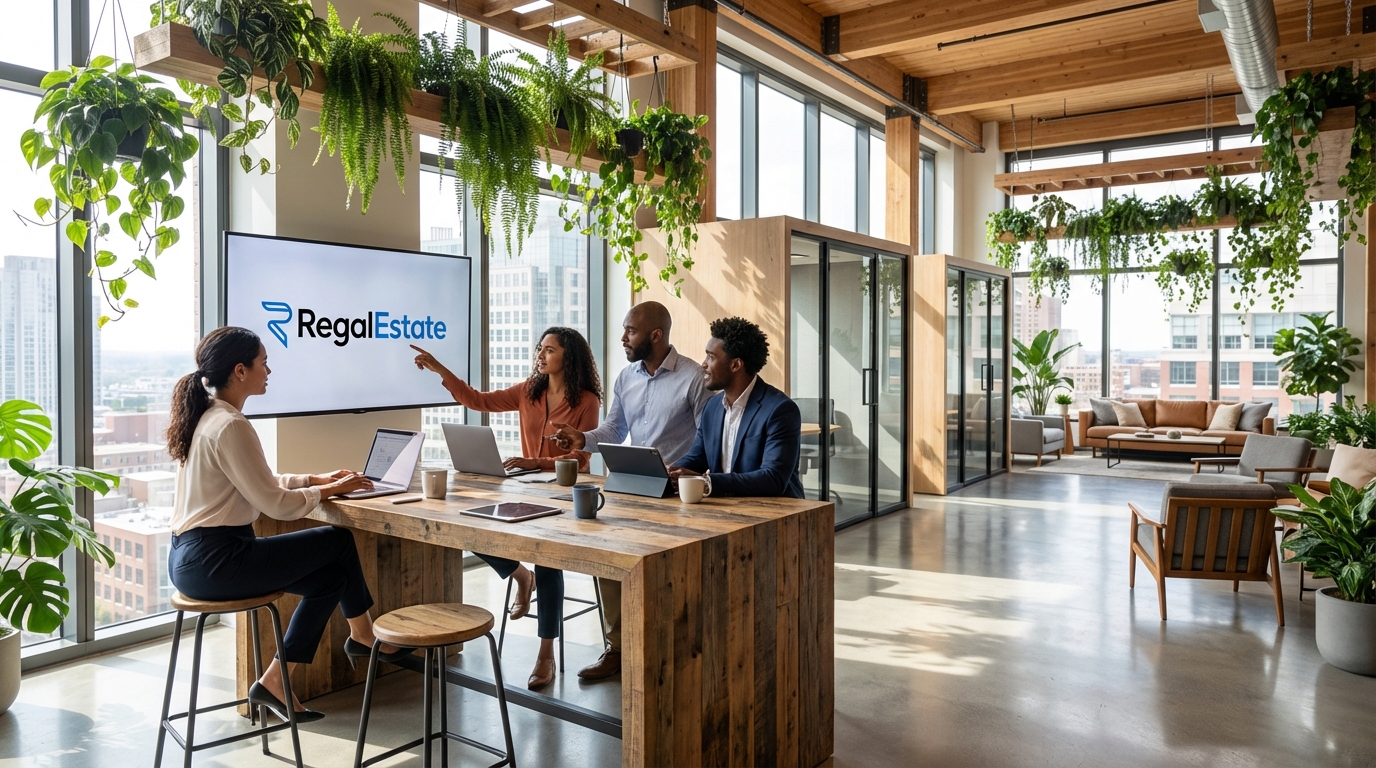
Before analyzing floor plans or negotiating rents, the first step is to look inward. Your workspace is one of the most powerful physical manifestations of your company culture. A disconnect between your space and your values can lead to disengagement and hinder collaboration. Therefore, the selection process must begin with a deep understanding of how your team works best and what environment will empower them. Are you a highly collaborative, fast-paced organization that thrives on spontaneous interaction? An open-plan layout with numerous breakout areas, whiteboards, and communal hubs would be ideal. Conversely, if your work requires deep, focused concentration, prioritizing private offices, quiet zones, and sound-proofed pods is essential. The right space should cater to these dominant work styles while also offering flexibility. This alignment is a critical factor in attracting and retaining top talent, as prospective employees will often view the office environment as a tangible indicator of the company’s commitment to its people and their well-being. A workspace that reflects and supports your culture becomes more than just an office; it becomes a tool for reinforcing your brand identity and fostering a sense of belonging among your team.
Deconstructing the cost: a comprehensive budget analysis
While the monthly lease payment is the most visible expense, it represents only a fraction of the total cost of occupancy. A truly strategic approach requires a comprehensive budget that accounts for all associated expenditures, both immediate and recurring. Initial, one-time costs can be substantial and include the security deposit, fit-out and customization expenses, furniture procurement, and the installation of critical IT infrastructure. These upfront investments are crucial for creating a functional and branded environment but can significantly impact your initial cash flow. Beyond these, you must factor in ongoing operational costs. These include utilities like electricity and internet, recurring maintenance fees or service charges, property taxes, and business insurance. It’s crucial to get clarity from any potential landlord or provider on exactly what is included in the base rent. Failing to account for these variables can lead to unexpected financial strain. By calculating the total cost of occupancy over the lease term, you gain a far more accurate picture of the investment, allowing for a more informed comparison between different options, from a traditional lease to a serviced office or coworking membership.
Location intelligence: more than just a pin on the map
The age-old mantra of ‘location, location, location’ remains true, but the criteria for what makes a great location have evolved significantly. While proximity to clients and a prestigious address can still be important, a modern, human-centric approach prioritizes the employee experience. A primary consideration should be the average commute time for your team. A difficult or lengthy commute is a major source of employee dissatisfaction and can be a significant barrier to retaining talent. Choosing a location with excellent access to public transportation and major roadways is paramount. Beyond the commute, consider the surrounding neighborhood and its amenities. The availability of coffee shops, restaurants, gyms, and childcare facilities contributes to a positive work-life balance and makes the office a more convenient and desirable destination. This concept of a ’15-minute city’ where employees have everything they need within a short walk or bike ride is a growing trend. Finally, the location should align with your brand image. A tech startup might thrive in a vibrant, innovative district, while a financial firm may require a more traditional corporate setting. The right location serves your clients, supports your employees, and reinforces your brand identity.
Designing for dynamism: embracing activity-based work
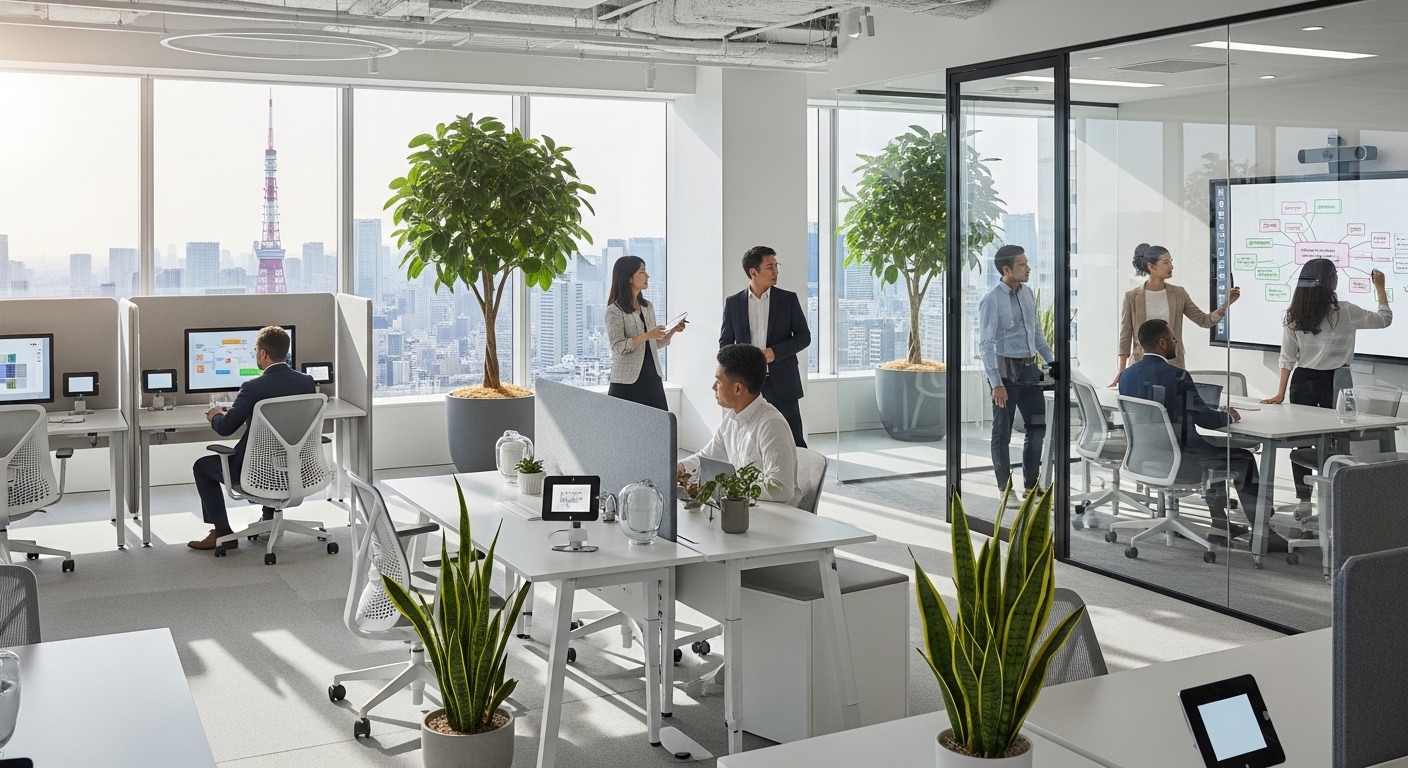
The one-size-fits-all office layout is a relic of the past. In an era where employees split their time between home and the office, the workplace must offer a compelling reason to make the commute. This is where Activity-Based Working (ABW) comes in. ABW is a design philosophy that provides employees with a variety of settings tailored to different tasks, empowering them to ‘choose their space’ based on their needs throughout the day. Instead of assigned seating, the office becomes a diverse ecosystem of zones. This includes quiet, library-like areas for focused concentration, sound-proofed pods for private calls or video conferences, open and energetic hubs for brainstorming and team collaboration, and comfortable lounges for informal meetings or taking a break. By providing this choice and autonomy, companies can significantly boost productivity and employee satisfaction.
As one workplace study noted, ‘When employees have the freedom to choose where and how they work, they report higher levels of engagement and effectiveness.’
The implementation of an ABW model signals a trust in your employees to manage their own time and workflow, fostering a culture of ownership and responsibility while optimizing your real estate for the specific needs of a hybrid workforce.
The technology backbone: enabling a seamless workspace experience
Technology is the invisible engine that powers the modern, flexible workspace. Without a robust and integrated tech stack, even the most beautifully designed office will fail to meet the demands of a hybrid team. The foundation is high-speed, reliable internet that can support numerous devices and video conferences simultaneously. However, the infrastructure goes far beyond connectivity. For flexible and activity-based environments, a workspace management software platform is essential. These tools allow employees to easily book desks, reserve meeting rooms, and even locate colleagues through interactive office maps, eliminating friction and uncertainty. For hybrid meetings to be successful, conference rooms must be equipped with high-quality cameras, microphones, and screens that create an equitable experience for both in-person and remote participants. This ensures that remote team members feel just as included as those physically in the room. Investing in a seamless technology experience is non-negotiable; it is the critical infrastructure that enables the flexibility, collaboration, and efficiency that define a successful modern workspace strategy.
Future-proofing your footprint: planning for scalability and change
In a constantly evolving business landscape, agility is key to survival and growth. Your workspace is a long-term commitment, and it must be able to adapt to future changes, whether that involves scaling your team, shifting your work model, or responding to unforeseen market dynamics. Future-proofing begins with the lease agreement itself. Avoid getting locked into a long, rigid lease if possible. Explore options with shorter terms or clauses that allow you to expand or contract your space as needed. This is a primary advantage of flexible and serviced office providers. The physical design should also be adaptable. Utilizing modular furniture, movable partitions, and multi-purpose spaces allows you to reconfigure the layout with minimal cost and disruption as your needs change. Finally, ensure your technological infrastructure is scalable. Your network should be able to handle an increase in users and devices, and your core software should be cloud-based to support a distributed workforce. By embedding flexibility and scalability into your workspace strategy from the outset, you create an environment that can support your business not just today, but for years to come.
In conclusion, selecting a workspace is no longer a tactical decision but a strategic one that reflects your company’s vision for the future. Moving beyond the lease requires a holistic framework that thoughtfully integrates your unique culture, a comprehensive understanding of costs, intelligent location analysis, dynamic design principles, a robust technology backbone, and a clear plan for future scalability. By viewing the office as a strategic tool—a destination for collaboration, innovation, and connection—you create more than just a physical space. You build a powerful asset that enhances your brand, attracts and retains the best talent, and empowers your team to do their best work. In the modern world of work, the right space is not just an operational expense; it is a direct investment in your people and your long-term success.