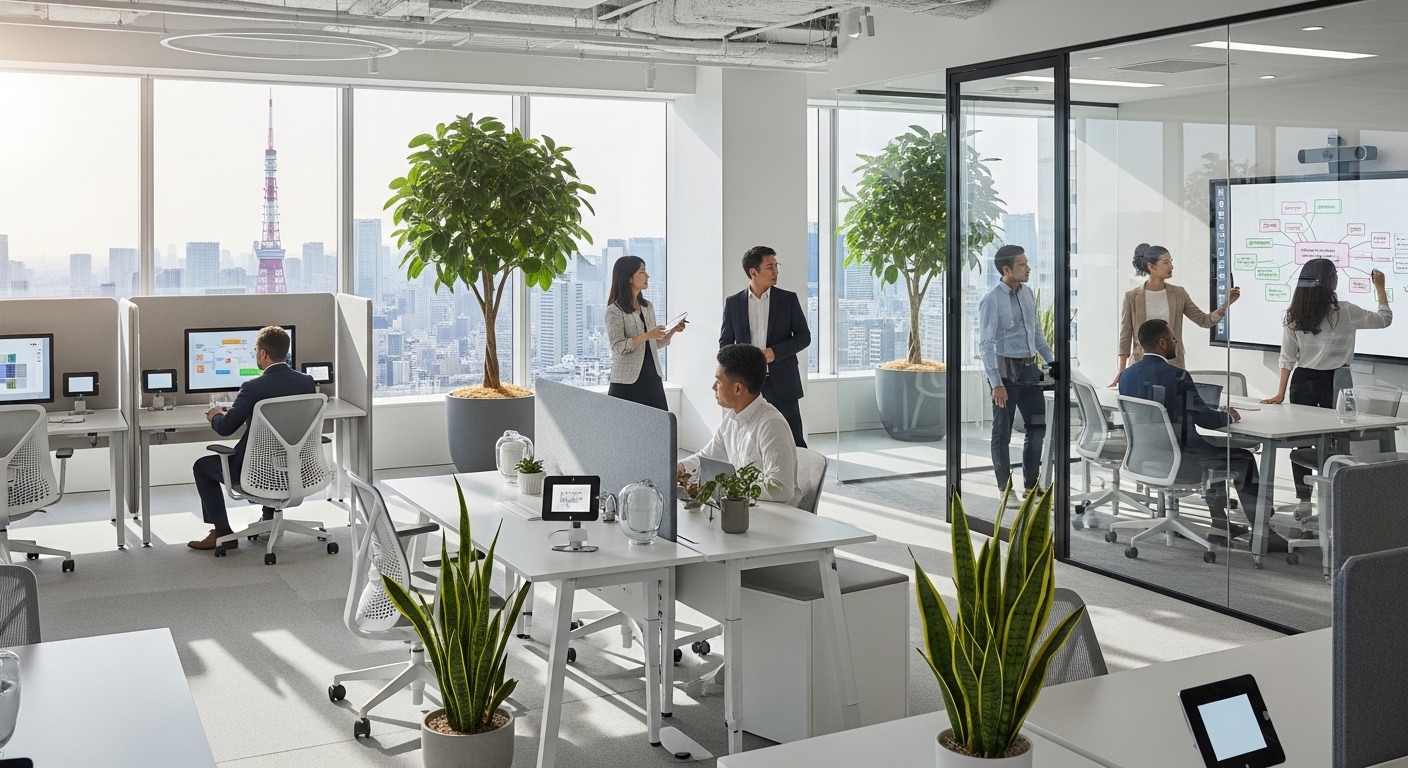
The era of the monolithic corporate headquarters as the sole center of gravity for a business is officially over. Propelled by the widespread adoption of hybrid work models and rapid technological advancements, a more sophisticated and agile approach to location analysis has emerged. Today’s workspace strategy is no longer about finding a single, centralized pin on a map. Instead, it’s about crafting a distributed, data-driven, and employee-centric ecosystem of spaces designed to enhance collaboration, attract top talent, and drive business goals. This fundamental shift requires leaders to think like urban planners, using advanced analytics and location intelligence to build a real estate portfolio that is as dynamic as their workforce. In this guide, we will explore the key pillars of modern location analysis, from leveraging AI to understand workspace utilization to prioritizing the employee journey and integrating sustainability into every decision.
Deconstructing the central headquarters
The post-2020 work environment has fundamentally deconstructed the traditional concept of a central office. The shift to hybrid work means that on any given day, a significant portion of the workforce is remote, rendering vast, underutilized office buildings a financial and cultural liability. This has triggered a widespread trend of ‘right-sizing’ corporate real estate portfolios. Companies are moving away from long-term, high-cost leases on massive single locations in favor of more flexible, cost-effective arrangements. This doesn’t mean the office is dead; its purpose has been radically redefined. The modern office now serves as a cultural hub—a destination for collaboration, innovation, and connection that employees choose to visit. This new role demands a different kind of space: smaller, more agile, and highly amenitized. As a result, location analysis has pivoted from simply finding a large enough building to identifying a network of spaces, including smaller core offices, regional hubs, and memberships in co-working facilities, that can support a fluid and distributed workforce.
The rise of location intelligence and AI
Gut feelings and outdated demographic maps are no longer sufficient for effective location analysis. The new cornerstone of workspace strategy is a sophisticated stack of technology, including Artificial Intelligence (AI), the Internet of Things (IoT), and advanced location intelligence (LI). Companies are now deploying IoT sensors to gather real-time, anonymized data on space utilization, revealing which areas are most used, when peak collaboration times occur, and which resources are in highest demand. AI-powered platforms then analyze this data to identify patterns and predict future needs, allowing organizations to make informed decisions about optimizing their footprint. Location intelligence takes this a step further by layering multiple data sources—such as employee home locations, public transit routes, and local market skills—to create a holistic view. This technology enables businesses to move beyond reactive adjustments and proactively design a workspace network that aligns with employee behavior and strategic objectives, ensuring that every square foot serves a clear and quantifiable purpose.
Prioritizing the employee journey
In a competitive labor market, the employee experience has become a primary driver of location strategy. The daily commute is a critical component of this experience. Modern location analysis places a heavy emphasis on the ’employee journey,’ starting from their front door. Companies are using sophisticated labor analytics to understand where their current and potential talent lives, and then mapping workspace locations to minimize commute times and stress. Proximity to public transportation, major highways, and local amenities like restaurants, childcare, and fitness centers are no longer just perks; they are essential criteria. Research consistently shows that a difficult commute is a major source of employee dissatisfaction.
A recent survey found that 28% of respondents would be more inclined to go to the office if they had a shorter journey.
By placing workspaces in locations that are convenient and desirable for their teams, companies can significantly boost morale, increase office attendance for collaborative work, and gain a powerful advantage in the war for talent.
The hub-and-spoke model in practice
One of the most effective strategies to emerge from this new approach is the ‘hub-and-spoke’ model. This decentralized framework replaces a single, massive headquarters with a more distributed network of workspaces. The ‘hub’ is typically a smaller, centrally located office that serves as the brand’s cultural anchor and a place for large-scale meetings, client presentations, and all-hands events. The ‘spokes’ are a series of smaller satellite offices, flexible workspaces, or co-working memberships located in suburban areas or regional towns where clusters of employees live. This model provides the ultimate flexibility, allowing employees to choose the workspace that best suits their needs for the day. They can work from home for focused tasks, visit a local spoke for team collaboration without a long commute, or travel to the central hub for major events. Implementing this model requires careful location analysis to identify the optimal placement for each spoke, ensuring they are accessible and provide the right mix of resources for the local employee population.
Integrating ESG into site selection
Environmental, Social, and Governance (ESG) criteria are no longer a secondary consideration in corporate real estate; they are a mainstream and critical factor in location analysis. Stakeholders, from investors to employees, now expect companies to operate sustainably and responsibly. This has put immense focus on the environmental impact of a company’s real estate portfolio. During site selection, organizations are now prioritizing buildings with green certifications like LEED or BREEAM, which demonstrate high standards of energy efficiency, water conservation, and sustainable materials. The analysis extends to factors like a location’s reliance on renewable energy, its access to public transportation to reduce carbon emissions from commuting, and its resilience to climate-related risks. Beyond the environmental aspect, the ‘Social’ component of ESG means selecting locations in diverse communities and ensuring that workspaces are accessible and inclusive for all employees. This focus on sustainability not only aligns with corporate values but also delivers tangible benefits, including long-term operational cost savings and a stronger brand reputation.
The financial case for a new location strategy
Adopting a distributed, tech-enabled, and employee-centric workspace strategy is not just a cultural imperative; it’s a financially prudent decision. The most immediate benefit comes from portfolio optimization. By ‘right-sizing’ their real estate and shedding underutilized space in expensive downtown cores, companies can dramatically reduce overhead costs associated with rent, utilities, and maintenance. While there is an upfront investment in technology like IoT sensors and analytics platforms, the ROI is realized through hyper-efficient space management and the avoidance of costly real estate mistakes. Furthermore, the financial benefits extend to talent management. A strategy built around employee well-being and convenience leads to higher retention rates, reducing the significant costs associated with recruitment and onboarding. Happier, less-stressed employees are also more productive and engaged, directly impacting the bottom line. This modern approach to location analysis transforms corporate real estate from a fixed cost center into a strategic asset that provides a competitive and financial advantage.
In conclusion, the geography of work has been irrevocably altered. The future of workspace strategy lies not in a single building, but in a thoughtfully curated ecosystem of physical and virtual spaces. This new paradigm is built on a foundation of data, with location intelligence and AI providing the insights needed to create a flexible and responsive real estate portfolio. By deconstructing the old headquarters model and prioritizing the employee journey, companies can create workplaces that are not just containers for work, but destinations that foster culture, drive innovation, and attract the best talent. The organizations that embrace this data-driven, sustainable, and human-centric approach to location analysis will not only navigate the new world of work but will be best positioned to lead it. They understand that where we work is no longer a single answer, but a strategic network designed for the needs of a dynamic and distributed future.