The quiet hum of servers has replaced the energetic buzz of collaboration in many traditional offices. Rows of empty desks stand as monuments to a bygone era, a clear sign that the old model of workspace design is failing the new demands of a hybrid workforce. Simply offering a desk and a chair is no longer enough to entice employees back to the physical workplace. The office must evolve from a place of obligation to a destination of choice. Recent trends show that successful organizations are redesigning their spaces to be dynamic hubs for collaboration, innovation, and culture-building, directly addressing the need for environments that remote work cannot replicate. This transformation is about creating a compelling reason for the commute—a ‘destination office’ that is flexible, technologically integrated, and fundamentally human-centric. This post explores the core principles of designing an office that doesn’t just accommodate but actively engages the modern, hybrid employee.
The evolution from workplace to destination
The fundamental purpose of the office has irrevocably shifted. Before the widespread adoption of remote work, the office was the default location for nearly all work-related activities. Its design reflected this, prioritizing density and individual workstations. The modern hybrid model, however, has proven that focused, individual tasks can often be performed more effectively from home. Consequently, the primary value proposition of the physical office has changed. It is no longer about providing a space for solo work; it’s about fostering the connections and collaborative moments that are difficult to replicate through a screen. Employee expectations have evolved in tandem. They now seek a workplace that offers something more than their home office—better technology, more opportunities for spontaneous interaction, and a stronger sense of community and belonging. An office that fails to provide these elements becomes a redundant space. This shift is driving a complete reimagining of corporate real estate, moving away from static layouts towards vibrant, multi-functional environments. The ‘destination office’ concept is born from this necessity, viewing the workspace as a strategic tool for enhancing culture, improving collaboration, and attracting and retaining top talent in a competitive market.
Zoning for purpose: the power of activity-based working
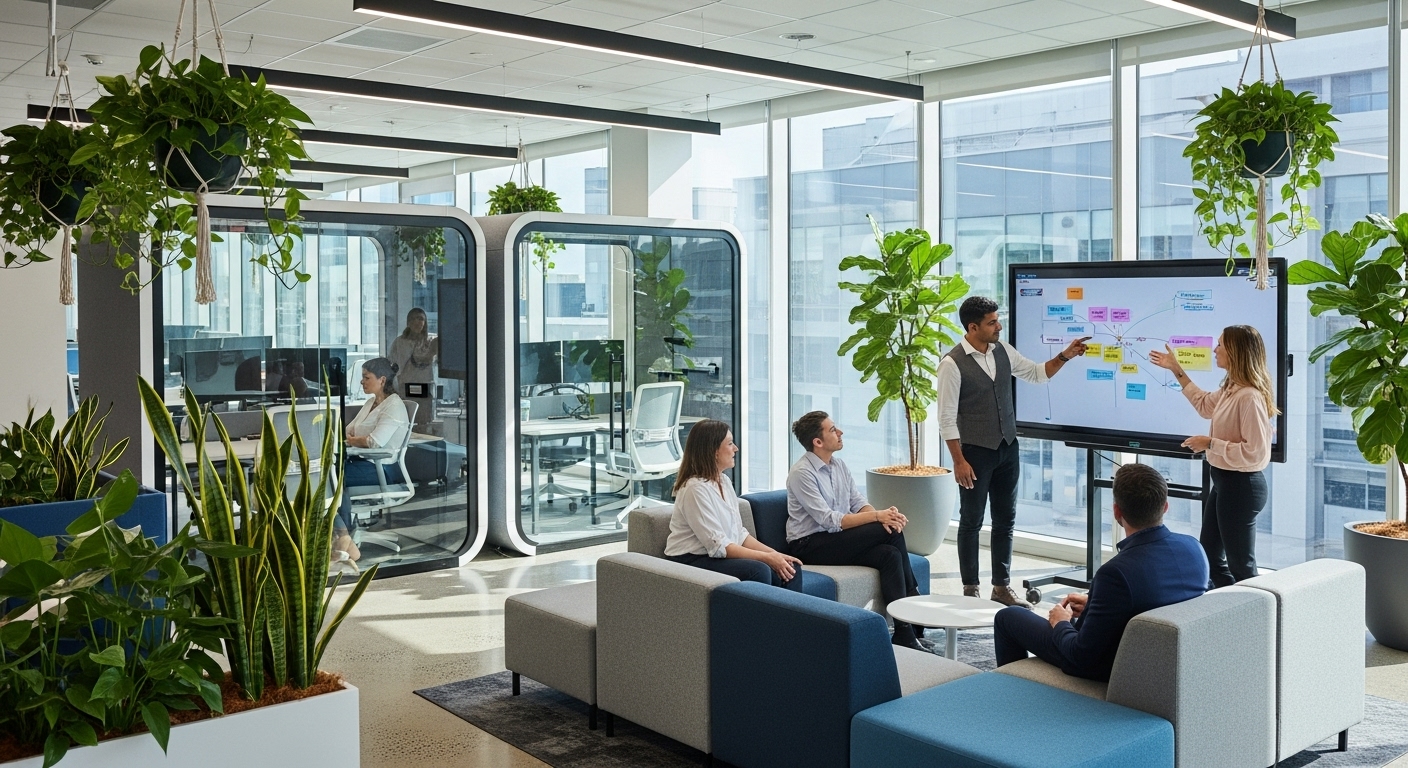
The one-size-fits-all open-plan office has proven ineffective in meeting the diverse needs of a hybrid team. The solution lies in a more nuanced approach known as Activity-Based Working (ABW), which involves creating a variety of distinct zones, each tailored to a specific type of activity. This empowers employees to choose the environment that best suits their task at hand, boosting both productivity and satisfaction. A well-designed ABW layout includes several key zones. First, ‘Focus Zones’ are dedicated to quiet, individual work, featuring sound-absorbing materials, single-person desks, and privacy screens to minimize distractions. These are essential for tasks requiring deep concentration. Second, ‘Collaboration Zones’ are designed to foster teamwork. These are dynamic spaces with modular furniture, large digital whiteboards, and project areas that encourage brainstorming and group problem-solving. Third, ‘Social Zones,’ such as cafes, lounges, and comfortable breakout areas, are crucial for building community. They facilitate the informal, spontaneous interactions that strengthen team bonds and company culture. Finally, ‘Private Zones,’ including small pods and enclosed meeting rooms, provide acoustically sealed spaces for confidential calls, one-on-one meetings, and virtual collaboration with remote team members, ensuring a seamless connection across the entire workforce.
Flexibility as a foundation: creating adaptable spaces
In the hybrid era, the number of employees in the office can fluctuate dramatically from one day to the next. This makes static, rigid layouts not only inefficient but also financially impractical. Flexibility is no longer a perk; it’s a core design principle for a resilient and future-proofed workspace. The foundation of a flexible office lies in modular and movable furniture. Lightweight partitions, tables on castors, and stackable seating allow teams to reconfigure spaces in minutes, transforming a collaborative area into a presentation space or a project zone. This adaptability ensures that the office can evolve alongside the organization’s needs without requiring costly renovations. To manage the variable occupancy, many companies are adopting ‘hot desking’ or ‘hoteling’ systems. Instead of assigning permanent desks, employees can book a workspace for the day through a simple software application. This optimizes space utilization, as research shows that traditional offices often have desk occupancy rates below 60%. By creating a pool of unassigned desks, companies can reduce their real estate footprint while still accommodating everyone who needs to be in the office. These strategies, combined with multi-purpose common areas, create a dynamic environment that can scale up or down, ensuring every square foot is used effectively.
The human-centric imperative: designing for well-being
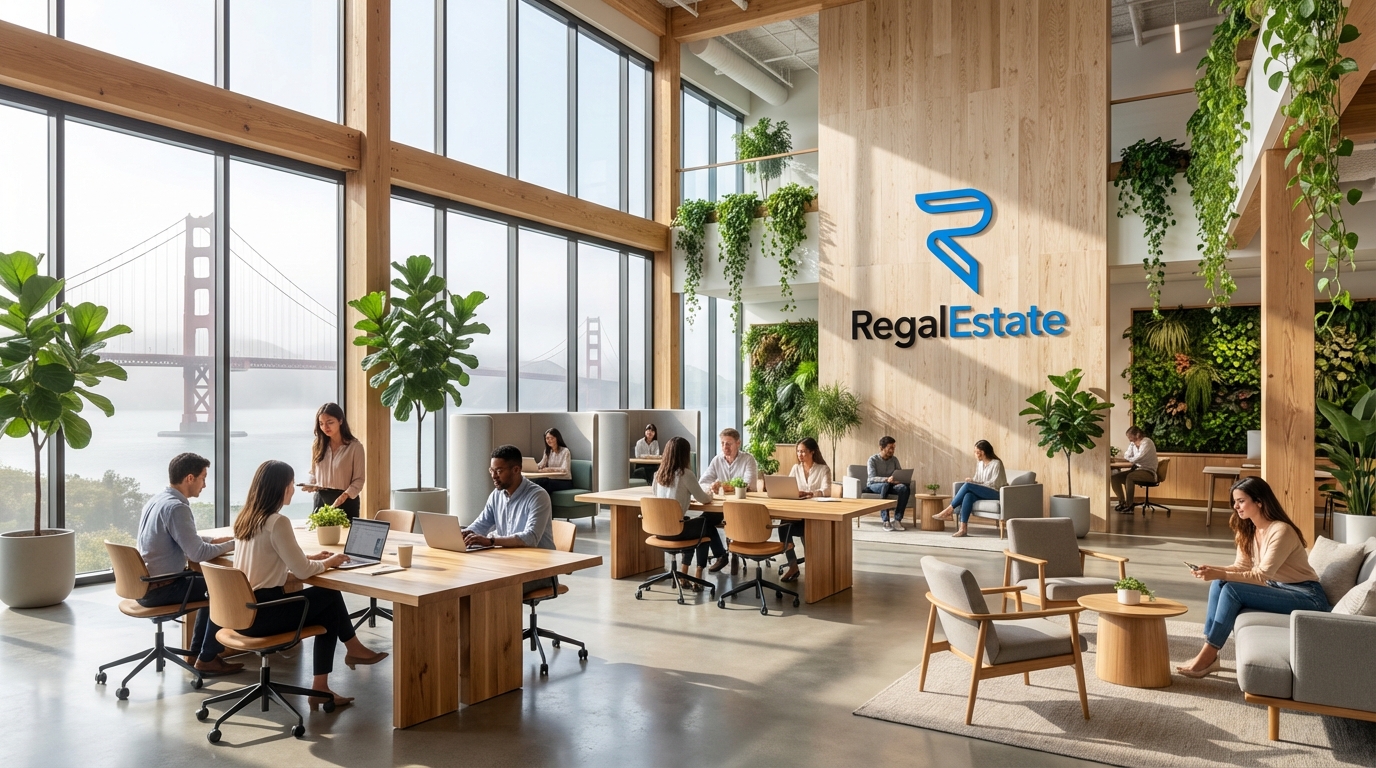
Creating an office that people want to come to requires a deep focus on employee well-being. A human-centric design approach prioritizes the physical and mental health of the workforce, recognizing that a comfortable and healthy environment is directly linked to higher productivity and engagement. A key element of this is biophilic design, which involves integrating natural elements into the workspace. The use of natural materials like wood and stone, abundant indoor plants, and large windows that maximize natural light has been shown to reduce stress, improve cognitive function, and boost creativity. Good ergonomics are also non-negotiable. Providing high-quality, adjustable chairs and desks prevents physical strain and demonstrates a company’s commitment to its employees’ health. Beyond furniture, the overall sensory experience matters. This includes optimizing acoustics to reduce distracting noise, ensuring excellent air quality through modern ventilation systems, and providing lighting that can be adjusted to suit different tasks and times of day. Furthermore, dedicated wellness rooms for meditation, prayer, or quiet reflection are becoming increasingly common, offering employees a space to decompress and recharge during the workday. By putting people first, organizations can create a positive and supportive atmosphere that becomes a key differentiator in attracting and retaining talent.
Tech as the connective tissue for a hybrid world
Technology is the invisible architecture that makes a hybrid office function effectively. It is the critical link that bridges the gap between in-office and remote employees, ensuring equitable and seamless collaboration for all. A primary focus must be on creating a frictionless meeting experience. This means equipping all meeting spaces, from small pods to large boardrooms, with high-quality video conferencing technology. Advanced cameras that automatically frame the active speaker, ceiling-mounted microphones that capture clear audio, and large, interactive digital whiteboards allow remote participants to feel as if they are in the room. Beyond meetings, workspace management software is essential for the logistics of a flexible office. Desk and room booking systems allow employees to easily reserve the spaces they need before they even leave the house, reducing uncertainty and frustration. These systems also provide valuable data on space utilization. Another critical component is robust, high-speed Wi-Fi that is accessible throughout the entire office, ensuring employees can work effectively from any zone. Smart office features, such as occupancy sensors that provide real-time data on which areas are being used, and automated climate and lighting controls, further enhance comfort and energy efficiency. Ultimately, technology should be seamlessly integrated into the design, empowering employees rather than creating complexity.
Measuring success with data-driven optimization
Designing a destination office is not a one-time project; it’s an iterative process of continuous improvement. The most effective workspaces are those that are regularly evaluated and refined based on how they are actually being used. This is where data-driven optimization becomes invaluable. By leveraging smart office technology, companies can gather anonymous data that provides deep insights into workplace dynamics. IoT-powered occupancy sensors installed under desks and in meeting rooms can track utilization rates in real-time, revealing which zones are most popular and which are underused. This information is crucial for making informed decisions about future design changes. For example, if the data shows that small private pods are consistently booked while larger conference rooms sit empty, it may indicate a need to reallocate space to create more individual booths. Similarly, analyzing booking system data can reveal peak usage days and times, helping to manage office capacity more effectively. This empirical approach removes the guesswork from office design. It allows facilities managers and leadership to adapt the physical environment to the evolving behaviors and preferences of the workforce, ensuring that the office remains a valuable and highly utilized asset that fully supports the needs of its people and the strategic goals of the organization.
In conclusion, the era of the office as a mere container for desks is over. The shift to hybrid work has elevated its purpose, demanding a more thoughtful and strategic approach to its design. The ‘destination office’ is a response to this new reality, creating a compelling environment that fosters collaboration, strengthens culture, and prioritizes employee well-being. By embracing principles like activity-based working, foundational flexibility, human-centric design, and seamless technology integration, organizations can build a workspace that employees choose to be in. This is not simply about aesthetics; it is about creating a physical manifestation of a company’s culture and a strategic tool for success in the modern world. The most forward-thinking leaders understand that investing in a well-designed office is an investment in their most valuable asset: their people. The future of work is not about where we work, but how we connect, and the destination office is the place where those connections are forged.