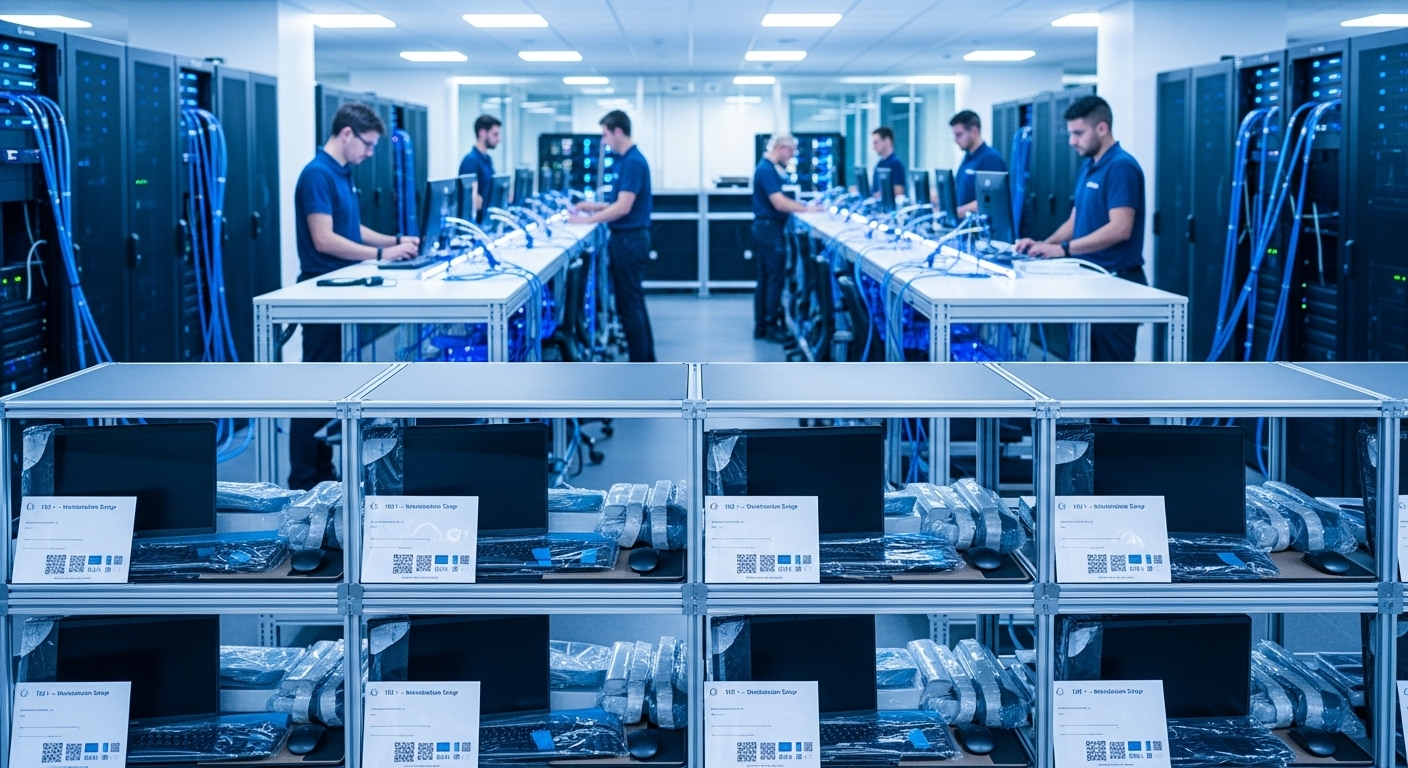
In the complex process of launching a new office, the integration of IT infrastructure with physical logistics often feels less like a symphony and more like a chaotic series of disconnected tasks. Hardware arrives before the space is secure, network cabling conflicts with furniture layouts, and employees walk in on day one to find a mess of boxes instead of a functional workspace. This reactive, disjointed approach is a significant source of delays, budget overruns, and frustration. However, a new paradigm is emerging, reframing this entire process through a powerful and proven business lens: the supply chain. By treating the procurement, configuration, and deployment of technology as a cohesive ‘digital supply chain,’ organizations can achieve a level of efficiency and predictability that has long been missing. This model shifts the focus from isolated tasks to an integrated, end-to-end flow of assets and services, ensuring that the right technology is in the right place, at the right time, fully operational from day zero. This article will explore the core stages of this transformative model and how it serves as the new blueprint for modern IT and workspace integration.
Redefining IT logistics as a supply chain
Viewing IT and office logistics through a supply chain lens is a fundamental shift from a project management mindset to a process-oriented one. Traditionally, setting up an office’s technology is treated as a series of distinct projects: one for procurement, another for network installation, a third for deploying laptops, and so on. These projects often run in parallel with conflicting timelines and poor communication between teams, leading to costly inefficiencies. For example, the facilities team might finalize a floor plan without consulting IT, only to discover that the chosen layout lacks adequate power or data ports. Conversely, IT might procure devices that don’t fit the new agile desking environment. A supply chain model, however, treats the entire process as a single, interconnected system focused on the smooth, efficient flow of goods—in this case, technology assets. It forces a holistic view, compelling stakeholders from IT, facilities, HR, and finance to work in concert from the earliest planning stages. The core idea is to apply principles of inventory management, logistics, and just-in-time delivery to the world of corporate technology. This means every piece of hardware and software is tracked, configured, and delivered according to a master plan that is intrinsically linked to the construction and design schedule, ensuring a seamless and synchronized rollout.
Stage one: strategic sourcing and procurement
The first stage of the digital supply chain is strategic sourcing, which goes far beyond simply placing orders for laptops and monitors. It’s about creating a proactive procurement strategy that aligns directly with the company’s growth, the specific design of the new workspace, and the entire lifecycle of the assets. This process begins with deep collaboration between IT, HR, and department heads to forecast technology needs accurately. Instead of a last-minute scramble, this foresight allows for bulk ordering, which can lead to significant cost savings and better vendor relationships. A key component of this stage is standardizing equipment. By creating a limited catalog of approved models for laptops, peripherals, and other devices, companies simplify ordering, streamline support, and ensure a consistent user experience. This standardization is crucial for an efficient supply chain, as it makes inventory management, imaging, and deployment far more predictable. Furthermore, strategic sourcing involves rigorous vendor management, negotiating contracts that include not just hardware costs but also service-level agreements (SLAs) for delivery, support, and end-of-life recycling. This initial step sets the foundation for the entire process, ensuring that the raw materials of your digital workspace are acquired intelligently and efficiently, preventing the common bottleneck of waiting for critical equipment to arrive.
Stage two: warehousing and configuration
Once assets are procured, the digital supply chain model introduces a crucial intermediate stage that is often overlooked: professional warehousing and pre-configuration. Instead of shipping pallets of new equipment directly to a chaotic and unsecured construction site, the hardware is sent to a controlled, off-site staging facility. This ‘warehouse’ becomes the central hub for asset management and preparation. Here, every device is unboxed, inspected for damage, and tagged with an asset identifier. This information is entered into a central asset management system, providing real-time visibility into the entire technology inventory before it even reaches the office. More importantly, this is where the pre-configuration or ‘imaging’ process takes place. Technicians can install the company’s standard operating system, security software, and core business applications onto every laptop. Workstation ‘kits’—containing a laptop, monitor, keyboard, mouse, and necessary cables—can be assembled, bundled, and labeled for specific employees or departments. This off-site preparation is a game-changer; it transforms a multi-hour setup process for each employee into a simple ‘plug-and-play’ experience on day one. It dramatically reduces on-site disruption, minimizes the risk of loss or theft at the new location, and ensures that every piece of equipment is tested and ready for immediate use, turning deployment into a streamlined logistical operation.
Stage three: last-mile delivery and deployment
The ‘last-mile delivery’ is the culmination of the digital supply chain, where all the careful planning and off-site preparation pays off. This stage is the physical placement and connection of technology within the newly designed office space, executed with logistical precision. Because all assets have been pre-configured and kitted, the on-site team’s job shifts from technical setup to efficient deployment. The process is synchronized with the final phases of the office build-out. Just after the furniture is installed and the network cabling is certified, the kitted workstations are delivered to the site. This just-in-time approach minimizes clutter and the risk of damage. Each kit, clearly labeled for a specific desk or user, is placed at its designated spot. The on-site IT team’s task is now simplified to connecting the peripherals, plugging the device into the network, and performing a final power-on test. This method drastically reduces the time and number of technicians required on-site in the critical days leading up to the office opening. It ensures a clean, organized, and professional rollout that impresses employees and allows them to be productive from the moment they walk in. This final, seamless step is what transforms the employee’s first day from one of technical frustration to one of excitement and productivity, representing the ultimate success of the supply chain model.
The role of data and automation
Data and automation are the engine that powers the modern digital supply chain, providing the visibility and efficiency needed to manage the complex flow of assets. At the heart of this is a robust IT Asset Management (ITAM) system, which acts as the single source of truth for the entire technology inventory. From the moment a purchase order is issued to the final disposal of a device, the ITAM tracks every asset’s location, status, user assignment, and maintenance history. This centralized data is critical for every stage of the supply chain. During procurement, it informs purchasing decisions by providing insights into current inventory levels and asset age. In the warehousing stage, it allows for accurate tracking of devices as they are configured and kitted. For deployment, it provides a clear map of where each asset needs to go. Automation tools build upon this data foundation to streamline repetitive tasks. For instance, automated workflows can trigger purchase orders when inventory falls below a certain threshold. During configuration, software deployment tools can automatically push the correct operating system and applications to thousands of devices simultaneously, a process known as Zero Touch Provisioning. This eliminates manual, error-prone work and ensures consistency across all machines. By integrating the ITAM with other business systems, like HR and finance, the entire lifecycle—from onboarding a new employee to recovering their assets upon departure—can become a seamless, automated process.
Reverse logistics: managing the asset lifecycle
A truly comprehensive digital supply chain doesn’t end when a device is deployed; it extends to the end of the asset’s useful life through a process known as ‘reverse logistics.’ This is the structured management of how technology is recovered, processed, and ultimately disposed of. Without a clear reverse logistics plan, old laptops, monitors, and servers pile up in storage closets, posing a significant data security risk and an environmental liability. An effective strategy begins with a clear policy for asset retirement, typically based on age or performance benchmarks. When an employee leaves the company or a device is scheduled for replacement, the supply chain process runs in reverse. A ticket is automatically generated to recover the asset, which is then returned to a central processing location. Here, the most critical step is secure data destruction. All storage media must be wiped according to certified standards to ensure that sensitive corporate or personal information cannot be recovered. Once the data is sanitized, a decision is made on the asset’s next step. Can it be refurbished and redeployed for a different role or a new employee? Can it be sold to a secondary market to recoup some of its initial cost? If not, it must be disposed of in an environmentally responsible manner through a certified e-waste recycling partner. This final stage of the supply chain not only mitigates security risks and ensures environmental compliance but also contributes to the bottom line by maximizing the residual value of technology investments.
Conclusion
Adopting a digital supply chain model fundamentally transforms IT setup and office logistics from a series of reactive, chaotic events into a proactive, predictable, and highly efficient system. By applying proven principles of sourcing, inventory management, just-in-time delivery, and reverse logistics to technology assets, businesses can eliminate the common pain points of office moves and new builds. This strategic approach ensures perfect alignment between the physical workspace and the digital tools required to power it. The benefits are clear and compelling: significant cost savings through strategic procurement, reduced downtime with pre-configured and tested hardware, and a vastly improved ‘day one’ experience for employees who can be productive immediately. Furthermore, integrating data-driven asset management and a secure, sustainable plan for the entire asset lifecycle mitigates risk and enhances corporate responsibility. In an era where the workspace itself is a critical tool for talent attraction and operational excellence, the haphazard IT setups of the past are no longer viable. The digital supply chain is not merely a better way to manage logistics; it is the essential operational blueprint for building the agile, secure, and productive workplaces of the future.