In today’s digitally-driven economy, the foundation of any successful business is no longer just its physical location but its digital infrastructure. For companies establishing or upgrading their presence, the integration of IT and office setup has become a critical strategic priority. This process involves more than just plugging in computers; it’s about creating a secure, scalable, and efficient ecosystem where technology empowers people to do their best work. The shift towards cloud computing, heightened cybersecurity demands, and the need for flexible, hybrid-ready workspaces are reshaping how businesses approach their foundational setup. A forward-thinking IT strategy is not a cost center but a competitive advantage, enabling agility, protecting valuable data, and ensuring business continuity in an unpredictable world. This is particularly true for businesses in dynamic tech hubs, where staying ahead of the curve is essential for attracting talent and driving growth.
The strategic shift to cloud-first infrastructure
The days of bulky, on-premise servers dominating office space are rapidly fading. Modern businesses are overwhelmingly adopting a cloud-first approach to their IT infrastructure, a trend that prioritizes flexibility, scalability, and operational efficiency. This strategic shift involves migrating core services—such as data storage, software applications, and even entire networks—to cloud platforms like Amazon Web Services (AWS), Microsoft Azure, or Google Cloud. The primary driver for this transition is the immense scalability the cloud offers. Businesses can scale their computing resources up or down almost instantly in response to demand, paying only for what they use. This eliminates the need for large, upfront capital expenditures on hardware that might quickly become obsolete. Furthermore, cloud services provide inherent business continuity and disaster recovery capabilities. With data replicated across multiple geographic locations, the risk of data loss due to a localized event like a fire or hardware failure is significantly minimized. For companies in Burnaby, leveraging the robust cloud infrastructure available is a key step in building a resilient and future-proof operational backbone that can support sustained growth.
Integrating cybersecurity from day one
In the modern digital landscape, cybersecurity cannot be an afterthought; it must be a foundational component of any IT and office setup plan. Integrating security from day one—a concept often referred to as ‘security by design’—is the most effective way to protect a business from the ever-growing spectrum of cyber threats. This proactive approach involves building security measures into the very fabric of the IT infrastructure, rather than trying to bolt them on later. Key elements include implementing a robust firewall, enforcing strong password policies, and utilizing multi-factor authentication (MFA) across all critical systems. Data encryption, both for data at rest (stored on drives) and in transit (moving across networks), is non-negotiable. It’s also crucial to establish a clear framework for employee security training, as human error remains one of the most common vulnerabilities. Educating staff on how to recognize phishing attempts, avoid suspicious downloads, and handle sensitive data securely creates a human firewall that complements technological defenses. This comprehensive security posture is vital for building trust with clients and ensuring long-term business viability.
Designing the network for a hybrid workforce
The rise of hybrid work models has fundamentally changed the requirements for office network design. An effective modern network must provide seamless, secure, and high-performance connectivity for employees whether they are in the office, at home, or on the move. This requires a more sophisticated approach than simply providing Wi-Fi. A key component is the implementation of a Virtual Private Network (VPN), which creates a secure, encrypted tunnel for remote employees to access company resources safely. Furthermore, businesses are increasingly adopting Software-Defined Wide Area Network (SD-WAN) technology. SD-WAN optimizes network traffic, prioritizing critical business applications to ensure performance is maintained even when the network is busy. For the physical office, strategic placement of high-quality wireless access points is essential to eliminate dead zones and ensure reliable coverage. Segmenting the network—for instance, creating separate networks for corporate users, guests, and IoT devices—adds another layer of security, preventing a breach in one area from compromising the entire system. This forward-looking network architecture is critical for supporting the flexible and collaborative work environments that modern businesses demand.
Streamlining logistics and hardware procurement
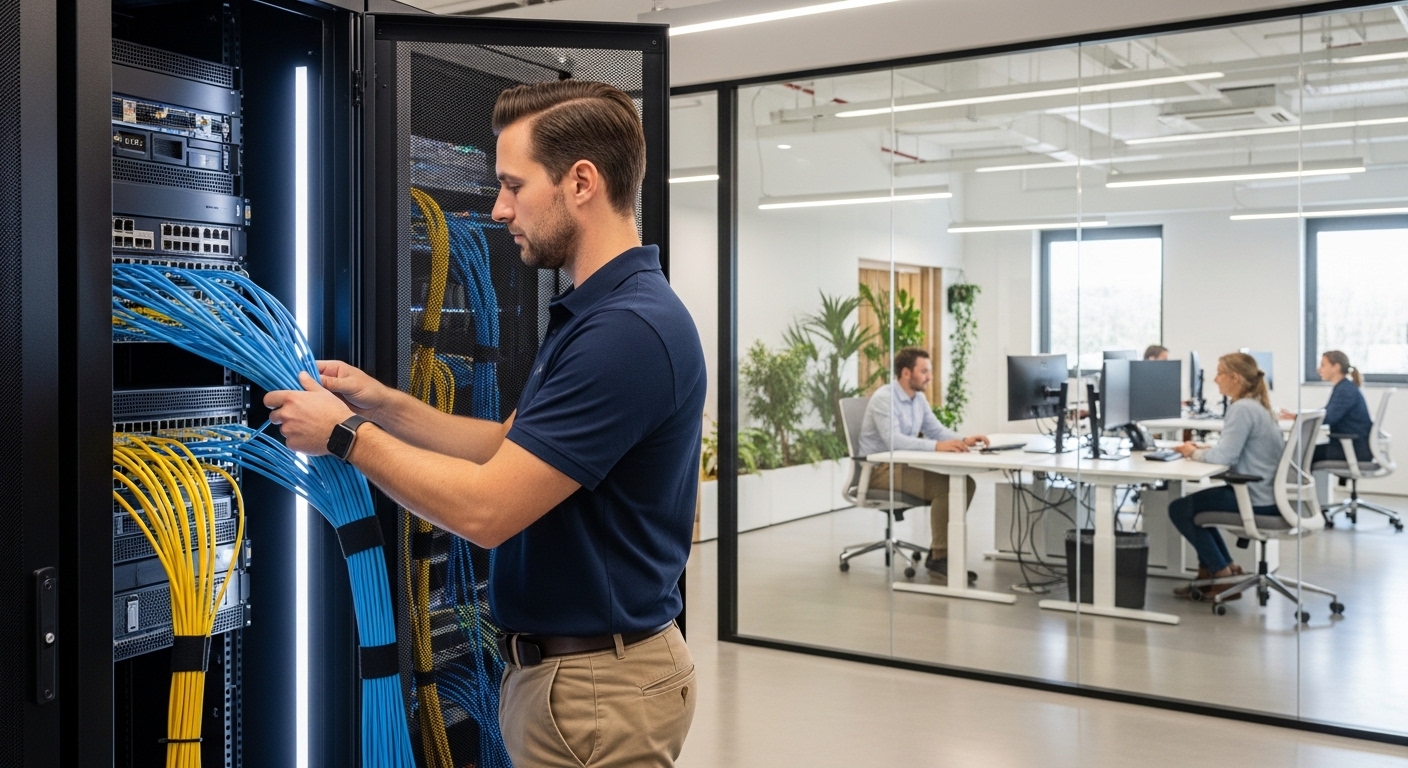
The logistical side of an IT setup is a complex process that requires meticulous planning and coordination. A streamlined procurement strategy is essential to ensure that the right hardware and software are acquired on time and within budget. This begins with a thorough needs assessment to determine the specific technology requirements for each role within the company, from laptops and monitors to specialized software licenses. Building strong relationships with reliable vendors is crucial for securing competitive pricing and ensuring timely delivery. A critical part of modern IT logistics is asset lifecycle management. This involves tracking all hardware and software from procurement through to deployment, maintenance, and eventual decommissioning. Implementing an asset management system provides a clear inventory of all IT resources, simplifies software license compliance, and helps plan for future hardware refreshes. For businesses setting up in a bustling commercial area like Burnaby, efficient logistics management prevents costly delays and ensures that the new office is fully equipped and operational from day one, allowing the team to be productive immediately.
The importance of a scalable IT support system
Even the most perfectly designed IT infrastructure will require ongoing maintenance and support. Establishing a scalable and responsive support system is not just about fixing problems as they arise; it’s about proactively managing the technology ecosystem to prevent issues before they impact productivity. For many small to medium-sized businesses, partnering with a Managed Service Provider (MSP) is the most efficient solution. An MSP can provide comprehensive support, from a 24/7 helpdesk to proactive network monitoring and cybersecurity management, often at a fraction of the cost of hiring a full-time, in-house IT team. An effective support system includes clear Service Level Agreements (SLAs) that define response times and resolution targets. It also involves creating a knowledge base or ticketing system that allows employees to find answers to common questions and track the status of their support requests. This tiered support structure ensures that simple issues are resolved quickly, while more complex problems are escalated to specialists. This focus on reliable, proactive support is essential for maintaining operational momentum and empowering employees to work without technological friction.
Future-proofing your IT with emerging technologies
Building a resilient IT infrastructure isn’t just about meeting today’s needs; it’s about anticipating the demands of tomorrow. Future-proofing your IT setup involves making strategic investments in emerging technologies that can provide a long-term competitive advantage. The Internet of Things (IoT) is one such area, with smart office technologies offering significant gains in efficiency and employee experience. This can range from smart lighting and climate control systems that reduce energy consumption to sensors that provide data on workspace utilization, helping to optimize office layouts. Artificial Intelligence (AI) and machine learning are also becoming integral to IT operations, with AI-driven tools that can predict hardware failures, detect security anomalies in real-time, and automate routine maintenance tasks. Adopting these technologies requires a modular and flexible core infrastructure that can easily integrate with new solutions as they become available. For businesses in a forward-thinking city like Burnaby, embracing this innovation-led approach to IT ensures the organization remains agile, efficient, and well-positioned for the future of work.
Conclusion
In conclusion, architecting a modern IT and office setup is a multi-faceted endeavor that extends far beyond basic hardware installation. It requires a holistic strategy that seamlessly blends cloud infrastructure, robust cybersecurity, and agile network design to support the fluid dynamics of today’s workforce. The strategic shift to a cloud-first model provides the scalability and resilience necessary for growth, while integrating security by design protects the company’s most valuable digital assets. Furthermore, thoughtful planning around logistics, procurement, and ongoing support ensures that the technological foundation is not only powerful but also reliable and user-friendly. By future-proofing the infrastructure with an eye towards emerging technologies like AI and IoT, businesses can create an environment that is not just functional but truly transformative. For any organization looking to thrive, investing in a secure, scalable, and intelligent IT framework is no longer optional—it is the essential blueprint for sustained success in the digital age, enabling innovation and empowering employees to reach their full potential.