When you’re comparing office options, base rent is an easy number to find. It’s also an easy number to overvalue.
A commercial lease can carry costs that sit outside the headline rent: utilities, common area maintenance, IT infrastructure, repairs, cleaning, and the upfront work needed to make the space usable. Leave those items out, and your office budget may look clearer than it really is.
That’s where total cost of occupancy in commercial real estate becomes useful. It gives you a fuller view of what a workspace will cost over time, so you can compare options on the same financial basis.
In this guide, we’ll break down the calculation, identify common hidden costs of commercial leases, and look at how all-inclusive workspace models can simplify the comparison.
The illusion of base rent
Base rent is the amount listed in a lease proposal for the right to occupy a space. It matters, but it usually isn’t the complete cost of running your office.
Think of it like buying a car based only on the sticker price. The purchase price tells you something important, but it doesn’t include insurance, maintenance, fuel, or registration. Office space works in a similar way. The rent is the starting point, not necessarily the final number.
A lease with lower base rent may still require a significant investment in setup, technology, furnishings, services, and ongoing operations. Another option may have a higher monthly price but include more of those costs in one predictable charge.
If you compare only the rent line, you may miss the financial effect of:
- Variable operating expenses that change over the lease term
- One-time fit-out and setup costs before the team can move in
- Technology and connectivity requirements
- Maintenance, cleaning, and repairs
- Administrative work and vendor coordination
The result can be budget surprises. You might approve a space based on an attractive headline rate, then discover that the usable cost is higher once the office is operational.
For a broader look at why growing companies are reassessing traditional lease structures, see this related discussion of moving beyond traditional commercial leases.
Breaking down the total cost of occupancy
Total cost of occupancy, or TCO, is a way to measure the full cost of using and operating a workspace over a defined period. The exact categories will depend on the lease, building, location, and operating model, but the framework should go beyond base rent.
A practical calculation looks like this:
Total cost of occupancy = upfront capital expenses + rent and lease charges + ongoing operating expenses + technology and service costs + internal administration
You can then evaluate the total over a month, a year, or the full expected lease term. Using the same period for every option is important. Otherwise, a one-time cost may appear cheaper or more expensive simply because it has been placed in a different part of the comparison.
Separate CapEx from OpEx
One of the most useful steps is separating capital expenses from operating expenses.
Capital expenses, or CapEx, are generally upfront investments required to prepare or improve the space. Depending on the arrangement, they may include fit-out work, furniture, cabling, access systems, signage, and other setup items. Not every lease includes the same requirements, so you should identify these costs before comparing proposals.
Operating expenses, or OpEx, are the recurring costs of keeping the office running. These can include utilities, cleaning, maintenance, connectivity, security-related services, and building charges. Some may be fixed. Others may vary based on usage, building expenses, or the terms of the lease.
Why does this distinction matter? Because a lease can appear manageable on a monthly basis while requiring a large upfront commitment. Conversely, an option with a more consolidated monthly fee may reduce the amount of separate setup and operating costs you need to manage.
Use a consistent time period
Choose a comparison period before you start. For example, you could calculate the first year separately from the full expected occupancy period.
For the first year, include upfront costs because they affect the initial cash requirement. For a longer view, spread one-time costs across the period only as an analytical comparison. Keep the actual cash timing visible as well. A cost that is amortized in a spreadsheet still needs to be paid at a particular point in time.
Your worksheet might include columns for:
- Cost category
- One-time amount
- Monthly amount
- Annual amount
- Whether the amount is fixed or variable
- Who is responsible for the cost
- When the cost is paid
This structure makes it easier to spot missing information and ask better questions before signing.
Identifying the hidden costs of commercial leases
The phrase “hidden cost” doesn’t always mean a fee was deliberately concealed. Often, the cost is described in a separate schedule, passed through from the building, or treated as the tenant’s responsibility rather than included in the base rent.
That still makes it important to include in your TCO model.
CAM fees and pass-through expenses
Common Area Maintenance, often called CAM, covers costs associated with maintaining shared parts of a building. Depending on the lease structure, you may also see charges related to property taxes, insurance, utilities, repairs, or other building expenses.
In a triple net lease structure, tenants may be responsible for some or all of these expenses in addition to base rent. The specific treatment varies by agreement, so don’t assume that a quoted rent figure includes them.
When reviewing a proposal, ask:
- Which operating expenses are included in the quoted rent?
- Which costs are passed through to the tenant?
- Can those charges change during the lease term?
- Is there a reconciliation or annual adjustment process?
- Are there administrative fees associated with managing those charges?
IT infrastructure and connectivity
An office isn’t operational simply because you have keys. Your team may need network equipment, cabling, internet service, installation, support, and security controls that fit your requirements.
The cost depends on the space and the standard your organization needs. A small team may have modest requirements. A larger operation may need a more robust setup, additional equipment, or specialist support.
Make sure your comparison records both the initial setup cost and the recurring service cost. It’s also useful to clarify whether internet and related support are included, billed separately, or managed by your own team.
Facility maintenance and daily operations
Maintenance is another area where the financial picture can become fragmented. Costs may include repairs, cleaning, waste services, heating and cooling, lighting, and the coordination required to resolve day-to-day issues.
Even when an individual expense is relatively small, the total administrative burden can matter. Someone still has to report the issue, contact the right vendor, approve the work, track the invoice, and confirm that it was resolved.
Include both the direct expense and, where relevant, the internal time required to manage it. You don’t need to assign a speculative dollar value to every task, but you should recognize that a low-rent option may create more operational work.
Comparing traditional leases with all-inclusive models
The goal of TCO isn’t to prove that one workspace model is always cheaper. It’s to make the financial comparison more honest.
With a traditional lease, you may have separate lines for rent, building charges, utilities, internet, cleaning, maintenance, furniture, and other services. Some costs are paid to the landlord. Others go to outside vendors. Some may be one-time expenses, while others change over time.
An all-inclusive workspace model consolidates more of those costs into a predictable monthly fee. That can make budgeting and comparison simpler, especially when the fee includes rent, high-speed internet, utilities, and cleaning services. You should still review the agreement carefully to confirm what is included, what is excluded, and whether any usage limits or additional charges apply.
When comparing the two structures, build a side-by-side view with at least these categories:
- Base rent or monthly workspace fee
- CAM and other building charges
- Utilities
- Internet and connectivity
- Cleaning and routine services
- Maintenance and repairs
- Furniture and initial setup
- Internal administration and vendor management
- Costs associated with changing the amount of space you occupy
Then compare more than the monthly total. Look at the upfront cash requirement, the predictability of future payments, the number of vendors involved, and the assumptions behind each estimate.
Use a like-for-like comparison
A fair comparison requires matching the service level. If one option includes furnished space, internet, utilities, and cleaning while the other includes only an unfurnished shell, the headline prices won’t tell you much.
Define what your team actually needs before comparing numbers. Consider the number of workstations, meeting areas, connectivity requirements, cleaning frequency, and operational support. Then add those requirements to every option, whether they’re included or purchased separately.
It’s also worth testing different occupancy scenarios. What happens if your headcount grows? What happens if you need less space? A TCO model that only works at one fixed occupancy level may not reflect the financial flexibility your business needs.
How an all-inclusive invoice can simplify TCO
Once you’ve identified the full cost of occupancy, the next question is how easy the cost will be to manage.
Regal Estate Group offers an all-inclusive monthly fee model that consolidates rent, high-speed internet, utilities, and cleaning into one predictable invoice. That structure doesn’t remove the need for due diligence, but it can make the included costs easier to see and compare.
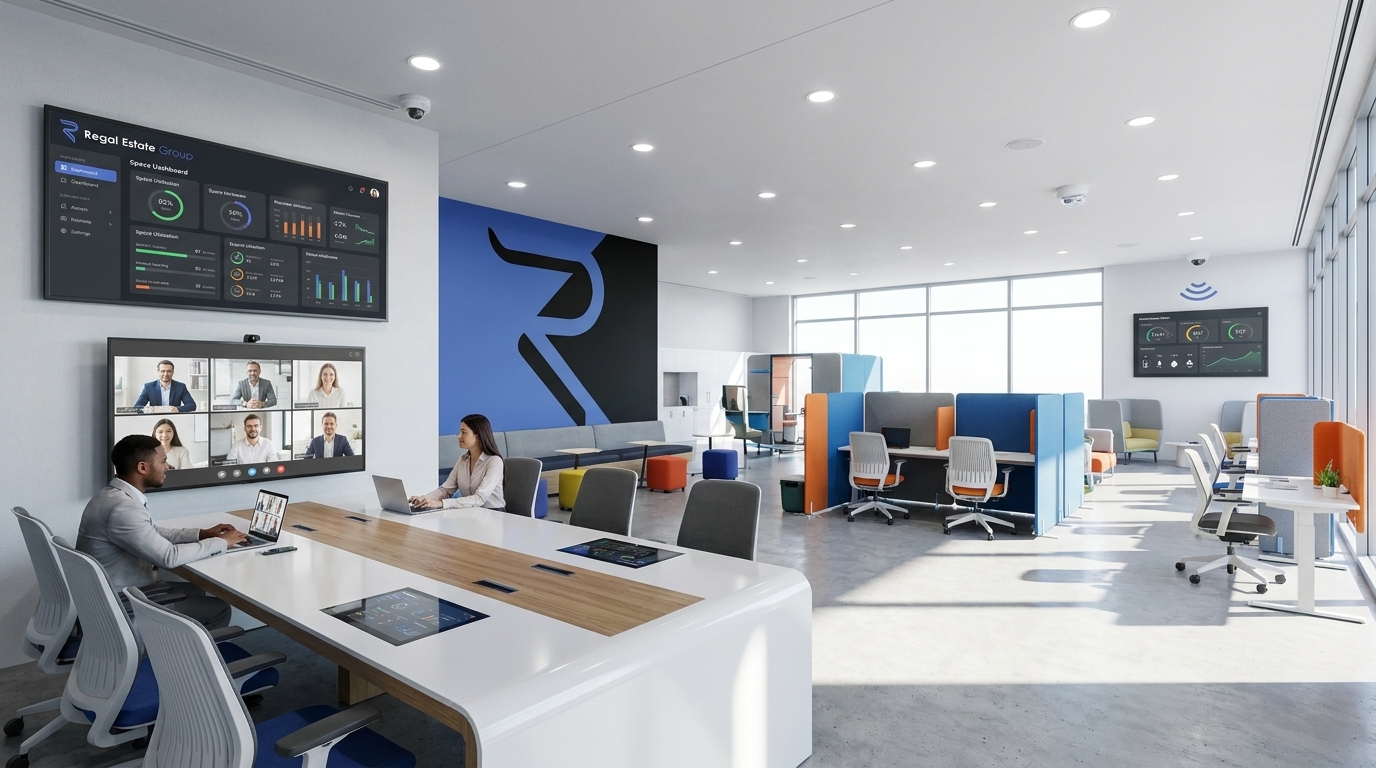
The Instant Clarity Dashboard is designed for side-by-side workspace comparisons. For an operations leader or corporate real estate manager, that gives you a practical place to review pricing structures and assess how much of the total cost is consolidated before making a decision.
Before choosing any workspace, confirm the details in writing. Ask for a clear breakdown of included services, exclusions, deposits, setup charges, renewal terms, and any variable fees. Predictability comes from understanding the agreement, not just from seeing a single monthly number.
Make TCO part of every workspace decision
Calculating the true cost of office space takes more work than comparing two rent figures. But the process doesn’t need to be complicated.
Start by listing every cost required to occupy and operate the space. Separate upfront CapEx from recurring OpEx. Use the same time period and service requirements for each option. Then consider the cash flow, administrative effort, and flexibility attached to the pricing model.
When you evaluate commercial real estate through total cost of occupancy, you get a clearer financial picture. You can see where a low headline rent may require additional spending, and where a consolidated monthly structure may make planning easier.
Ready to compare workspace costs more clearly? Use Regal Estate Group’s Instant Clarity Dashboard to review global flexible workspace options using transparent, all-inclusive pricing.