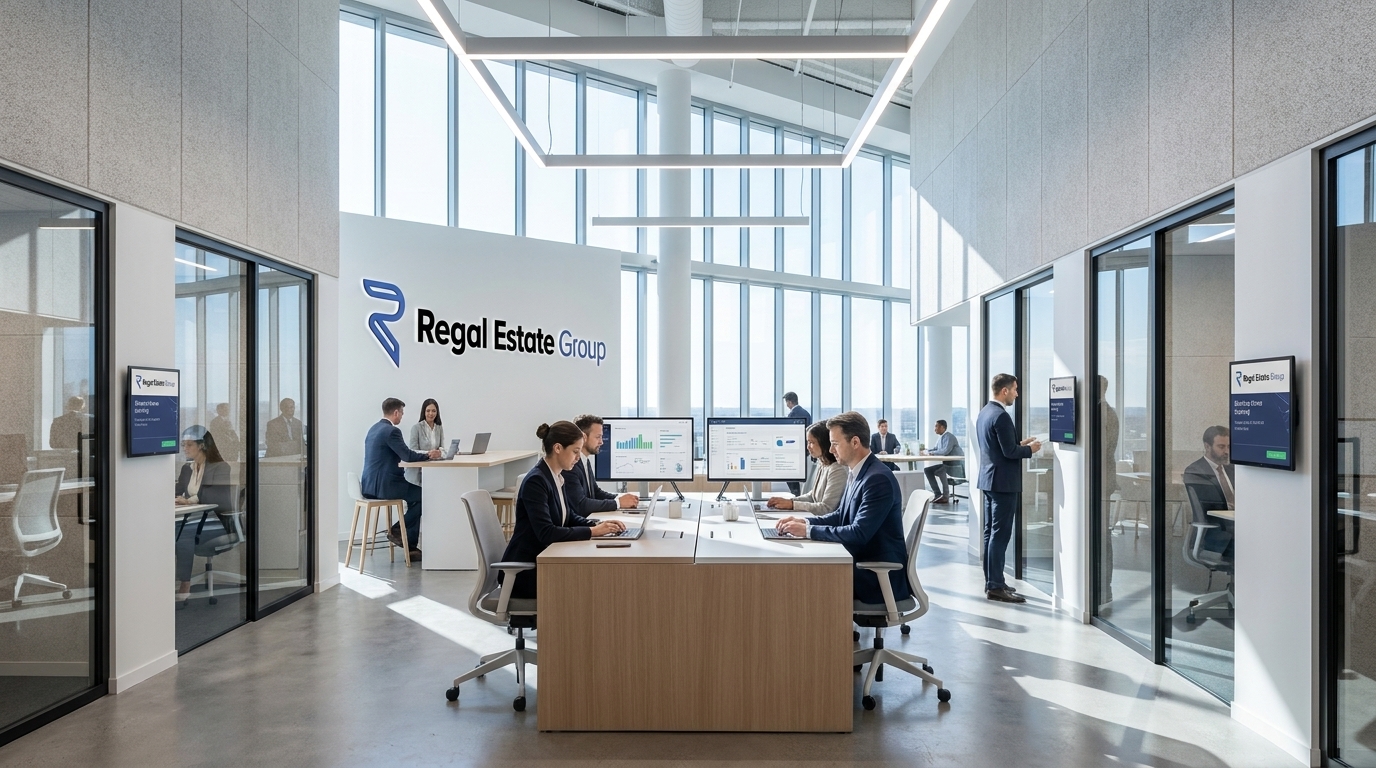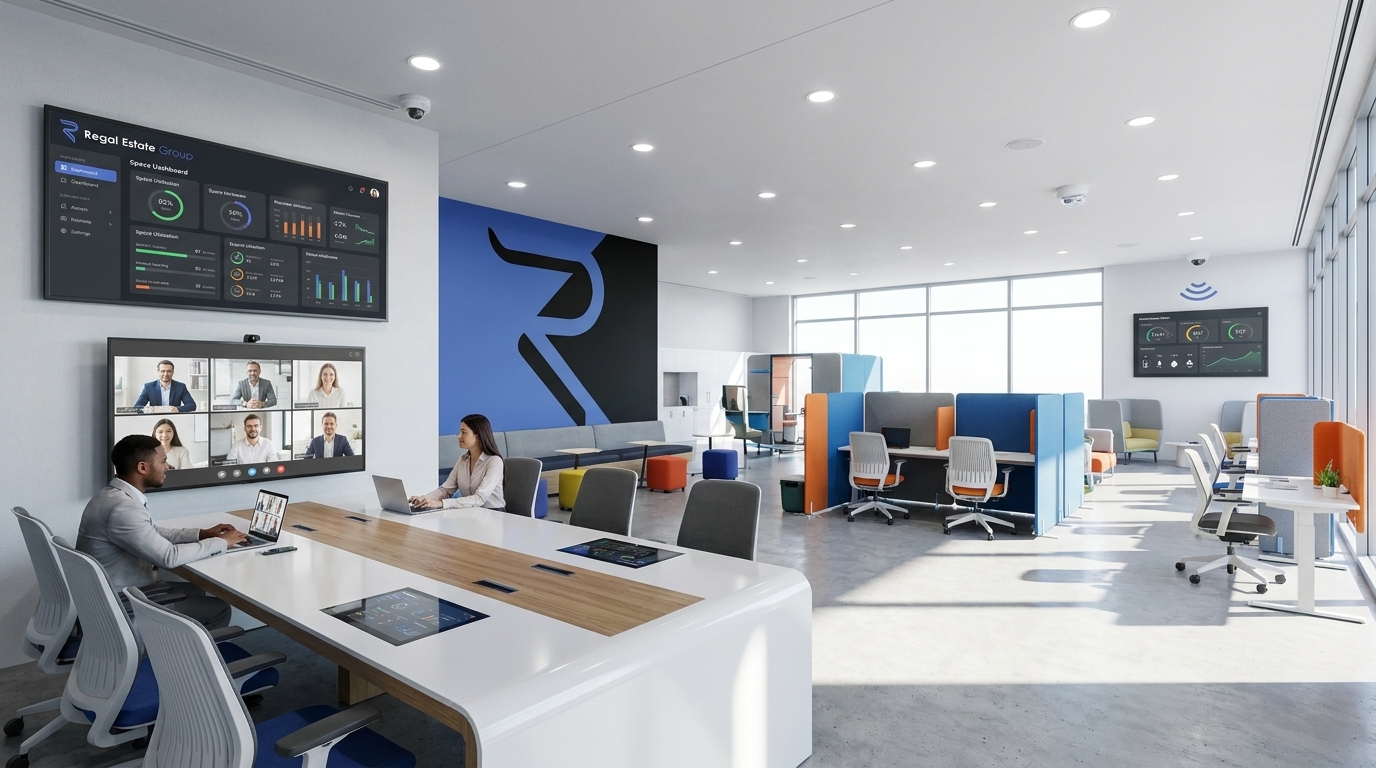
The traditional commercial real estate model heavily relies on rigid long-term leases and static physical layouts. These outdated structures consistently fail to meet the rapid operational demands of the modern workforce. Freelancers, scaling startups, and multinational corporations demand unparalleled agility to maintain competitiveness across dynamic global markets. Consequently, agentic artificial intelligence fundamentally restructures how enterprises approach workspace strategy and daily design execution. Physical spaces no longer act as passive containers for human labor. Interconnected sensors and data analytics transform these environments into active participants in complex business operations. Intelligent algorithms instantly adapt rooms to fluctuating occupancy levels and specific collaborative requirements. This technological convergence empowers organizations to cultivate highly productive team cultures while drastically reducing unnecessary overhead costs. Technology-driven platforms dictate the entire trajectory of commercial leasing, allowing distributed teams to operate with unprecedented efficiency worldwide.
Agentic artificial intelligence acts as the core orchestrator
Integrating advanced technology into commercial properties marks a foundational shift from static buildings to responsive environments. Agentic artificial intelligence functions as the central nervous system of these modern solutions. Advanced algorithms continuously analyze vast datasets to anticipate the precise needs of independent professionals and massive corporate divisions. Processing historical occupancy metrics alongside real-time behavioral patterns allows these systems to predict spatial requirements with exceptional accuracy. Organizations enthusiastically abandon rigid spatial planning methods to embrace dynamic floors that automatically adjust to daily human usage. Predictive operations completely eliminate the friction previously associated with complex hybrid schedules. Intelligent networks automatically suggest optimal days for in-person attendance when enterprise teams plan collaborative sessions. Such strategic recommendations guarantee that critical personnel overlap seamlessly. Systems instantly identify underutilized meeting rooms and release them back into the broader booking pool.
This high level of continuous optimization directly supports overarching business logistics. Aligning real estate expenditures with actual utility significantly lowers overhead costs for ambitious enterprises. Advanced platforms seamlessly incorporate dedicated virtual assistants to handle the daily friction of workspace operations. A 24/7 digital concierge, integrated within the Regal Estate Group ecosystem, provides immediate answers and administrative support. Users completely bypass the multi-day delays typically associated with traditional property brokers. Occupants receive instant, automated assistance regarding access protocols, amenity reservations, and technical troubleshooting. Analysts note that such autonomy fundamentally changes how human beings interact with their physical surroundings. Intelligent orchestration turns the entire building into an active participant in team productivity. Global footprints expand rapidly because remote workers and core teams experience a uniform, highly optimized standard of support.
Businesses achieve superior operational flow by fully utilizing autonomous orchestration. The resulting environment anticipates employee requirements and drastically reduces administrative burdens. Professional teams focus strictly on their primary corporate objectives rather than constantly managing facility logistics. Flexible smart office tech directly transforms conventional office infrastructure into adaptable ecosystems. Calm technology operates quietly in the background to adjust physical settings based on real-time human presence. Modern workspaces reject manual environmental controls or static desk assignments. Responsive architectures support a wide spectrum of diverse workstyles. Integrated sensors instantly calibrate the environment whenever employees enter specific zones. Acoustic masking systems raise or lower ambient white noise depending on the volume of nearby team conversations. Deep-work areas remain perfectly undisturbed during peak collaborative hours.
Agentic artificial intelligence elevates building ecosystems
Human-centric lighting systems dynamically alter color temperatures throughout the entire workday. These automated adjustments mimic natural daylight progression to sustain employee alertness and reduce visual fatigue. Optimal conditions for productivity emerge without requiring any manual intervention from facility managers or the occupants themselves. Ultimate flexibility defines the current commercial real estate market landscape. Organizations increasingly reject the heavy lease break penalties of traditional contracts in favor of agile, tech-enabled arrangements. Intelligent spatial design perfectly complements this financial agility by allowing companies to scale space up or down seamlessly. Startups often require rapid expansion to accommodate new hires immediately. Multinational corporations frequently seek to consolidate their regional footprint to maximize efficiency. Flexible tech enables rapid physical reconfiguration across all these varied scenarios.
Modular partition systems and robust wireless connectivity protocols allow entire departments to relocate within a building seamlessly. Strategic workspace design also encompasses highly dynamic reservation protocols. Traditional assigned seating rapidly becomes obsolete as activity-based working models gain immense popularity. Intelligent booking applications analyze daily workflows and suggest ideal workstations. These suggestions depend entirely on the specific colleagues an employee needs to interact with that day. Matching the physical environment to the task at hand greatly enhances cross-departmental collaboration. Seamless synchronization between human behavior and physical infrastructure establishes an incredibly robust foundation for modern operations, driven primarily by agentic artificial intelligence. Commercial spaces actively facilitate corporate growth rather than merely housing workers. Interconnected IoT building management systems provide the necessary technological infrastructure to monitor vast portfolios.
Flexible smart ecosystems utilize agentic artificial intelligence
Interconnected networks of sensors and smart devices collect continuous streams of operational data. Global enterprises gain unprecedented visibility into building performance across different continents. Centralizing this critical information empowers companies to manage multiple distributed workspaces through a single, comprehensive interface. Consistent environmental standards remain intact across entirely different geographic regions. Edge intelligence represents a critical advancement within these complex management frameworks. Localized sensors analyze information and execute commands instantaneously at the source. This advanced architecture avoids transmitting all operational data to remote cloud servers for initial processing. Sub-second response times define crucial building functions, such as adjusting ventilation rates immediately when a large group enters a conference room. Security protocols activate instantly during any unauthorized access attempts. Facilities managers consistently rely on these instantaneous adjustments to maintain rigorous safety standards.
The implementation of digital twin technology completely revolutionizes how organizations plan physical operations. Administrators simulate various operational scenarios using highly accurate virtual replicas of physical workspaces. Decision-makers test the direct impact of new desk arrangements or modified HVAC schedules virtually. Optimizing physical spaces before implementing costly physical changes saves immense capital. This analytical approach severely minimizes operational disruptions for the entire workforce. Facility upgrades consistently deliver measurable improvements in daily workflow efficiency. Establishing reliable infrastructure across international borders poses a formidable challenge for companies managing global teams. Regal Estate Group directly addresses this immense complexity. Organizations seamlessly search and secure spaces across more than 6,500 global locations without relying on commissioned brokers. Advanced building management systems already exist within these heavily vetted properties.
Agentic artificial intelligence empowers localized decisions
Enterprises deploy remote workers and satellite teams into fully optimized environments immediately upon signing a digital agreement. This standardized technological foundation guarantees a high-tier infrastructure experience everywhere. Employees operating out of major financial capitals enjoy the exact same operational reliability as those in remote regional hubs. Data-driven location analysis dictates the long-term success of corporate market expansion. Selecting the optimal site for a new regional headquarters requires evaluating complex demographic datasets. Modern platforms consolidate this geographic information swiftly. Location selection transforms from a speculative exercise into a precise, highly strategic science. Analytical rigor ensures that real estate investments align perfectly with overarching corporate growth objectives. Advanced mapping interfaces allow corporate planners to visualize overlapping logistical factors simultaneously. Organizations pinpoint neighborhoods with high concentrations of specific professional skills.
Data analytics drive location and talent strategies
Targeted analysis directly supports highly specialized enterprise recruitment efforts. Evaluating local transit infrastructure and average commute times ensures selected workspaces remain accessible to the workforce. These careful considerations deeply influence overall employee retention rates. Optimized commutes significantly enhance daily job satisfaction and strengthen overall team culture. Strategic insight tools streamline this complex evaluation process for all stakeholders. Decision-makers conduct comprehensive location analyses utilizing advanced mapping functionalities through the Regal Estate Group platform. Users instantly assess surrounding local amenities, public transportation nodes, and competitor proximity. Businesses of all sizes make highly informed decisions without conducting expensive, on-the-ground feasibility studies. Agile startups and established multinational corporations alike benefit from this robust capability. Comparing multiple properties simultaneously significantly accelerates the overall corporate procurement cycle.
Objective data visualization completely removes emotional bias from commercial property selection. Professionals utilize an instant clarity dashboard to compare workspace choices side-by-side with ease. Expansion teams accurately assess total square footage, technological capabilities, and included amenities. Making data-backed decisions with complete confidence allows organizations to bypass traditional operational bottlenecks. Robust analytical frameworks help enterprises rapidly secure strategic footholds in emerging global markets. Methodological approaches eliminate the guesswork traditionally associated with commercial real estate procurement. Every newly acquired lease delivers maximum strategic value to the expanding business. Recent studies highlight that agentic artificial intelligence fundamentally decouples the longstanding link between output growth and headcount growth. Implementing sustainable office technology trends fundamentally reduces the environmental footprint of all commercial real estate. These essential upgrades simultaneously drive down expensive facility operating costs.
Sustainable innovations reduce operational waste
Corporate responsibility mandates become increasingly stricter across all major global jurisdictions. Advanced environments provide the precise mechanisms necessary to measure, report, and minimize resource consumption. Integrating sustainable systems into daily routines transforms energy conservation into an automated, continuous process. Smart energy orchestration stands at the very forefront of this critical ecological shift. Modern building management platforms communicate directly with local power grids and weather forecasting services. Analyzing upcoming temperature fluctuations allows these systems to optimize heating and air conditioning usage autonomously. Thermal setpoints adjust automatically based on real-time building occupancy and external weather conditions. The software automatically curtails energy distribution to specific zones operating at low capacity. Precise matching of resource allocation to actual human demand drastically reduces widespread energy waste. Utility expenditures drop by substantial margins as a direct result.
Lighting systems also contribute significantly to highly sustainable corporate operations. Networked LED fixtures equipped with passive infrared sensors ensure illumination only occurs when a space actively holds occupants. Sophisticated daylight harvesting systems push beyond simple motion detection capabilities. Measuring the exact amount of natural sunlight entering a room allows the technology to dynamically dim artificial lights. Consistent luminance levels remain intact while electricity consumption drops significantly. Workers enjoy optimal visual conditions without generating unnecessary carbon emissions. Financial benefits derived from these sustainable technologies pass directly to the occupant. All-inclusive pricing models, facilitated by platforms like Regal Estate Group, bundle rent, internet, and utilities into one transparent cost. Highly efficient underlying real estate keeps overall operational costs remarkably stable and entirely predictable. Companies successfully avoid the hidden fees typically associated with traditional leases.
Agentic artificial intelligence guarantees meeting equity
Predictability aids corporate financial planning and allows growing enterprises to allocate capital toward core business activities. Hybrid work intelligent environments rely heavily on specialized audiovisual technology. Bridging the communication gap between physically present teams and remote collaborators remains absolutely paramount. Organizations permanently adopt distributed workforce models, making the concept of meeting equity a top priority. Intelligent office design strictly ensures that all participants experience equal visibility and acoustic clarity. Advanced conference rooms utilize algorithmic framing protocols to capture every individual clearly. Sophisticated multi-lens camera arrays and directional microphone grids automatically track active speakers. The software intelligently isolates individual faces and displays them in distinct, equal-sized digital frames. Technological interventions actively prevent remote workers from feeling disconnected or marginalized during critical sessions. In-person colleagues transmit clear facial expressions and body language through these high-definition systems.
The physical layout of the hybrid office evolves purposefully to support this deep technological integration. Floorplans heavily prioritize acoustic isolation for dedicated video conferencing pods. Larger, open areas cater specifically to spontaneous social interaction and team building. Contemporary offices function effectively as a purpose-built destination for intentional collaboration. Isolated task execution no longer dictates the primary purpose of the physical corporate headquarters. This fundamental shift strengthens overall team culture and provides remote workers with highly functional gathering spaces. Diverse physical configurations easily accommodate the highly varied spatial requirements of dynamic hybrid teams. Customizable solutions across global portfolios allow organizations to procure everything from single hot desks to massive enterprise headquarters. Structural elasticity guarantees that a company’s physical footprint perfectly mirrors its rapidly evolving operational strategy. Businesses empower their distributed workforces to collaborate seamlessly by deploying advanced meeting equity technology.
The continuous evolution of global workspaces
Rapid deployment of smart office technology definitively transforms how modern enterprises manage their physical footprints. Agentic artificial intelligence and sophisticated energy orchestration provide the essential infrastructure required to optimize business logistics. Corporate teams become increasingly decentralized, heavily intensifying the reliance on responsive, data-driven environments. Static, traditional office leases quickly become entirely obsolete in this fast-paced market. Organizations that embrace these technological advancements immediately secure a significant competitive advantage. Utilizing comprehensive analytics to select prime global locations positions companies for massive long-term success. Deploying sustainable technologies minimizes operational costs and aligns real estate strategies with broader financial goals. Sophisticated meeting equity tools ensure that remote workers remain highly engaged and deeply integrated into the culture. Predictive spatial analytics fuel workflow efficiency, proving that technology drives tangible business outcomes. The future relies entirely on adaptable spaces that continually evolve to meet demanding economic standards.